Altitude worries more Inca Trail hikers than distance or stairs, and with good reason: Cusco sits at about 3,400 m and the Classic trek crosses a pass at 4,215 m. But the numbers that matter most are not the highest point. What matters is where you sleep and how fast you get there. Below we explain the altitude profile of each route night by night, what US health authorities (CDC) recommend, and how to plan your first days in Peru so the trek feels easier.
Where you sleep: the altitude profile night by night
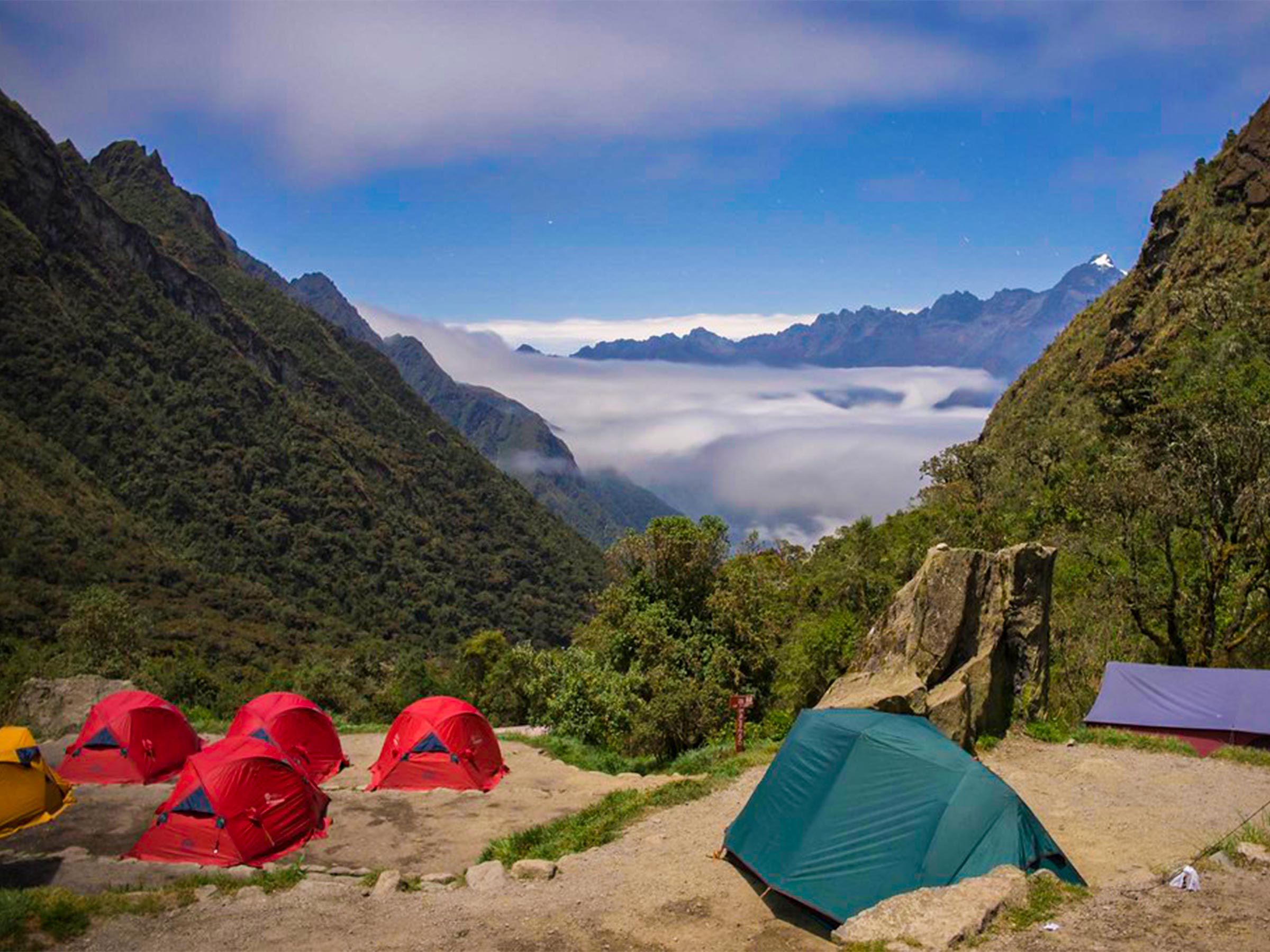
Doctors look at sleeping altitude because that is when your body does most of its adjusting. Here is ours, from our own route data. Campsites are assigned by the Ministry of Culture with each permit, so the nights on the Classic route can vary slightly.
| Place | Altitude | Compared with Cusco |
|---|---|---|
| Cusco (city) | ≈3,400 m · 11,150 ft | — |
| Sacred Valley (Urubamba, Ollantaytambo) | ≈2,800–2,900 m · 9,200–9,500 ft | About 500 m lower |
| Classic, night 1: Wayllabamba | ≈3,000 m · 9,840 ft | Lower |
| Classic, day 2: Dead Woman’s Pass | 4,215 m · 13,830 ft | Higher, for a short time only |
| Classic, night 2: Pacaymayo | ≈3,600 m · 11,810 ft | The only night higher than Cusco |
| Classic, night 3: Wiñay Wayna | ≈2,650 m · 8,690 ft | Much lower |
| 2-day route: Km 104 to the Sun Gate | 2,100–2,720 m · 6,890–8,920 ft | Always lower |
| Aguas Calientes (hotel) / Machu Picchu | ≈2,040 m / 2,430 m | Much lower |
Altitudes from our route profiles; the Sacred Valley figures are approximate town altitudes.
Two practical conclusions. If you are well adjusted to Cusco, the Classic trek adds one higher night (Pacaymayo) and a few hours at the pass, then drops fast. And the 2-day Inca Trail never goes above 2,720 m: if altitude is your main concern, it is the gentler option. Compare both in our 2-day vs 4-day guide.
What the CDC says
The US Centers for Disease Control and Prevention cover altitude in their Yellow Book for travelers (page updated in April 2025). These are the points most relevant to the Inca Trail:
- Cusco is a known risk. The CDC names Cusco (about 3,350 m in its text) as a destination where flying in straight to altitude is common. When gradual acclimatization isn’t possible, rates of altitude illness can approach 50%.
- Sleep lower first. For Cusco, the CDC notes that travelers can sleep 1–2 nights at elevations lower than the airport and then begin their ascent, which may avoid the need for medication. That is exactly what the Sacred Valley offers.
- Ascend gradually. Above 3,000 m, the general rule is to raise your sleeping altitude by no more than 500 m per night, with an extra day for every 1,000 m gained.
- No alcohol for the first 48 hours at altitude.
- Medication. The CDC recommends that medium-risk travelers consider acetazolamide and strongly encourages it for high-risk travelers. It is a prescription medicine: ask your doctor whether it suits you and how to take it.
Symptoms to watch for
According to the CDC, the main symptom of acute mountain sickness (AMS) is a headache, usually with one or more of the following: loss of appetite, dizziness, fatigue, nausea or, sometimes, vomiting. It usually starts 2 to 12 hours after you arrive at altitude or climb higher. That is why many travelers feel it on their first afternoon or night in Cusco.
A 3-day acclimatization plan before the trek
- Day 1: land in Cusco, sleep in the Sacred ValleyGo straight down to Urubamba or Ollantaytambo, about 500 m lower than Cusco. Rest, eat light, drink water and skip alcohol.
- Day 2: easy day in the Sacred ValleyVisit Pisac, Moray or Ollantaytambo at a gentle pace and sleep there again.
- Day 3: move up to CuscoSleep in Cusco, walk the city slowly and come to our office at 6:00 p.m. for the trek briefing the evening before you start.
- Day 4: start the trekOn the Classic route, the first night (Wayllabamba, about 3,000 m) is lower than Cusco.
If you have fewer days, keep at least two nights at altitude before the trek. We recommend this to all our travelers, and you will find a full itinerary for US vacation days in planning the Inca Trail from the USA.
On the trail
- Go slow on day 2. The climb to Dead Woman’s Pass gains about 1,200 m. Walk at your own pace; the group regroups at rest stops and sites.
- Drink and eat. We give you filtered, boiled water from day 2 onwards and hot drinks at every meal, so start day 1 with your bottles full.
- Tell your guide early. A mild headache that you mention early is easy to manage; a symptom you hide can turn a good day into an evacuation. Our groups carry a first-aid kit with emergency oxygen, and groups of more than eight hikers travel with two guides.
- Be ready to turn back. Descending is the treatment for altitude illness. If a hiker cannot continue, the guide arranges the descent; medical and evacuation costs are paid by the traveler’s insurance, which is why travel insurance with evacuation cover is required.
How hard is the rest of the trek? See how hard the Inca Trail really is and, for travelers over 60, hiking the Inca Trail at 60, 70 or 80.
What about coca tea?
Coca tea (mate de coca) is offered everywhere in Cusco and is part of local tradition. The CDC guidance on altitude illness doesn’t list it as a prevention measure, so treat it as a comforting local custom, not a substitute for gradual ascent or the advice of your doctor.
Frequently asked questions
How high does the Inca Trail go?
Will I get altitude sickness on the Inca Trail?
How many days should I acclimatize before the Inca Trail?
Should I take medication for altitude sickness?
Is the 2-day Inca Trail better for altitude?
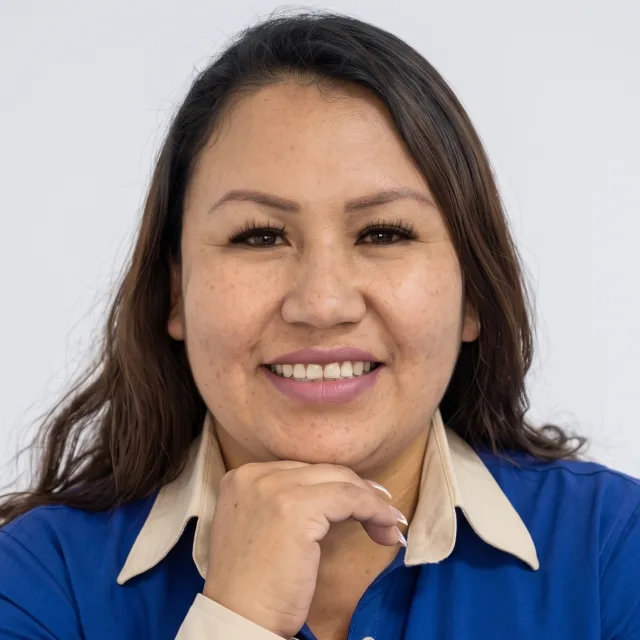
About the author
Raquel Sánchez co-founded Terra Quechua Peru in Cusco in 2012 together with Edwin Medina, both with extensive trekking experience. She writes our Inca Trail guides from the day-to-day work of securing permits and organizing every departure with our guides, cooks and porters.