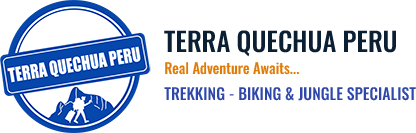
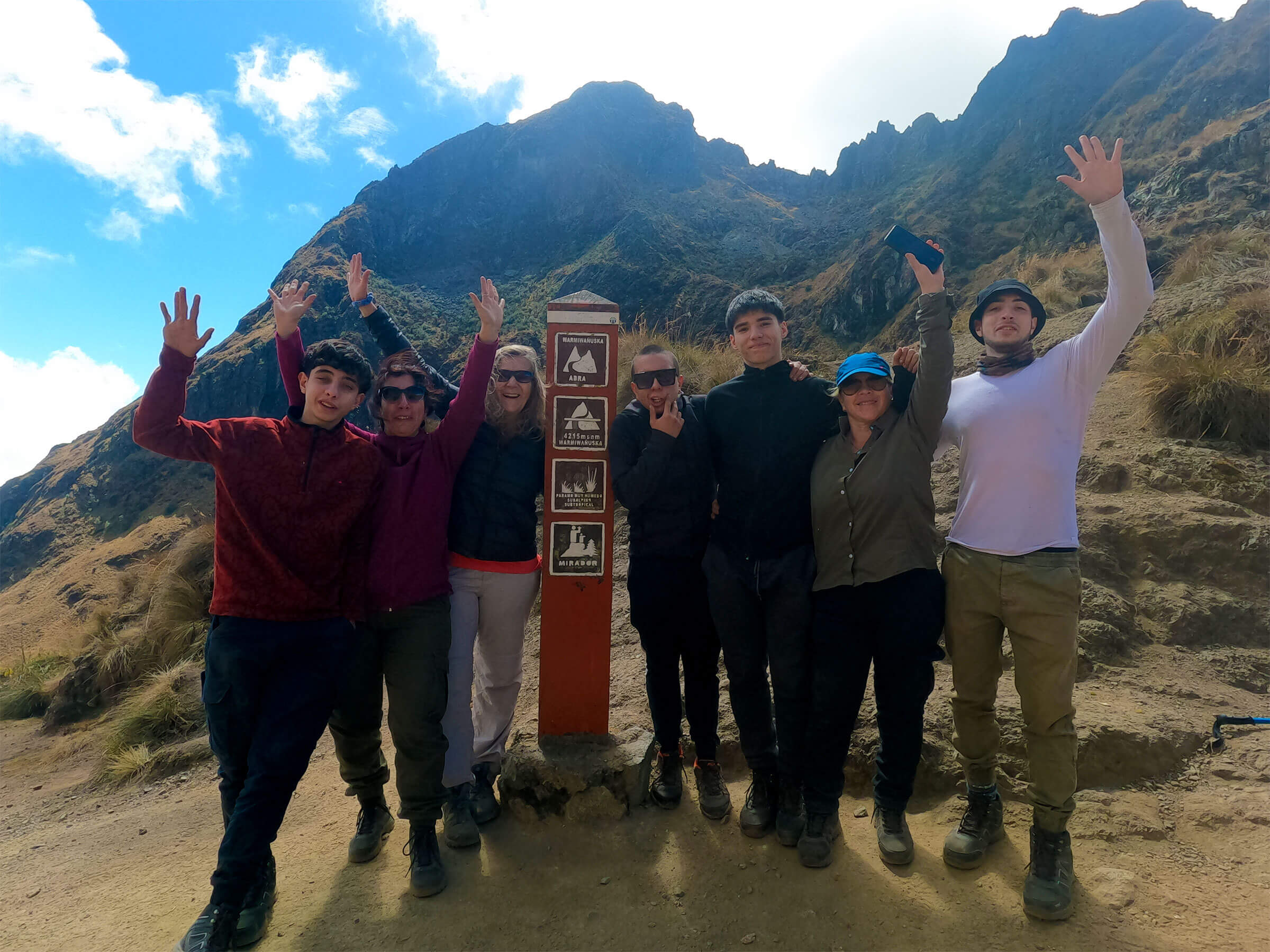
The Classic Inca Trail is moderate to challenging: about 42 km (26 miles) in four days, with one very hard morning over Dead Woman’s Pass at 4,215 m (13,828 ft) and a lot of uneven Inca stairs. You do not need to be an athlete. You do need to arrive acclimatized, be able to walk six to eight hours on consecutive days, and treat the descents with respect. This guide breaks the difficulty down day by day with real figures, so you can judge it for yourself.
The numbers, day by day
| Day | Section | Distance | Hiking | Up / down | Highest point | Effort |
|---|---|---|---|---|---|---|
| 1 | Km 82 → Wayllabamba | 12 km / 7.5 mi | 6–7 h | +400 m / −100 m | 3,000 m (9,840 ft) | Easy–moderate |
| 2 | Wayllabamba → Dead Woman’s Pass → Pacaymayo | 11 km / 6.8 mi | 7–8 h | +1,215 m / −615 m | 4,215 m (13,828 ft) | Hard |
| 3 | Pacaymayo → Runkurakay → Wiñay Wayna | 13.5 km / 8.4 mi | 7–8 h | +450 m / −1,400 m | 3,950 m (12,960 ft) | Long; hard on knees |
| 4 | Wiñay Wayna → Sun Gate → Machu Picchu | 5.5 km / 3.4 mi | 2–3 h | +100 m / −320 m | 2,720 m (8,920 ft) | Easy, very early start |
Approximate distances and times at a normal group pace. Campsites are assigned with each permit and can vary.
Dead Woman’s Pass: what the hard day really feels like
Day 2 is the one everyone talks about. From the Wayllabamba camp (about 3,000 m) the trail climbs for roughly 8 km through cloud forest and then open grassland to Warmiwañusca, “Dead Woman’s Pass”, at 4,215 m. That is more than 1,200 m (almost 4,000 ft) of climbing in a single morning, most of it on steps. The last stretch above Llulluchapampa is exposed and slow: at that altitude each breath carries noticeably less oxygen, and even fit hikers stop every few minutes.
Then, after the photo at the top, the trail drops about 600 m on steep stone stairs to the Pacaymayo camp. Most hikers reach the pass between late morning and early afternoon, and there is no prize for speed: our guides set a steady pace and the group regroups at the top.
The underrated challenge: stairs and descents
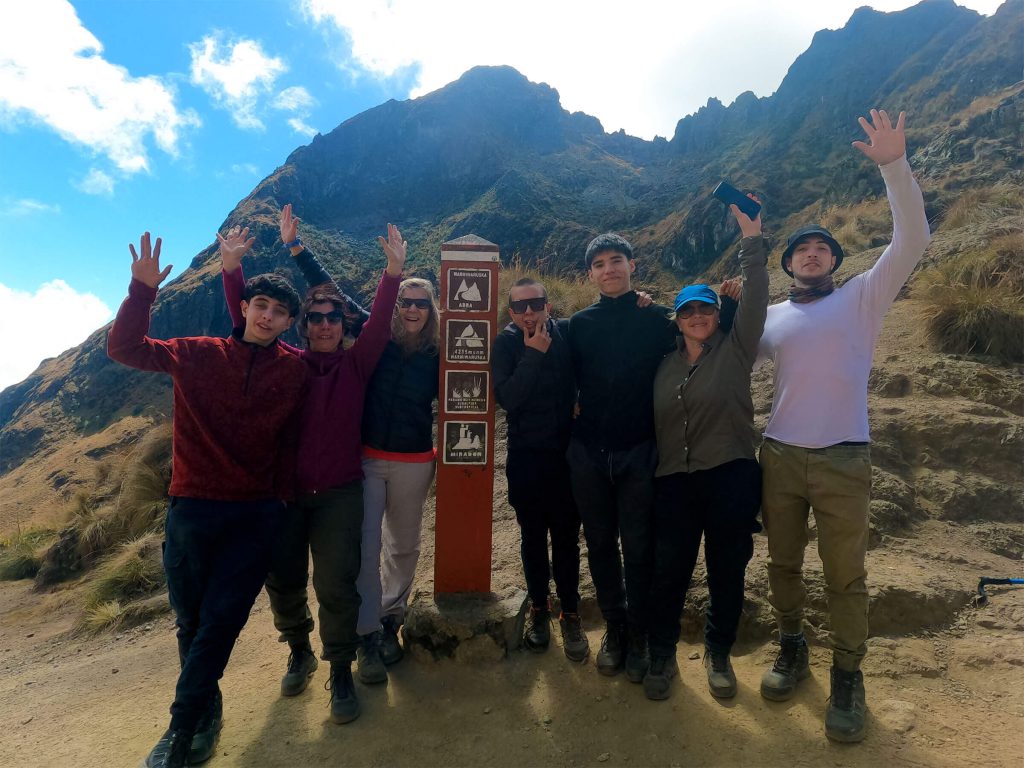
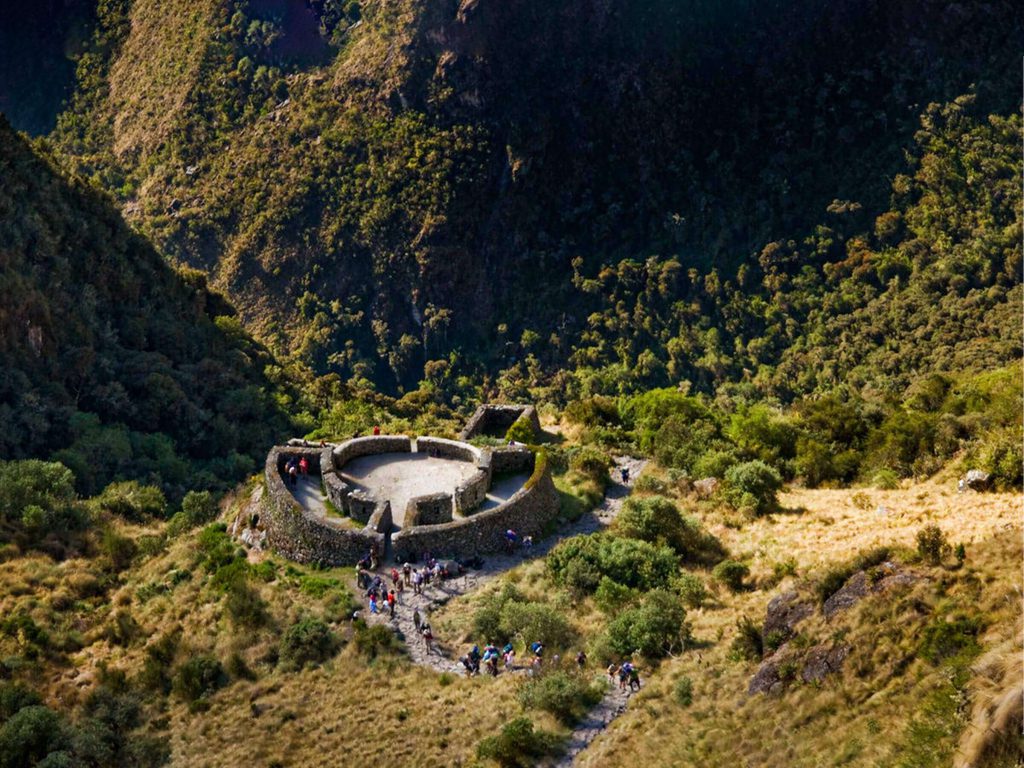
Many hikers are surprised that day 3 tires them more than day 2. It is the longest day, with a second pass at Runkurakay (about 3,950 m) and then around 1,400 m (4,600 ft) of descent on original Inca stairways past Sayacmarca and Phuyupatamarca down to Wiñay Wayna. The steps are uneven, some are knee-high, and they can be wet in the cloud forest. This is where trekking poles earn their place (on the Inca Trail they must have rubber tips), and where people with knee problems should go slowly.
Altitude: the part you can actually prepare for
Cusco sits at about 3,400 m (11,150 ft), higher than the first three campsites. Spending two or three days there, or in the lower Sacred Valley, before the trek is the single most effective thing you can do. Mild headaches, shortness of breath and poor sleep are normal the first nights; severe headache, vomiting, confusion or loss of coordination are not, and mean going down and seeing a doctor.
- Arrive early: plan the trek for your third day in the region or later.
- Keep the first days easy: a city tour or the Sacred Valley, not a rainbow mountain at 5,000 m.
- Drink water and go easy on alcohol during the first 48 hours.
- Ask your doctor about altitude medication before you travel, especially if you have heart or lung conditions.
- Tell your guide how you feel; our guides carry first aid and oxygen and know when to slow down.
How fit do you need to be?
A good benchmark: if you can hike 10–12 miles (16–19 km) with a few thousand feet of climbing in a day, and do it again the next day, you are ready. If not, eight to twelve weeks of preparation make a real difference:
- Walk uphill, oftenHills, stairs or a steep treadmill three times a week, building up to 2–3 hours.
- Train the descentWalk down stairs and slopes too; strong quads protect your knees on day 3.
- Do back-to-back daysTwo long hikes on consecutive days simulate the trail better than one very long outing.
- Use your real boots and daypackBreak in your boots and carry the weight you will carry on the trail.
What makes it easier
- You only carry a daypack. Our porters carry the tents, kitchen and food, and the cook prepares every meal; ask us if you need help with extra gear.
- A steady group pace. Two guides go with groups of more than eight, so faster and slower hikers are both looked after.
- Choosing the right route. The 2-day Inca Trail covers about 11.5 km (7 miles), never goes above 2,720 m (8,920 ft) and ends at the same Sun Gate — compare both in our 2-day vs 4-day guide. The 1-day version is the same walk with a same-day return.
Who should think twice
People with serious heart or lung conditions, recent knee surgery or severe fear of heights should talk to their doctor first; some sections run along steep drops, although the path is wide. Age alone is not the issue: we regularly take hikers in their sixties and seventies — see hiking the Inca Trail at 60, 70 or 80. And if you are comparing it with other famous treks, our Inca Trail vs Kilimanjaro guide puts both side by side.
Next steps
See the full itinerary with the altitude profile on our Classic Inca Trail 4 Days page, check dates on the permits and availability page, and read what the Inca Trail costs in 2027.
Frequently asked questions
How hard is the Inca Trail on a scale of 1 to 10?
What is the hardest part of the Inca Trail?
Can a beginner hike the Inca Trail?
How many days should I acclimatize before the Inca Trail?
Do I need to carry my own backpack?
Is the 2-day Inca Trail easy?
About the author
Raquel Sánchez co-founded Terra Quechua Peru in Cusco in 2012 together with Edwin Medina, both with extensive trekking experience. She writes our Inca Trail guides from the day-to-day work of securing permits and organizing every departure with our guides, cooks and porters.