
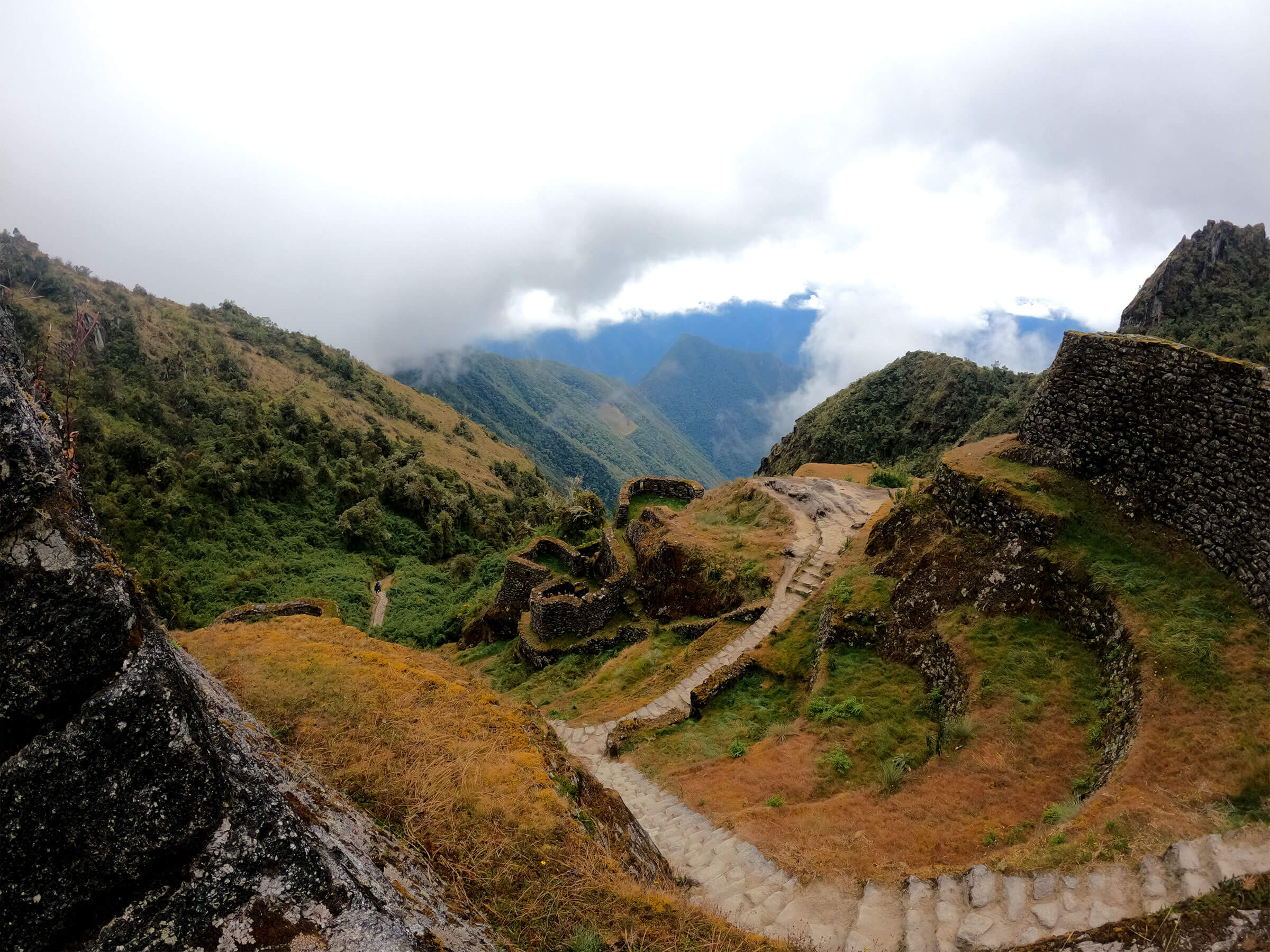
“Is it worth hiking the Inca Trail in the rainy season?” is one of the questions we hear most from travelers who can only come between November and April. The honest answer depends on the month, and most guides lump the whole season together. Below are the official rainfall figures month by month, what really happens in February, how rain changes the trek, and our advice on which rainy-season dates are worth booking for 2027.
How much it rains, month by month
These are the official climate normals (1991–2020) of Peru’s weather service, SENAMHI, for its Machu Picchu station, at 2,399 m, near the end of the trail. Higher sections, such as Dead Woman’s Pass at 4,215 m, are colder, but the pattern of wet and dry months is the same along the route.
| Month | Rain (mm) | High / low (°C) | What it means for the trek |
|---|---|---|---|
| October | 163 | 22.8 / 11.5 | Shoulder month: showers start, usually in the afternoon |
| November | 173 | 22.8 / 12.0 | Similar to October; a good rainy-season choice |
| December | 275 | 21.2 / 12.0 | Clearly wetter; Christmas and New Year weeks are busy |
| January | 341 | 20.6 / 11.8 | Wettest month the trail is open; expect rain most days |
| February | 325 | 20.6 / 11.9 | Trail closed for maintenance |
| March | 341 | 21.0 / 11.9 | As wet as January; the trail reopens on 1 March |
| April | 184 | 21.5 / 11.7 | Rain eases quickly; green landscapes and fewer hikers than May |
| May–September | 51–76 | 22–23 / 9–11 | Dry season, for comparison |
Source: SENAMHI, climate normals 1991–2020, Machu Picchu station (2,399 m). Annual total: about 2,116 mm.
Two things stand out. First, March is as wet as January (341 mm each), so “the trail reopens in March” does not mean the rain is over. Second, October and November get about half the rain of January, which makes them the best compromise if you cannot travel in the dry season.
February: why the Inca Trail closes
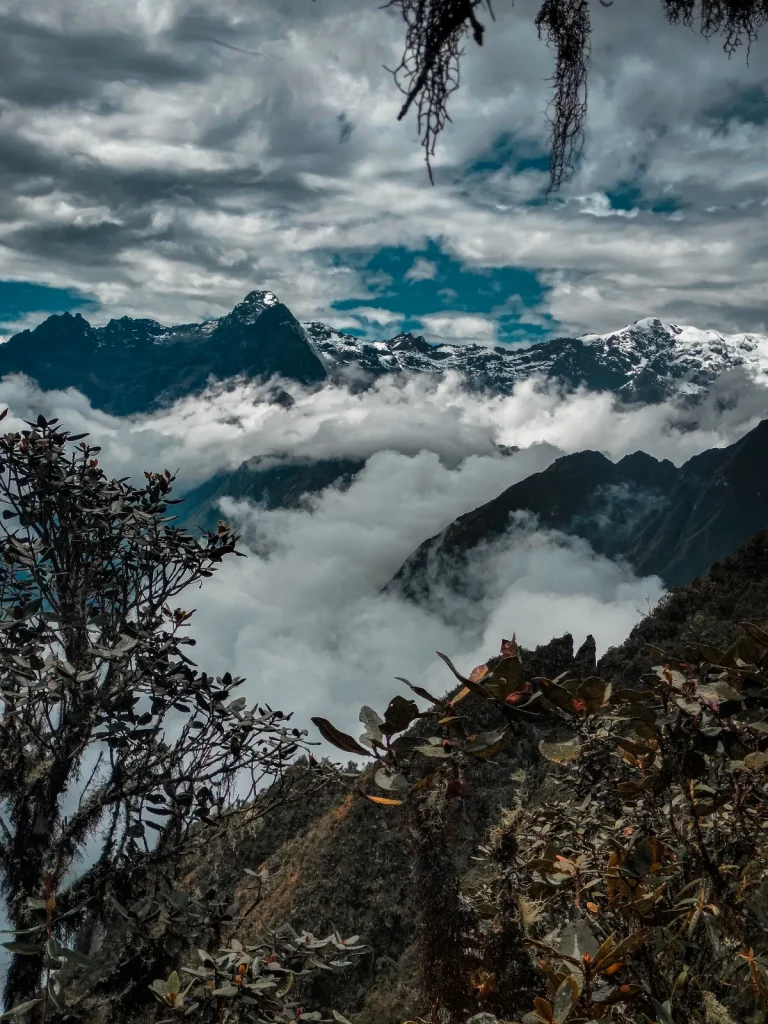
Every year the Inca Trail closes for the whole of February. In 2026, SERNANP, Peru’s protected-areas service, closed routes 1, 2, 3, 5 and 6 of the Inca Trail network throughout February, in line with the regulations for the sustainable use of the network, and reopened them on 1 March. That covers both the Classic route from Km 82 and the short route from Km 104. According to the official announcement, a team of about 60 specialists and workers used the month for:
- repairs to the trail surface, steps and retaining walls;
- clearing vegetation and maintaining drainage;
- repairs to bridges, handrails and toilets;
- landslide prevention and slope protection;
- biological monitoring of flora and fauna, and letting the ecosystem recover.
Licensed operators take part too: once a year our team travels to the trail to help with its maintenance, on dates assigned by lottery. We explain it on our page about how we care for the Inca Trail. Machu Picchu itself stays open in February, so you can still visit the citadel by train; only the trail is closed. February 2027 should follow the same pattern, but the official dates are confirmed each year.
How rain changes the trek
- Slippery stone steps. The original Inca stairways are the real challenge when wet, especially the long descents on days 2 and 3. Trekking poles with rubber tips help a lot (we rent a pair for US$20).
- Clouds instead of views. Passes and viewpoints are often in cloud; the payoff is the cloud forest at its greenest and mist moving over the ruins.
- Wet gear. Pack in dry bags or zip bags inside your duffel and your daypack. Our porters carry up to 5 kg of your gear, so keep spare dry clothes in the duffel for camp.
- Closures for safety. Outside February, heavy rain or landslides can also close the trail for a few days. If that happens to your departure, you hike an alternative route instead, such as the Lares trek.
Our Inca Trail packing list has the rain gear we recommend, and the day-by-day guide shows where the long descents are.
The upside: availability
Rainy-season dates are much easier to get. For January, March, November and December, booking 2–3 months ahead is usually enough, while May to September sells out as soon as permits go on sale. The exceptions are the holiday weeks: in 2027, Holy Week runs from 21 to 28 March, US Thanksgiving falls on 25 November, and Christmas and New Year weeks fill up early. Our month-by-month book-by calendar has the details, and for the end-of-year weeks see the Inca Trail at Christmas and New Year.
If you can only travel in February
- Machu Picchu by train. The citadel is open, and you can visit it on a day trip from Cusco or stay overnight in Aguas Calientes.
- Treks that need no Inca Trail permit, such as the Lares trek, the Salkantay trek or the Inca Jungle, end at Machu Picchu by train. Expect rain on these routes too. Compare them in our alternatives for 2027.
- Move your trip to late March or April if the Inca Trail itself is the goal: April has about half of March’s rain.
Booking a rainy-season departure for 2027
The calendar below opens in January 2027. Our 2027 prices apply as usual: on the Classic 4-day trek, booking by 31 December 2026 keeps US$795 per person; on the 2-day trek, 2027 departures cost US$560. See how to book the Inca Trail in 2027 for the whole process.
Frequently asked questions
When is the rainy season on the Inca Trail?
Is the Inca Trail closed in February?
Is it worth hiking the Inca Trail in the rainy season?
Is March a good month for the Inca Trail?
What happens if the trail closes because of rain?

About the author
Raquel Sánchez co-founded Terra Quechua Peru in Cusco in 2012 together with Edwin Medina, both with extensive trekking experience. She writes our Inca Trail guides from the day-to-day work of securing permits and organizing every departure with our guides, cooks and porters.