
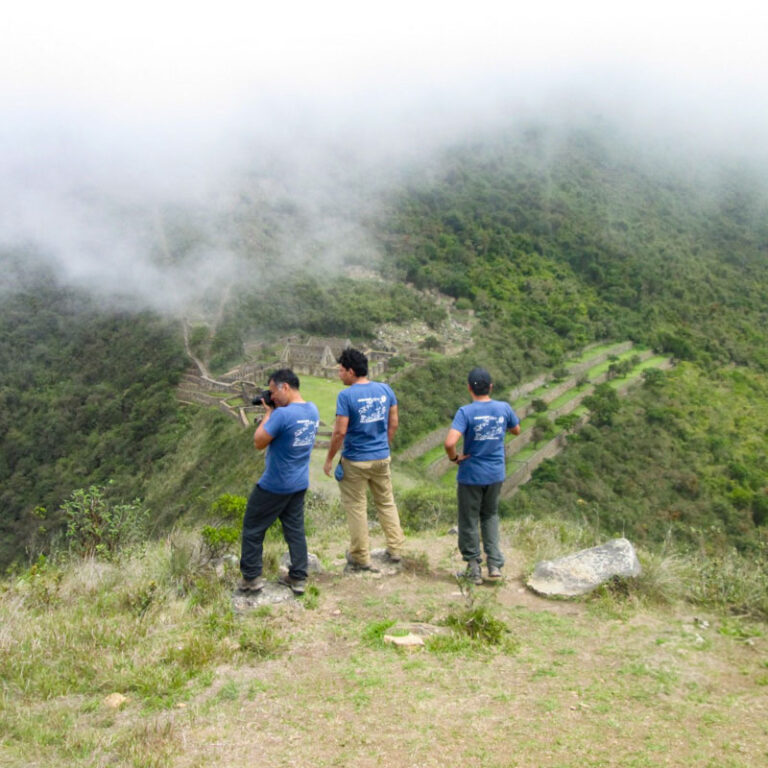
 4.7 4 Days / 3 Nights

Choquequirao
Choquequirao Trek: Tours, Route and Difficulty from Cusco
Choquequirao comes from the Quechua whose meaning is “cradle of gold”. This site is believed to be the last place inhabited by the Inca civilization. Choquequirao is known as the sister of Machu Picchu, due to the similarity in their constructions. To get to this magical place you must hike for two days, ideal for lovers of mystery and hiking.
Choquequirao is an Inca site at about 3,050 m (10,000 ft) above the Apurímac canyon, and the only way in is on foot from Cachora. Compare our four departures: 4 or 5-day round trips, or 6 and 8-day trips that continue to Machu Picchu.
4.7 4 Days / 3 Nights 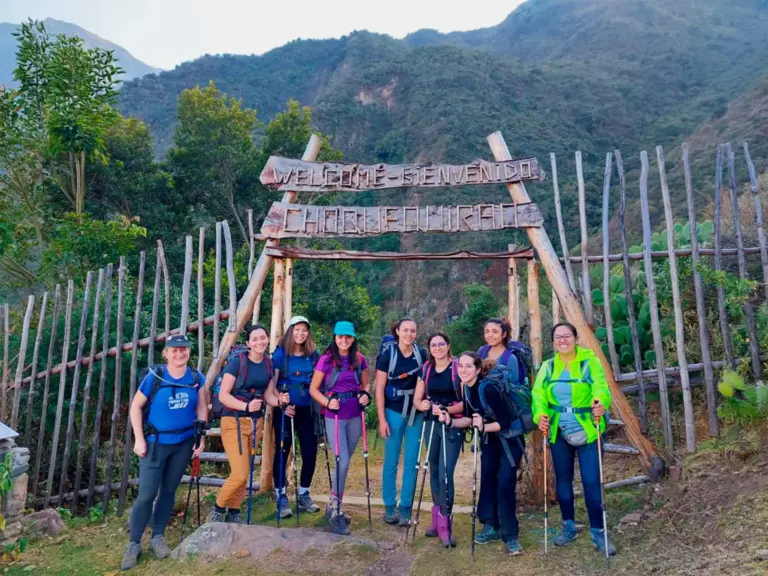 4.7 5 Days
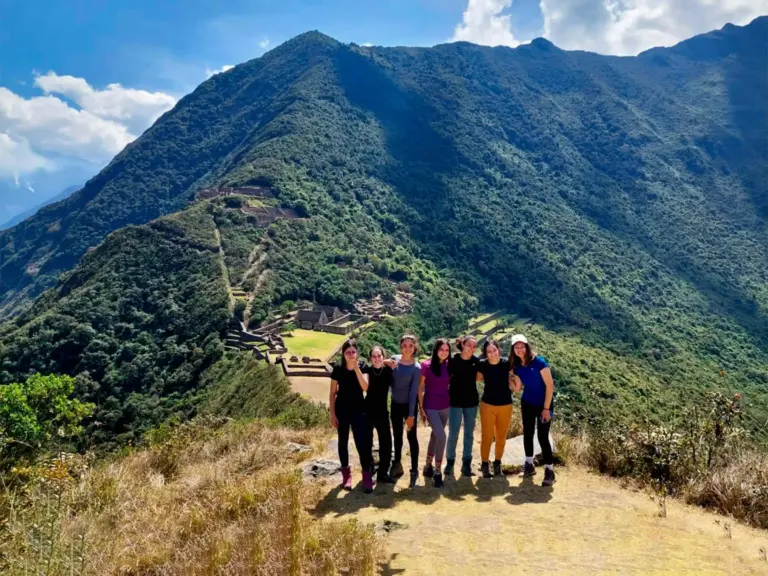 4.7 6 Days / 5 nights
 4.7 8 Days
Choquequirao is an Inca site at about 3,050 m (10,000 ft) above sea level, on a ridge high over the Apurímac River canyon, west of Cusco. There is no road or train to it: you walk in from Cachora and the Capuliyoc trailhead, dropping about 1,500 m to the river and climbing back up, which takes two days each way. Our Choquequirao tours last 4 to 8 days from Cusco and start at US$430; the longer ones continue to Machu Picchu.
Published altitudes for the site range from about 2,900 to 3,100 m, because each source measures a different sector of a site spread over a steep ridge, and there is no official figure for the citadel itself. We use ≈3,050 m as the middle value.
- ≈3,050 m(about 10,000 ft): the Inca site, lower than Cusco at about 3,400 m.
- ≈1,500 m(about 4,900 ft) down to the Apurímac and roughly the same back up, in each direction.
- From US$430for 4 days from Cusco, with the Choquequirao entrance ticket included.
Access status, October 2026: Choquequirao is open and we are running departures. Earlier this year Peru’s Ministry of Culture (DDC Cusco) suspended entry by every route from 1 February 2026, and the ministry announced that the Capuliyoc–Cachora route would reopen on 15 April 2026 (Andina, 28 March 2026); the Río Blanco and Santa Teresa routes were not enabled. Access was also suspended in March 2025 after rockfall on the bridge. Ask us about the status for your travel dates before you book.
Our Choquequirao tours compared
All four trips start with private transport from Cusco, walk the same canyon trail and include a guided visit of the site. What changes is the time you get at the ruins and whether you return to Cusco or continue to Machu Picchu.
| Tour | Days | Route | Accommodation | Highest point | Price from |
|---|---|---|---|---|---|
| Choquequirao Trek 4 Days / 3 Nights | 4 | Round trip from Cachora; guided visit on the morning of day 3 | 3 nights camping on the trail | ≈3,100 m / 10,170 ft (Choquequirao) | US$430 |
| Choquequirao Trek 5 Days / 4 Nights | 5 | Round trip from Cachora, with a full day at the site | 4 nights camping on the trail | ≈3,100 m / 10,170 ft (Choquequirao) | US$560 |
| Choquequirao + Machu Picchu 6 Days / 5 Nights | 6 | Round trip on foot from Capuliyoc, then road and train to Aguas Calientes and Machu Picchu on day 6 | 4 nights camping, 1 hotel night in Aguas Calientes | 3,100 m / 10,168 ft (Choquequirao) | US$910 |
| Choquequirao to Machu Picchu Trek 8 Days / 7 Nights | 8 | One way on foot from Cachora via Choquequirao, Yanama and Totora, ending at Machu Picchu | Camping, plus 1 hotel night in Aguas Calientes | Over 4,000 m / 13,120 ft (San Juan and Yanama passes) | US$1,210 |
Choquequirao needs no Inca Trail permit, so it is one of the alternatives when the Inca Trail is sold out. See also our alternative treks.
The route: from Cachora to Choquequirao
The drive from Cusco to Cachora is about 165 km on the road to Abancay, with a turnoff near km 154; our itineraries plan 4 to 5 hours. Cachora is the village where the muleteers and horses join the group. Capuliyoc is the pass and viewpoint above the canyon where the trail starts to drop, about two hours’ walk from Cachora. Some itineraries walk from Cachora and others drive to Capuliyoc.
The official access route listed by DDC Cusco in April 2025 is Capuliyoc – Playa Rosalina – Marampata – Choquequirao. The path zigzags down past Chiquisca to Playa Rosalina, where a bridge crosses the Apurímac; groups cross it in turns of up to 6 people and no more than 2 pack animals. Then comes a steep climb to Santa Rosa, where you can try cambray, a local sugar cane drink, and a gentler one to Marampata, a small settlement on the ridge. From there the ruins are about two hours away.
| Stop | Approx. altitude | Feet | What it is |
|---|---|---|---|
| Cachora | ≈2,900 m | ≈9,500 ft | Village where the trek starts |
| Capuliyoc | ≈2,900 m (sources give 2,750–3,200) | ≈9,500 ft | Pass, viewpoint and trailhead |
| Chiquisca | 1,800–1,950 m | 5,900–6,400 ft | Campsite halfway down |
| Playa Rosalina | 1,450–1,550 m | 4,760–5,090 ft | Bridge over the Apurímac; river level is the lower figure |
| Santa Rosa | 1,900–2,115 m | 6,230–6,940 ft | Farms and campsite after the steepest climb |
| Marampata | 2,850–3,000 m | 9,350–9,840 ft | Settlement on the ridge, lunch stop |
| Choquequirao | ≈3,050 m (2,900–3,100 by sector) | ≈10,000 ft | The Inca site |
Approximate ranges. There is no official altitude profile: these figures combine travel guides (PeruForLess, Stingy Nomads) with our itineraries, and they vary with whether a figure refers to the path, the campsite or the river.
Why the distance varies from 50 to 64 km: published round-trip figures include 50–60 km (Explorandes), 58 km (PeruForLess), 60 km (Stingy Nomads) and 39 miles, about 63 km (National Geographic), or 28–32 km each way. They differ mainly on where the walk starts (Cachora or Capuliyoc), whether the walk around the site is counted and how the switchbacks are measured. None explains its method, so treat any single number as an estimate.
How hard is the Choquequirao trek?
It is demanding, and the reason is the canyon, not the altitude. You drop about 1,500 m to the Apurímac and climb about the same to the site, then do it again on the way out. A simple sum gives roughly 3,000 m of climbing and 3,000 m of descent on a round trip, although no source publishes a measured total. Our itineraries plan 6 to 9 hours of walking on the main days.
- Heat: the canyon floor is hot, especially after midday, so our groups leave camp at 5:00–6:00 a.m.
- Steep climbs: the zigzag from Playa Rosalina to Santa Rosa and the final climb to Capuliyoc, 4 to 5 hours on the last day of our 5-day trek.
- Descents: long downhill sections are hard on the knees; trekking poles help.
- Altitude: the classic route stays between about 1,450 and 3,100 m, below Cusco, while the Inca Trail tops 4,215 m and Salkantay about 4,650 m. The 8-day trek crosses passes above 4,000 m. See our guide to altitude sickness.
It suits fit hikers used to long climbs and descents who can walk 6–9 hours a day in heat. It does not suit travelers with knee problems, first-time hikers or anyone who needs a hotel every night; for an easier walk to Machu Picchu, look at our Inca Trail treks. A saddle horse can be hired for the climbs. To prepare, our 12-week training plan works for Choquequirao too, and how hard the Inca Trail is gives a useful comparison.
Choquequirao or Machu Picchu?
Many travelers do both, and our 6 and 8-day trips combine them. If you have to choose, these are the facts that matter.
| Choquequirao | Machu Picchu | |
|---|---|---|
| Getting there | On foot only, about 2 days each way | Train and bus, or on foot by the Inca Trail |
| Minimum time from Cusco | 4 days round trip | A day trip by train is possible |
| Visitors | About 8,000 a year (Mincetur, quoted by Gestión, May 2025) | Timed tickets and fixed circuits |
| Altitude | ≈3,050 m / 10,000 ft | 2,430 m / 7,972 ft (elevation guide) |
| Recognition | Not a UNESCO World Heritage Site; recognized by the Andean Parliament in 2024 | UNESCO World Heritage Site |
The claim that Choquequirao is three times bigger than Machu Picchu has no solid basis: the area of the citadel varies between sources, and the large official figure, 522,878 hectares, is for the whole archaeological park. In 2024 the Andean Parliament recognized Choquequirao as a reference of the cultural heritage and biodiversity of the Andean region. For trains and tickets, see our Machu Picchu tours and Machu Picchu tickets guide; to see both sites on one trip, the Choquequirao + Machu Picchu 6-day tour is the shortest option.
Best time to go
Most guides recommend the dry season, roughly April or May to October or November. In the rainy season paths are slippery and closures are more likely: entry was suspended from 1 February 2026, and in March 2025 rockfall on the bridge stopped visits for weeks. In any month the canyon floor is hot at midday, so expect early starts. If you plan to go in the rainy season, ask us about the current status before booking flights.
What our Choquequirao tours include
On all four trips: private transport from Cusco, a professional guide, a cook and meals on the trek, and pack animals that carry the food, the kitchen and part of your gear. The Choquequirao entrance is included in the 4, 5 and 6-day trips, and both trips to Machu Picchu include the Machu Picchu entrance and one hotel night in Aguas Calientes.
| Tour | Also included | Not included |
|---|---|---|
| 4 days | Bilingual guide, English and Spanish (2 for more than 10 people), chef, 3 breakfasts, 4 lunches and 3 dinners, up to 7 kg of your gear, 1 emergency horse per 6 hikers, filtered boiled water | Breakfast on day 1, dinner on the last day, walking sticks (US$15 a pair), saddle horse (US$75, uphill only), drinks and snacks |
| 5 days | Bilingual guide (English and Spanish), chef and meals, up to 6 kg of your gear, first-aid kit with emergency oxygen | First breakfast, last dinner, horse to ride (US$80), trekking poles (US$15), drinks, tips |
| 6 days | Transport from Capuliyoc to Ollantaytambo, Expedition class train, Machu Picchu bus, 4-season tents and mattresses, trek leader, Quechua chef, 5 breakfasts, 5 lunches and 4 dinners, up to 8 kg of your gear, oxygen | Trekking poles (US$5 a day), hot springs, extra drinks, tips, travel insurance (required) |
| 8 days | Spanish and English-speaking guide, cook and all meals on the trek, tents with kitchen and dining tents, up to 8 kg of your gear on mules, boiled water, train back to Ollantaytambo | Machu Picchu bus, the last lunch, Huayna Picchu entrance |
Each tour page has the day-by-day itinerary. For gear, our trekking packing list covers the basics; read more about our team in Cusco.
Frequently asked questions
How hard is the Choquequirao trek?
It is demanding because of the canyon: about 1,500 m down to the Apurímac and the same back up to the site, then again on the way out, often in heat. The altitude is moderate, between about 1,450 and 3,100 m on the classic route.
Is Choquequirao open now?
Yes. In October 2026 the site is open and we are running departures. Entry was suspended from 1 February 2026 and the reopening was announced for 15 April 2026, so ask us about the status for your dates.
Do I need a permit for Choquequirao?
No Inca Trail permit is needed. The site has its own entrance ticket, included in our 4, 5 and 6-day tours.
How much does a Choquequirao tour cost?
With us, from US$430 for 4 days, US$560 for 5 days, US$910 for the 6-day tour with Machu Picchu and US$1,210 for the 8-day trek to Machu Picchu.
Is the 5-day trek easier than the 4-day?
The trail is the same but the pace is easier: you get a full day at the site and the walk out is split over two days. On the 4-day trek, day 3 combines the visit and the descent to the river.
Is altitude sickness a problem?
Less than on most Cusco treks, because the classic route stays below about 3,100 m, lower than Cusco. The heat is usually the bigger challenge. The 8-day trek is the exception, with passes above 4,000 m.
Can I hire a horse or mule?
Yes. A saddle horse costs US$75 for the uphill sections on the 4-day trek and US$80 on the 5-day trek. The 4-day trek also includes one emergency horse for every six hikers.
Is Choquequirao bigger than Machu Picchu?
The claim that it is three times bigger has no solid basis. The area of the citadel varies between sources, and the large official figure refers to the whole archaeological park.
Will there be a cable car to Choquequirao?
The tender was called in March 2025 and ProInversión expected to award it by the end of 2026 (Gestión, April 2026). As of October 2026 it has not been awarded or built, so the only way in is on foot.
When is the best time to hike to Choquequirao?
The dry season, roughly April or May to October or November. In the rainy season paths are slippery and closures are more likely.