
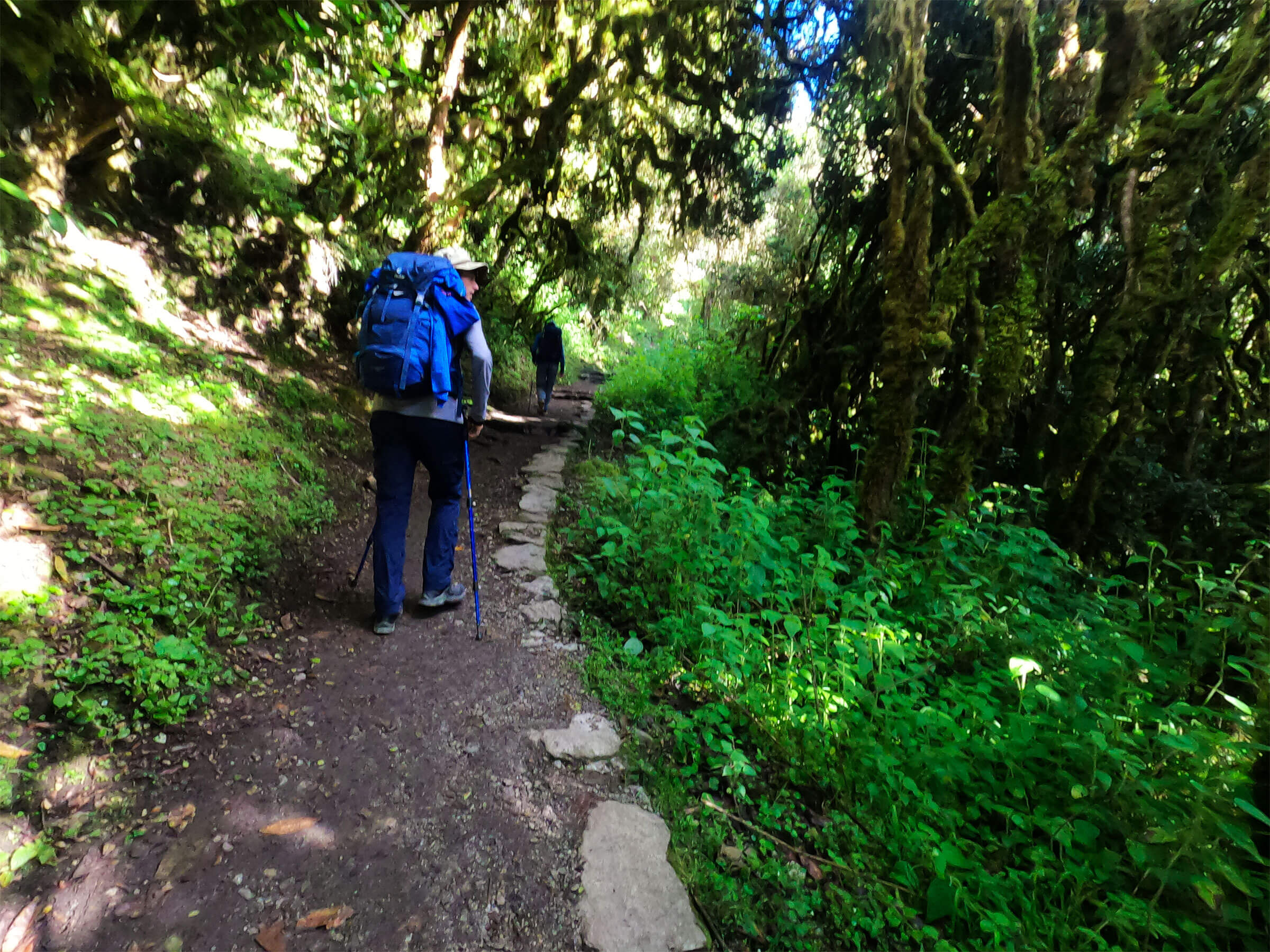
Most Inca Trail packing lists are long lists of gear. What actually decides a good packing job is three other things: what your operator already provides, the rules that ban some items on the trail and at Machu Picchu, and the fact that on the Classic route you walk from about 2,700 m to 4,215 m and back down into warm cloud forest in four days. This list is organized around those three things, with a separate list for the 2-day and 1-day routes and a printable checklist at the end.
- 3 bagsone stays in Cusco, one goes with the porters (4-day only), one is your daypack.
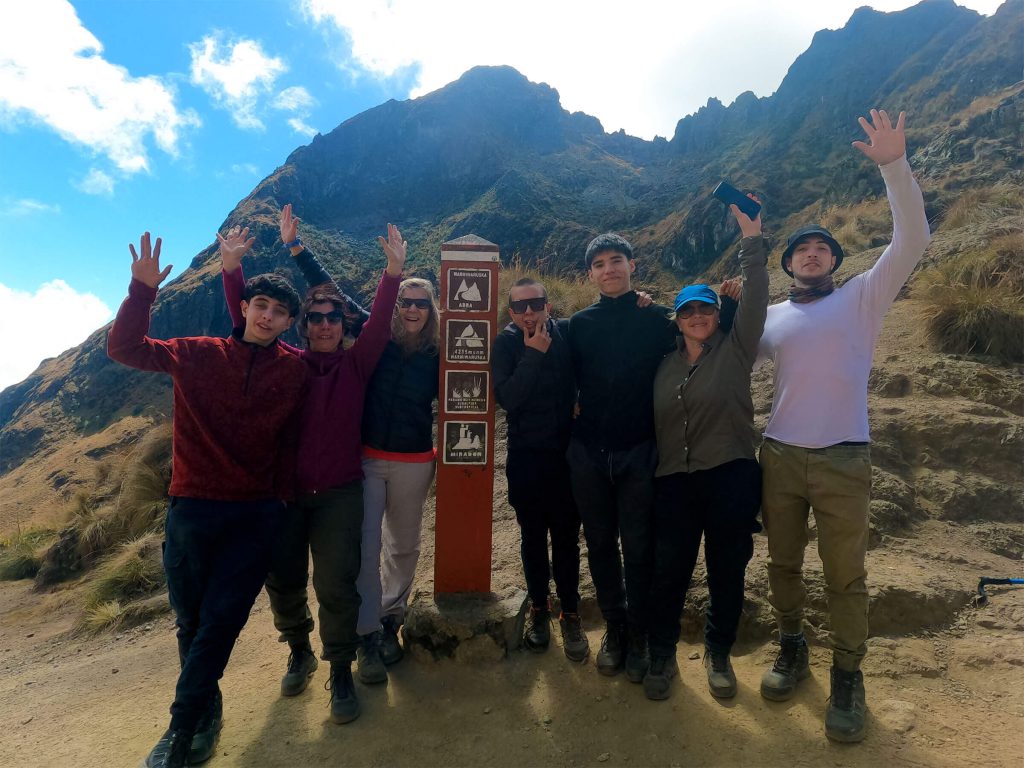
- 4,215 m13,828 ft at Dead Woman’s Pass: pack for freezing wind and hot sun on the same day.
- 40 × 35 × 20 cmthe largest bag allowed inside Machu Picchu (16 × 14 × 8 in).
What we already provide (so you don’t pack it)
On our Classic Inca Trail, 4 days, the camping gear is ours: you don’t need to bring a tent, mattress, stove or water filter.
- Tents: 4-person tents shared by 2 people, so your bags fit inside with you.
- An inflatable mattress for each hiker.
- Dining and kitchen tents, with tables and chairs.
- Drinking water: filtered, boiled water from lunch on day 1, to refill your bottles morning, noon and night.
- Hot water every morning and evening for washing, plus biodegradable hand soap.
- A daily snack and a reusable cloth snack bag.
- A first aid kit with emergency oxygen, carried by the team.
What you bring is your personal gear and a sleeping bag. If you don’t want to travel with a sleeping bag or trekking poles, you can rent both from us; the prices are on the tour page.
Your three bags
- The suitcase that stays in Cusco. Almost every hotel in Cusco keeps luggage for free while you trek, especially if you come back to the same hotel. Put passports you don’t need, laptops and valuables in the hotel safe. If your hotel can’t keep it, we can store it at our office.
- The duffel for the porters (4-day trek only). It carries your sleeping bag, camp clothes and anything you won’t need during the day. The porters leave camp after you and walk faster, so you won’t see this bag again until the next campsite.
- Your daypack. Everything you might need between breakfast and camp: water, rain gear, a warm layer, sun protection, snacks, toilet paper, your passport and a little cash. On the 2-day and 1-day routes this is the only bag you carry.
Packing by route: 4-day, 2-day and 1-day
| Item | Classic, 4 days (camping) | Short, 2 days (hotel) | 1 day |
|---|---|---|---|
| Sleeping bag | Yes, your own or rented | No, you sleep in a hotel in Aguas Calientes | No |
| Duffel for porters | Yes | No, you carry your own daypack | No |
| Daypack | 20–30 L | 25–30 L, with your overnight things | 15–25 L |
| Warm layers | Insulated jacket, fleece, hat, gloves | Fleece and a light jacket | Fleece |
| Rain gear | Jacket and pants, or a poncho | Jacket or poncho | Jacket or poncho |
| Headlamp | Essential (3:30 a.m. start on day 4) | Useful | Not needed |
| Clean clothes for Aguas Calientes | In the duffel | In the daypack | Optional |
| Water capacity | 2 L, refilled at camp | 2 L | 2 L |
| Original passport and cash in soles | Yes | Yes | Yes |
On the 2-day and 1-day routes there are no porters for your personal gear, so every gram is on your back: pack as light as you can.
The complete 4-day checklist
Documents and money
- Original passport, the same one used for your permit. It is checked at the Km 82 control and at Machu Picchu.
- Original student card, if you booked with a student discount.
- Cash in soles, including coins: some toilets on day 1 and at the Machu Picchu entrance charge S/1–2. Also bring money for tips, lunch in Aguas Calientes on the last day and the hot springs.
Clothing (layers, not cotton)
- 3–4 quick-dry hiking shirts, at least one with long sleeves for sun.
- 1–2 pairs of hiking pants; convertible or light pants work well for the warm valley and the cloud forest.
- A fleece or wool mid-layer.
- An insulated jacket (down or synthetic) for the camps and the top of the pass.
- A rain jacket, and rain pants from November to March.
- Thermal base layer to sleep in.
- Warm hat, light gloves, sun hat or cap, and a neck gaiter.
- 4 pairs of hiking socks and underwear for each day.
Footwear
- Broken-in hiking boots or trail shoes with good grip; waterproof is best. The stone steps are slippery when wet, and on day 3 you descend about 1,400 m.
- Sandals or light shoes for camp.
Sleeping
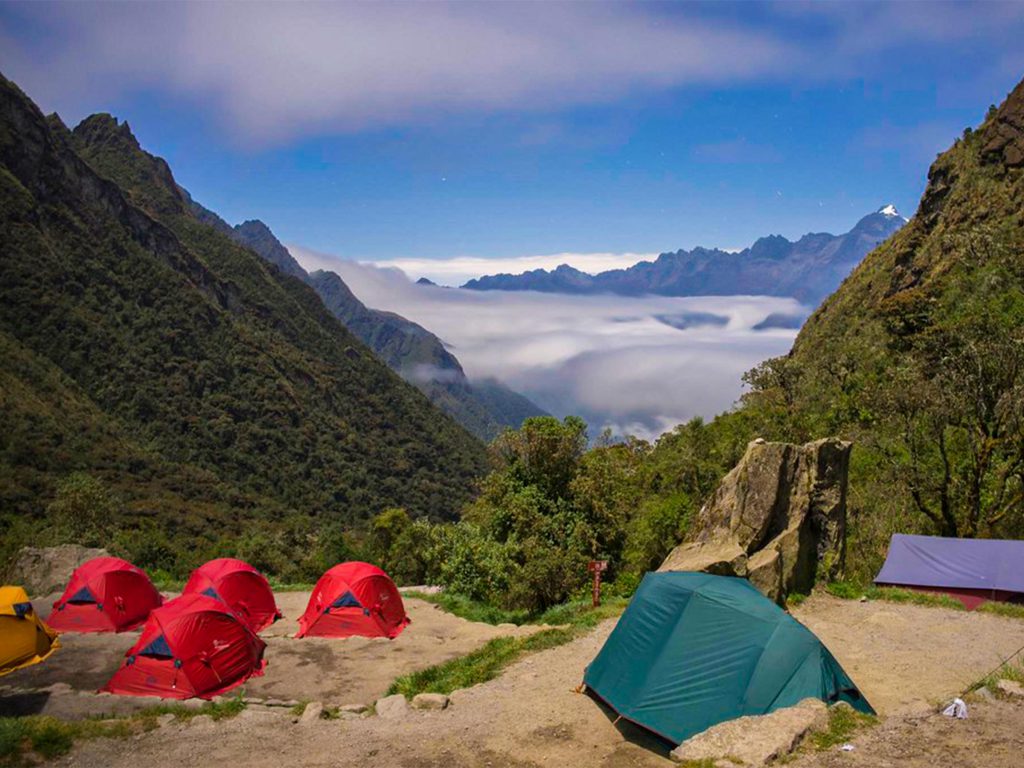
- A sleeping bag with a comfort rating of about −10 °C (14 °F) in the dry season, May to September, and about −5 °C (23 °F) the rest of the year. Nights at Pacaymayo, at 3,600 m (11,810 ft), drop to around freezing, and below it in June and July.
- Optional: a liner for extra warmth, and earplugs.
Water and food
- Reusable bottles or a hydration bladder, about 2 L in total. Single-use plastic bottles are not allowed on the Inca Trail.
- Water for the first morning, until lunch on day 1.
- Your favorite snacks, if you have one you rely on; we provide a daily snack.
Health and toiletries
- Personal medicines, blister plasters, and any altitude medication your doctor recommends.
- Sunscreen (SPF 50), lip balm with SPF and sunglasses. The sun is strong at altitude even when the air is cold.
- Insect repellent (at least 20% DEET) for the lower, humid sections. No malaria risk has been reported on the trail.
- Toilet paper, hand sanitizer, wet wipes and a small quick-dry towel. There are no showers on most of the trail, and you pack out what you use.
Electronics and extras
- Headlamp with spare batteries.
- Power bank: there is no electricity on the trail, and batteries drain faster in the cold.
- Dry bags or zip bags to keep clothes, passport and electronics dry.
- Trekking poles with rubber tips.
- Swimsuit, if you want to visit the hot springs in Aguas Calientes.
Pack for each day, not for “the Inca Trail”
Your duffel travels with the porters, so what matters is what is in your daypack each morning. This is how the four days change, and what we tell our hikers to keep on their back. The day-by-day guide has the full route.
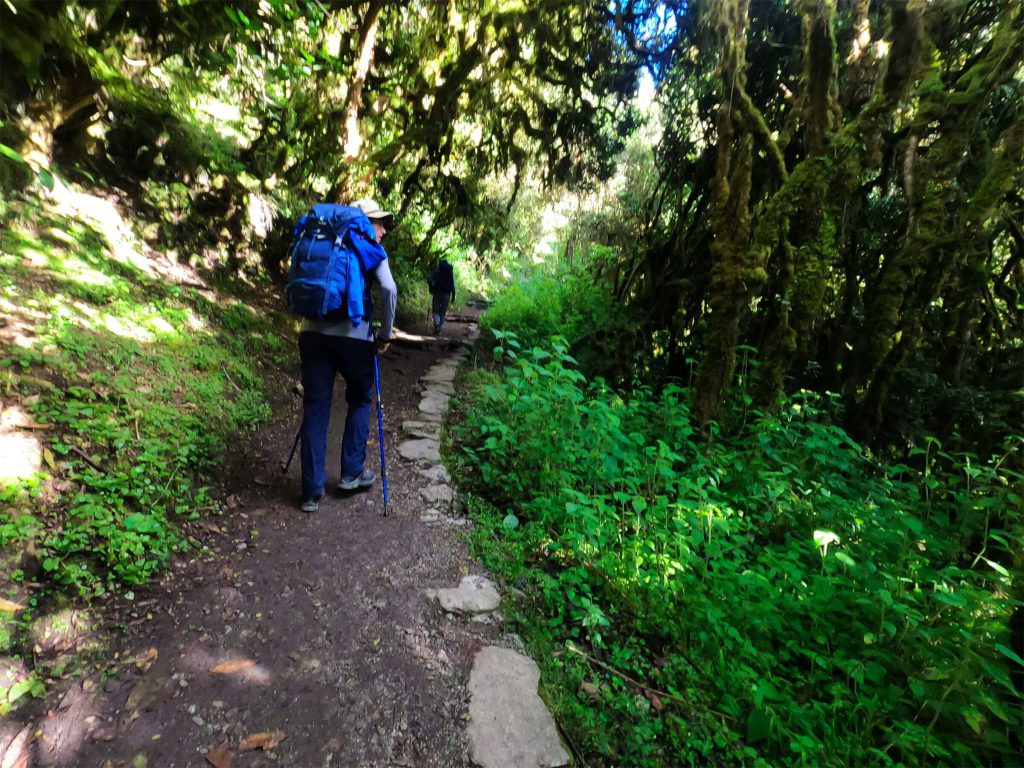
- Day 1, Km 82 to Wayllabamba (≈3,000 m): warm, sunny valley. Sun hat, sunscreen, 2 L of water and coins for the village toilets.
- Day 2, over Dead Woman’s Pass (4,215 m): you start in the cloud forest and finish in cold, windy grassland. Keep the fleece, insulated jacket, hat and gloves in the daypack, not the duffel. The night at Pacaymayo is the coldest of the trek.
- Day 3, the longest day: two more passes, then a long descent into humid cloud forest. Trekking poles save your knees; repellent goes on in the afternoon.
- Day 4, Sun Gate and Machu Picchu: a 3:30 a.m. start in the dark, then heat and humidity. Headlamp in hand, and a daypack small enough for the Machu Picchu rules.
Adjust for the season
- Dry season (May–September): the coldest nights, especially in June and July. The warm sleeping bag, the insulated jacket and gloves matter most, and so does sun protection.
- Rainy season (November–March): rain pants, a poncho that covers your pack, dry bags for everything and an extra pair of socks. Choose quick-dry fabrics over everything else. The trail is closed in February.
- April and October: pack for both: cold nights and possible showers.
See what each month is like in our guide to the best time to hike the Inca Trail.
Rules that change what you pack
| Item | On the Inca Trail | Inside Machu Picchu |
|---|---|---|
| Trekking poles | Allowed only with rubber tips | Only for older visitors or people with disabilities, with rubber tips |
| Single-use plastic (bottles, bags) | Not allowed; use reusable bottles | Not allowed |
| Backpack size | Your daypack and the porter’s duffel | Up to 40 × 35 × 20 cm; larger bags go to the luggage storage outside the gate |
| Food | Yes | Not allowed inside the citadel |
| Umbrellas, tripods, selfie sticks | — | Not allowed; bring a poncho for rain |
| Passport | Checked at the Km 82 control | Checked at the entrance |
Rules from the Ministry of Culture and SERNANP, the authorities that manage the Machu Picchu Historic Sanctuary. Drones are not allowed at Machu Picchu either.
Mistakes we see every season
- New boots. Walk at least 30–40 km in them before the trip.
- All the warm clothes in the duffel. The porters are ahead of you, and the pass is cold.
- Cotton everything. It stays wet with sweat and rain and chills you at the top.
- Metal-tipped poles. Buy rubber tips in Cusco if yours don’t have them.
- A large daypack on day 4. If it is bigger than 40 × 35 × 20 cm, it has to go into storage before your Machu Picchu visit.
- A single-use water bottle, or no water for the first morning.
- A copy instead of the original passport. Your permit is tied to the passport number.
Still deciding between routes? Compare the 2-day Inca Trail and the Classic route in 2-day vs 4-day, read how hard the Inca Trail really is and where the bathrooms are, and check live dates on our permits and availability page.
Frequently asked questions
How much can the porters carry for me on the Inca Trail?
Do I need my own sleeping bag?
Are trekking poles allowed on the Inca Trail?
What size daypack should I bring?
Is drinking water provided?
What shoes are best for the Inca Trail?
About the author
Raquel Sánchez co-founded Terra Quechua Peru in Cusco in 2012 together with Edwin Medina, both with extensive trekking experience. She writes our Inca Trail guides from the day-to-day work of securing permits and organizing every departure with our guides, cooks and porters.