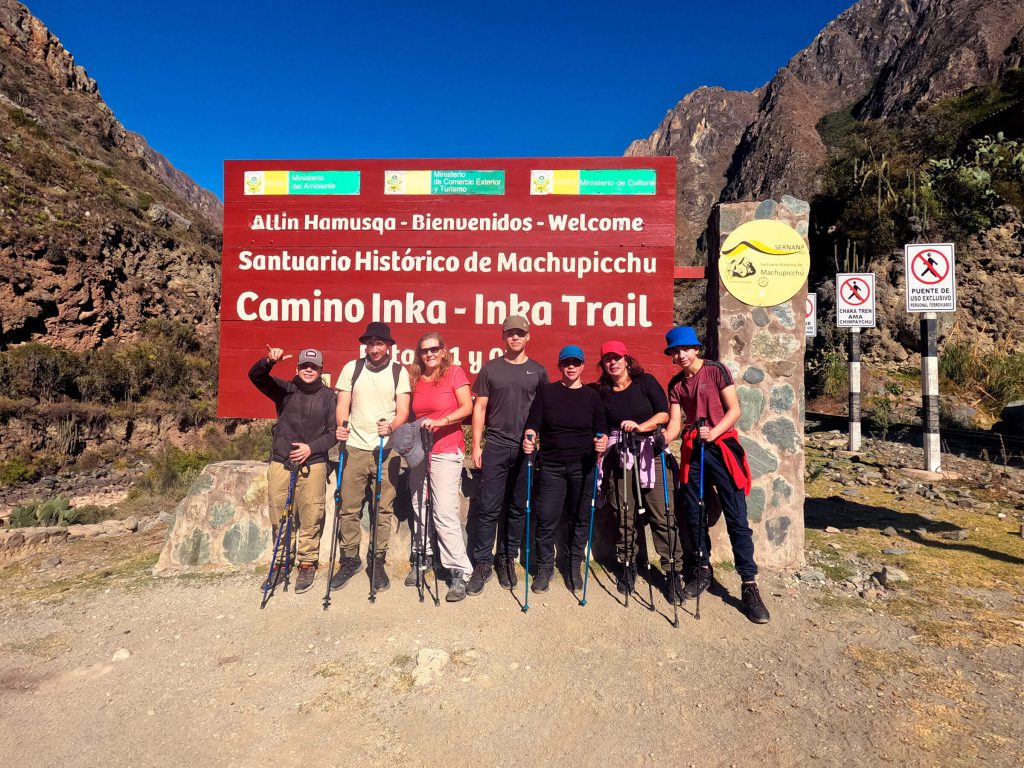
The Classic Inca Trail covers about 42 km (26 miles) in four days, from Km 82 in the Sacred Valley to the Sun Gate above Machu Picchu. Each day has its own character: an easy warm-up along the Urubamba river, a big climb to 4,215 m (13,828 ft), a long day of Inca sites and stairways through the cloud forest, and a pre-dawn walk to the Sun Gate. Here is what each day really looks like, with the distances, elevations and campsites our groups use.
- 42 km26 miles over 4 days, starting at Km 82.
- 4,215 m13,828 ft at Dead Woman’s Pass, the highest point.
- 3 campsusually Wayllabamba, Pacaymayo and Wiñay Wayna.
The day before: briefing in Cusco
The evening before the trek you meet your guide at our office in Cusco for a briefing at 6 pm: we check passports (the permit is issued with your passport number and you must carry the same one), go through the itinerary and review what to pack. Pack light: our porters carry the camping gear and food, and you walk with a daypack.
Day 1: Km 82 to Wayllabamba — the warm-up
12 km / 7.5 mi · 6–7 hours · +400 m / −100 m · camp at 3,000 m (9,840 ft)
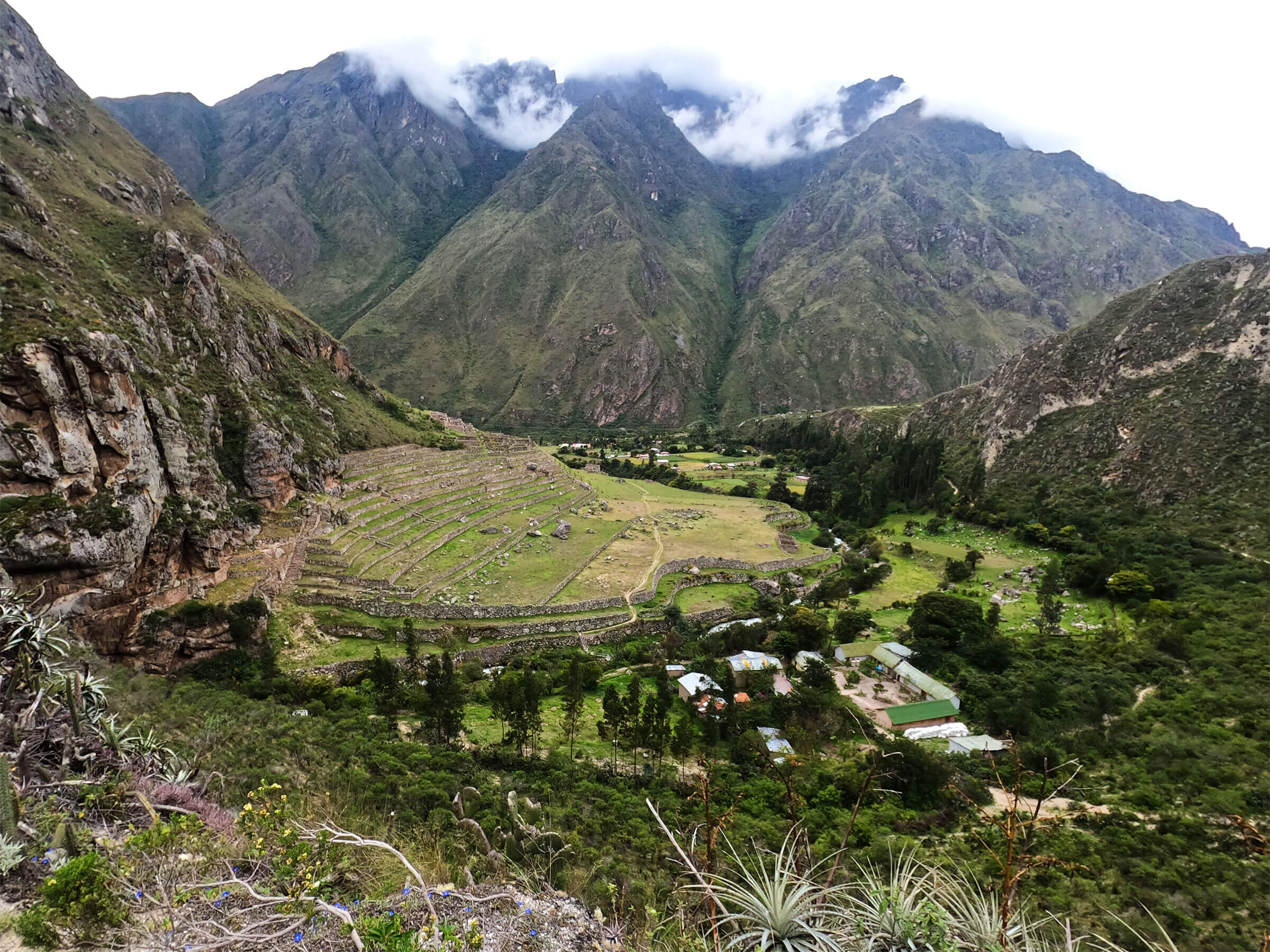
We pick you up early and drive through the Sacred Valley to Ollantaytambo, where there is time for breakfast, and on to Km 82 (Piscacucho, about 2,720 m). After the first checkpoint, where your permit and passport are checked, the trail follows the Urubamba river through dry valleys with cactus and eucalyptus. About two hours in, a viewpoint opens over Llaqtapata, a large Inca terraced complex that your guide explains before lunch. The afternoon is a gentle climb to the first camp at Wayllabamba. It is a moderate day designed to get used to the rhythm of the trail.
Day 2: over Dead Woman’s Pass to Pacaymayo — the big one
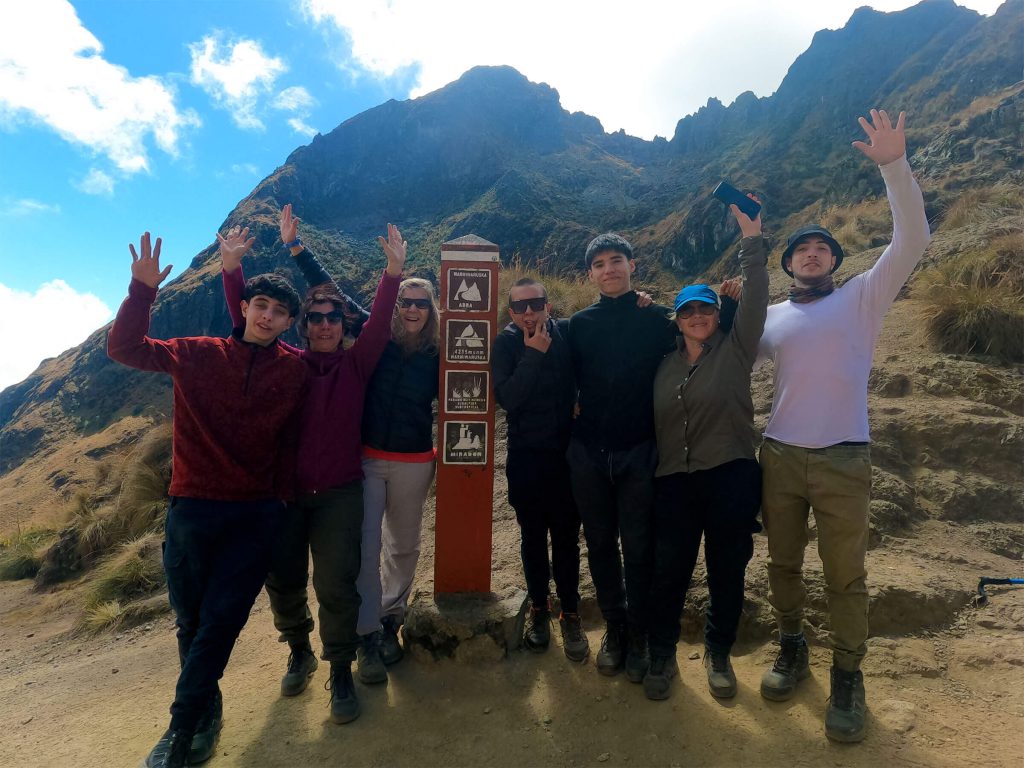
11 km / 6.8 mi · 7–8 hours · +1,215 m / −615 m · highest point 4,215 m (13,828 ft) · camp at 3,600 m (11,810 ft)
After an early breakfast the climb begins: roughly 9 km uphill, first through cloud forest and then across open puna grassland past Llulluchapampa, to Warmiwañusca, Dead Woman’s Pass, at 4,215 m. It is mostly stairs, and the air is thin, so the guide sets a slow, steady pace and the group regroups at the top. From the pass, stone steps drop steeply to the Pacaymayo camp in the next valley. You arrive tired and proud: the hardest part of the trail is behind you. Nights here are chilly, and in June and July they can drop below freezing.
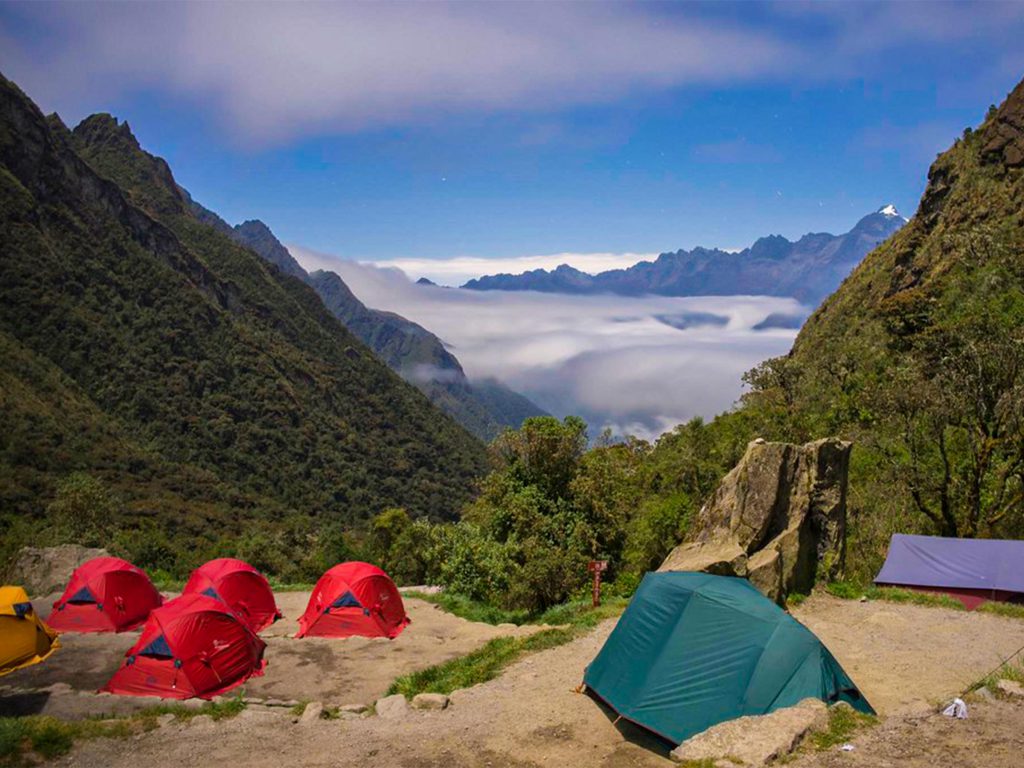
Day 3: Pacaymayo to Wiñay Wayna — the most beautiful day
13.5 km / 8.4 mi · 7–8 hours · +450 m / −1,400 m · highest point about 3,950 m (12,960 ft) · camp at 2,650 m (8,690 ft)
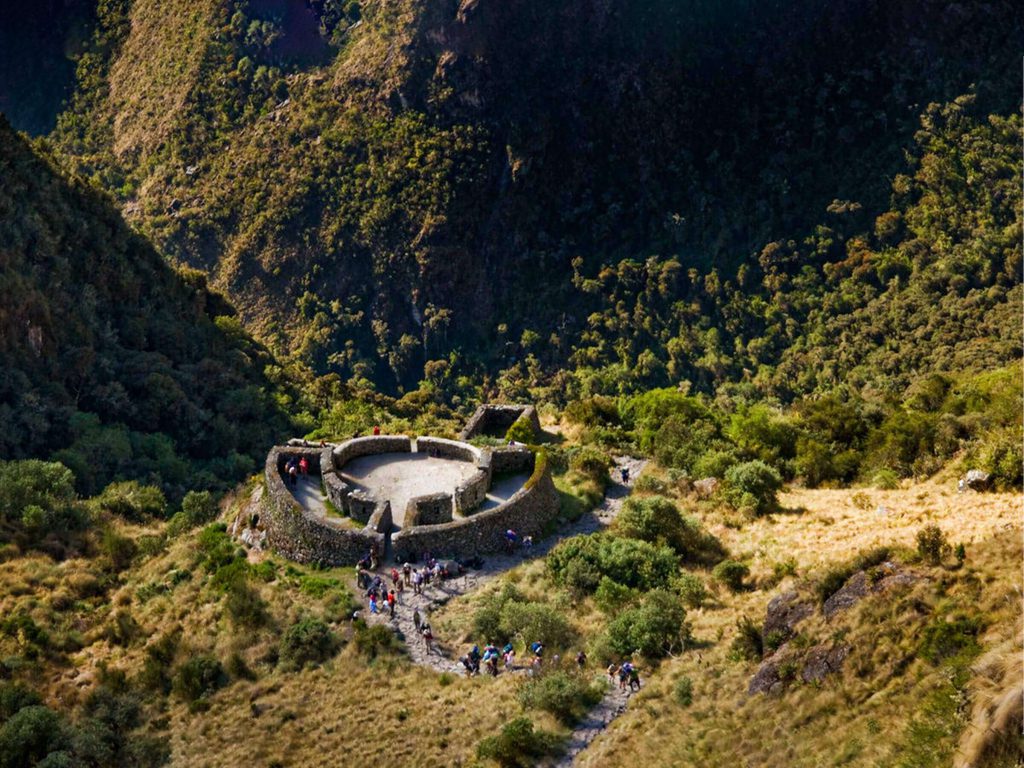
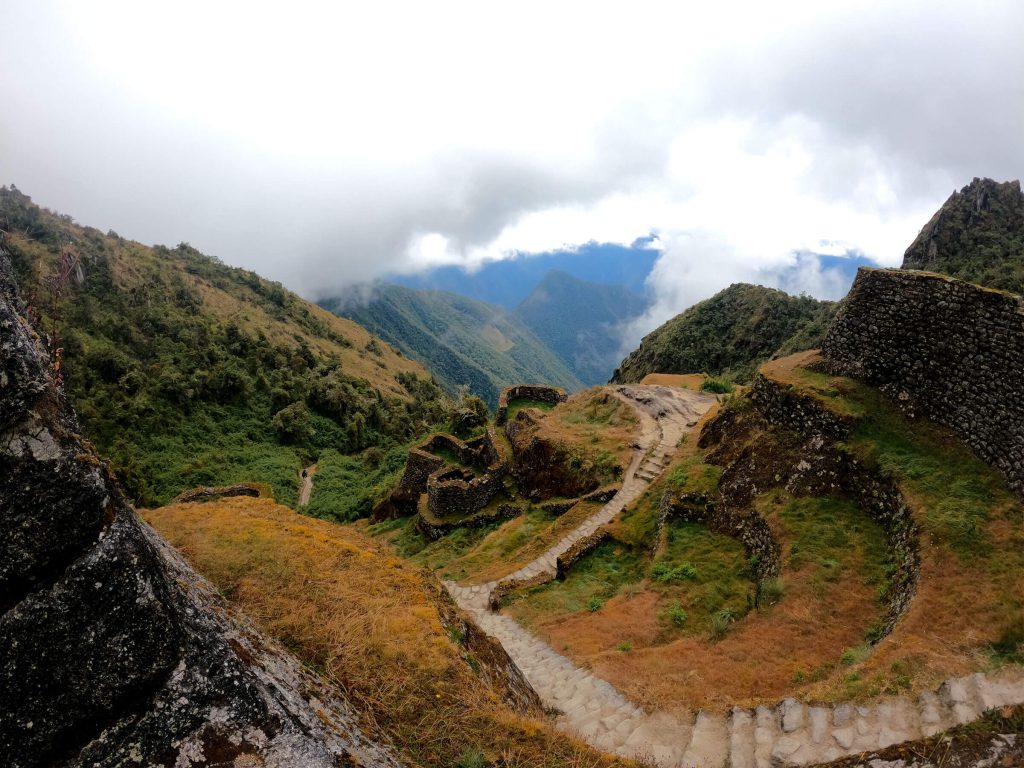
Many hikers say this is their favorite day. A shorter climb leads to Runkurakay, a round Inca structure that watched over the valley, and the second pass just above it. Then the trail runs along original Inca paving past Sayacmarca, perched on a ridge, to lunch around Chaquicocha. In the afternoon you walk through a tunnel carved into the rock and reach Phuyupatamarca, “the town above the clouds”, before a long descent on Inca stairways to Wiñay Wayna, a spectacular terraced site next to the last camp. It is the longest day, and the descent is where trekking poles help most.
Day 4: Sun Gate and Machu Picchu — the arrival
5.5 km / 3.4 mi · 2–3 hours · +100 m / −320 m · Sun Gate at 2,720 m (8,920 ft) · Machu Picchu at 2,430 m (7,970 ft)
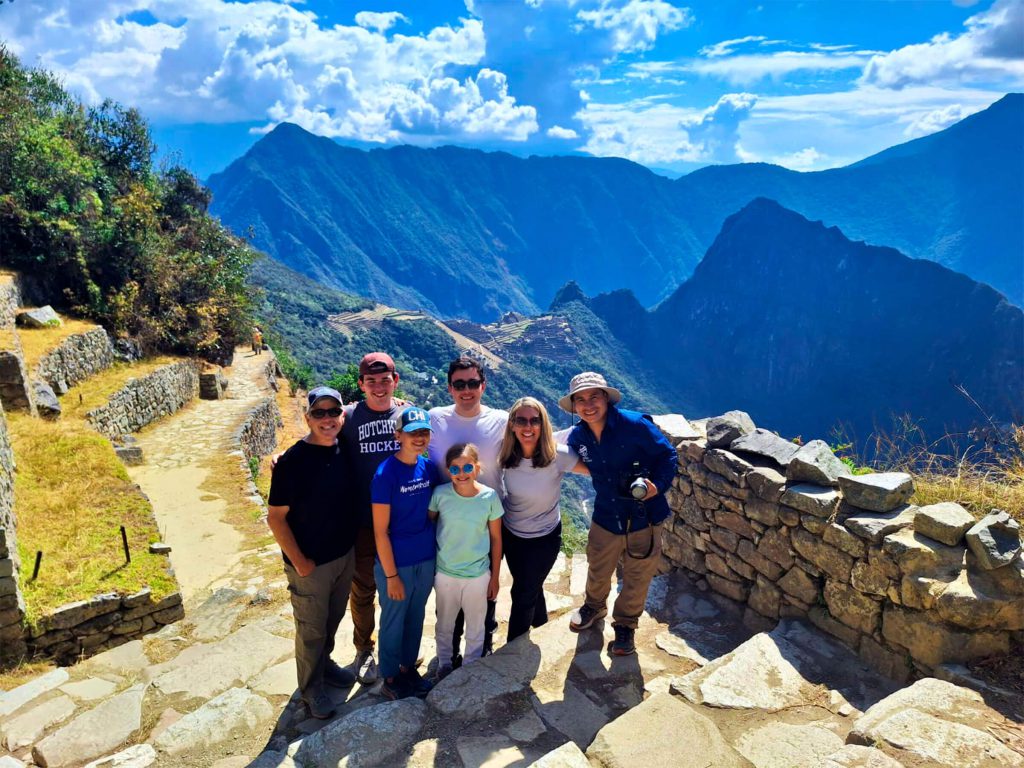
The wake-up call comes around 3:30 am so the porters can pack and catch their train. After breakfast the group waits at the last checkpoint until it opens at dawn, then follows a narrow cloud-forest path to the final steep steps of Inti Punku, the Sun Gate. From there Machu Picchu appears below you for the first time — the moment the whole trek builds up to. You walk down into the citadel for a guided visit of its main sectors, with free time for photos. Afterwards you go down to Aguas Calientes, have lunch on your own and take the train to Ollantaytambo, where our transfer brings you back to your hotel in Cusco, usually after dark.
Which circuit of Machu Picchu Inca Trail hikers visit, and at what time, is explained on our Machu Picchu circuits guide. If you want to add Huayna Picchu or Machu Picchu Mountain, see our Huayna Picchu guide.
Campsites can change
Campsites on the Inca Trail are assigned by the authorities with each permit, according to availability on the date you book. Wayllabamba, Pacaymayo and Wiñay Wayna are the usual ones, but some departures camp at Ayapata instead of Wayllabamba, or at Chaquicocha instead of Wiñay Wayna, which shifts part of the walking from one day to another. We confirm your campsites when your permit is issued.
What a day on the trail looks like
- Morning: hot drink at your tent, breakfast in the dining tent, start walking around 7 am (earlier on day 4).
- Midday: the team runs ahead, sets up the dining tent and serves a hot lunch.
- Afternoon: arrival at camp, tents already up, tea time and a snack.
- Evening: dinner, a briefing for the next day and early to bed.
- Water: boiled, filtered water to refill your bottles each morning and evening.
For more on the practical side, read bathrooms on the Inca Trail and how hard the Inca Trail really is. The complete tour, with the altitude profile and what is included, is on our Classic Inca Trail 4 Days page; check dates in the calendar below.
Frequently asked questions
How many miles is the Classic Inca Trail each day?
Which day of the Inca Trail is the hardest?
Where do you camp on the Inca Trail?
What time do you arrive at the Sun Gate?
How do you get back to Cusco after the Inca Trail?
Do I carry my own tent and food?
About the author
Raquel Sánchez co-founded Terra Quechua Peru in Cusco in 2012 together with Edwin Medina, both with extensive trekking experience. She writes our Inca Trail guides from the day-to-day work of securing permits and organizing every departure with our guides, cooks and porters.