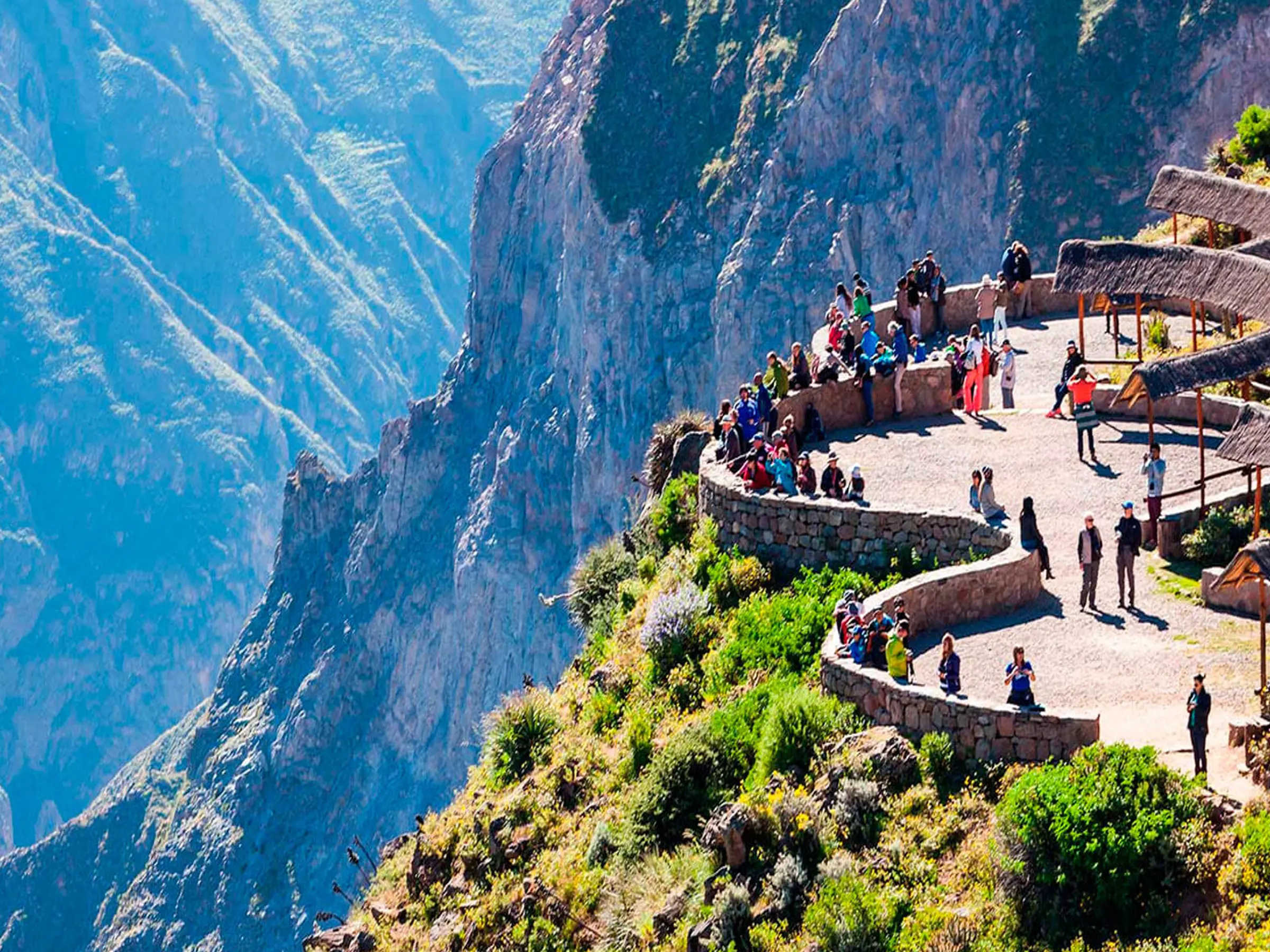
Colca Canyon lies in Caylloma province, Arequipa, about 150 km (93 mi) from the city by road, a 3–4 hour drive. It is 3,200–3,400 m (10,500–11,150 ft) deep depending on where you measure, roughly twice the depth of the Grand Canyon. It is famous for the Cruz del Cóndor viewpoint, where Andean condors ride the morning air currents, for its pre-Inca terraces and for villages such as Chivay, Yanque and Maca. Since 2019 it has been part of the Colca and Andagua Volcanoes UNESCO Global Geopark, Peru’s first. You can see it on one long day, over two days with a night in Chivay, or by hiking down to the Sangalle oasis. This guide explains each option, the altitudes along the road, the tourist ticket and when to see condors.
- 3,200–3,400 m(10,500–11,150 ft) deep, per PromPerú and Peru’s Andina news agency.
- ≈4,900 m(16,080 ft) at the Mirador de los Andes, the highest point of the trip.
- 8–10 amthe best hours to see condors at Cruz del Cóndor.
How deep is Colca Canyon, compared with the Grand Canyon?
There is no single official figure: PromPerú gives 3,200 m and the Andina agency “up to 3,400 m,” measured from the surrounding summits down to the river. At Cruz del Cóndor, the most visited spot, the river is about 1,200 m (3,900 ft) below the viewpoint. Some pages quote 4,160 m, but that is an outlier that does not match the official sources.
| Canyon | Depth | Source |
|---|---|---|
| Colca (Arequipa, Peru) | 3,200–3,400 m / 10,500–11,150 ft | PromPerú / Andina |
| Cotahuasi (Arequipa, Peru) | ≈3,535 m / 11,600 ft | Often cited as slightly deeper than Colca |
| Grand Canyon (Arizona) | ≈1 mile (1.6 km) on average | US National Park Service |
The road from Arequipa and its altitudes
The road to Chivay crosses the Salinas y Aguada Blanca National Reserve, where you see vicuñas at Pampa Cañahuas, and climbs to the Mirador de los Andes at Patapampa, with views of the Hualca Hualca, Sabancaya, Ampato, Chachani and Misti volcanoes. It is the highest point of the day, higher than any pass on the Inca Trail (4,215 m / 13,828 ft), so spend at least one day in Arequipa first.
| Place | Approx. altitude | What is there |
|---|---|---|
| Mirador de los Andes (Patapampa) | 4,900 m / 16,080 ft | Volcano views; a short stop because of the altitude |
| Cruz del Cóndor | 3,800 m / 12,470 ft | The main canyon and condor viewpoint |
| Chivay | 3,600 m / 11,810 ft | Main town, hotels and La Calera hot springs |
| Cabanaconde | 3,287 m / 10,784 ft | Start of the hike to the canyon floor |
| Sangalle oasis | ≈1,100 m (3,600 ft) below Cabanaconde | Bungalows and pools on the canyon floor |
Altitudes from our itineraries and public sources; figures vary by a few meters between sources. AUTOCOLCA says the circuit ranges from about 2,400 to 5,000 m.
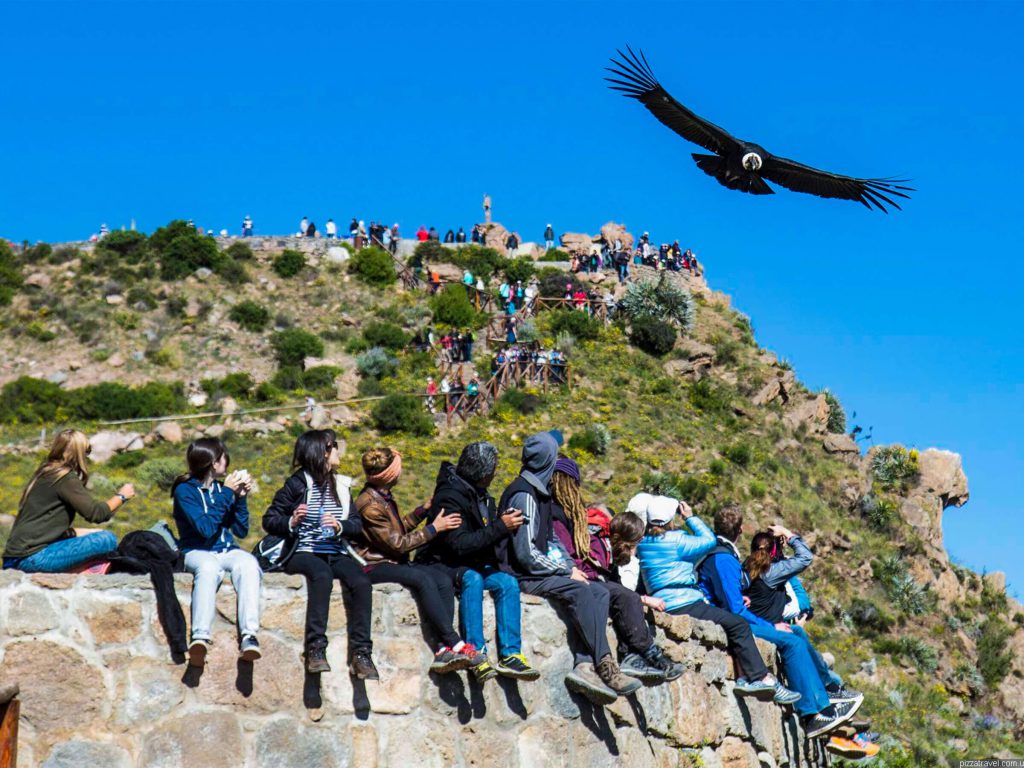
Cruz del Cóndor: best time to see condors
Andean condors need the warm air currents that rise from the canyon once the sun heats its walls. That is why every tour arrives early: in our guides’ experience the best hours are 8 to 10 am. On our 2-day tour by car we arrive around 8:00, and on the trek around 8:30. Condors live in the canyon year-round, but no company can guarantee them: it depends on that day’s wind and weather. Since 2020 the IUCN has listed the Andean condor as Vulnerable.
Colca tourist ticket (2026)
| Visitor | Price |
|---|---|
| Foreign adult | S/70 (≈US$20) |
| Latin American adult | S/40 |
| Foreign or Latin American child (6–15) | S/20 |
| Peruvian adult / foreign resident | S/20 |
| Peruvian student, child (6–15) or over 60 | S/5 |
| Children aged 0–5 | Free |
Official AUTOCOLCA prices checked on October 5, 2026. Dollar figure is approximate.
You can buy the ticket on the AUTOCOLCA website or at the Chivay Interpretation Center (5:00 am–6:00 pm). It is valid for one entry and you need your passport. The official site lists card, Yape and Plin payments, but carry cash just in case. It does not cover the La Calera hot springs (S/15 on our tour pages) or other local fees. Check each tour to see whether the ticket is included: some include it, others pay at the checkpoint.
One day, two days or a trek?
| Option | What it’s like | Best for |
|---|---|---|
| 1 day (from US$70) | Pickup at 2:30–3:00 am, breakfast in Chivay, Cruz del Cóndor, viewpoints, Maca, hot springs and lunch; back in the late afternoon | Short on time and fine with a very long day |
| 2 days by car (from US$135) | 7:30 am departure, a night in Chivay with hot springs and a folk show; Cruz del Cóndor around 8:00 on day two | Seeing the canyon without a 3 am start or hiking |
| 2-day trek (from US$159) | Down from San Miguel to San Juan de Chuccho and the Sangalle oasis; a 3-hour climb to Cabanaconde from 5:00 am | Fit hikers |
| 3-day trek | The same route with an extra night and the villages of Cosñirhua and Malata | Spreading the effort |
When to go and what to pack
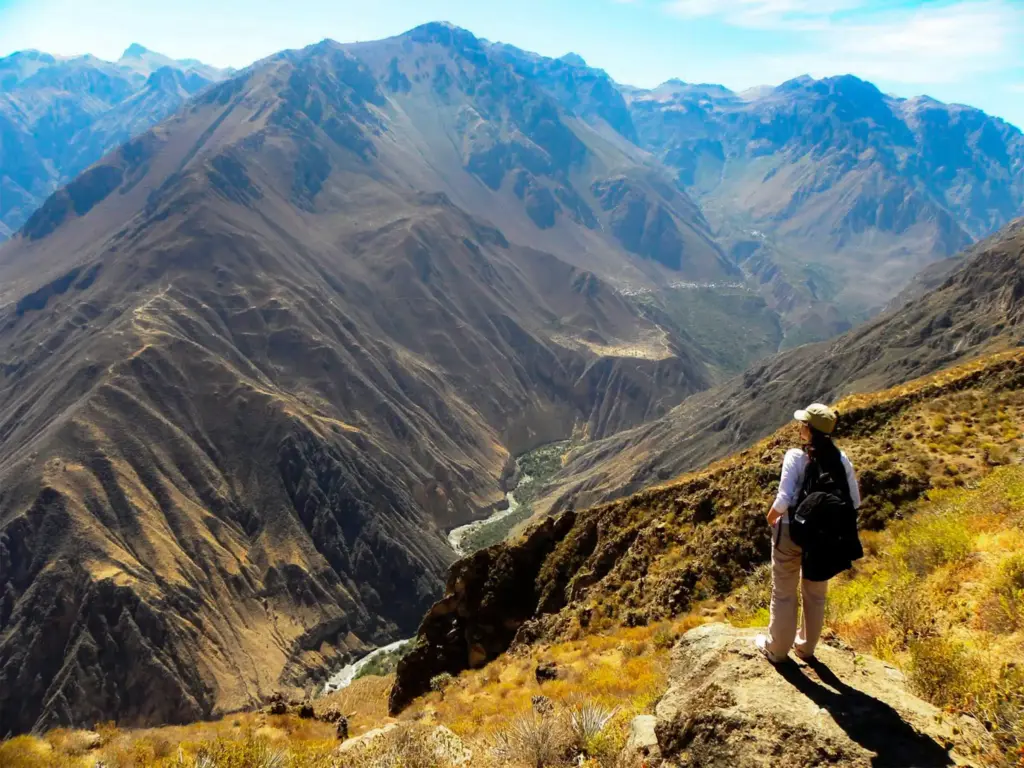
According to AUTOCOLCA, the rains fall mainly from January to March. The rest of the year days are usually clear, with cold mornings and nights and strong midday sun; the canyon floor is hot. Pack layers, a warm jacket for the pre-dawn stop at Patapampa, sunscreen, sunglasses, water, swimwear for the hot springs and cash. For the trek, wear shoes with good grip: the descent is hard on the knees and the final climb gains about 1,100 m (3,600 ft).
If you have more days in Arequipa, Colca pairs well with a volcano climb: compare both in our Misti vs Chachani guide. And if the Inca Trail is the reason for your trip, Colca makes a good add-on before Cusco, but remember Patapampa is higher than any point on the trail: here is how to prevent altitude sickness.
Frequently asked questions
How much is the Colca Canyon entrance fee?
What time do you see condors at Cruz del Cóndor?
Can you visit Colca Canyon in one day from Arequipa?
Is Colca Canyon deeper than the Grand Canyon?
Will the altitude affect me at Colca?
How hard is the Colca Canyon trek?
About the author
Raquel Sánchez co-founded Terra Quechua Peru in Cusco in 2012 together with Edwin Medina, both with extensive trekking experience. She writes our Inca Trail guides from the day-to-day work of securing permits and organizing every departure with our guides, cooks and porters.