The Sacred Valley of the Incas is the Urubamba River valley between Pisac and Ollantaytambo, about 30 km (19 mi) from Cusco. It holds four of the region’s great Inca sites, Pisac, Ollantaytambo, Chinchero and Moray, plus the Maras salt mines, craft markets and villages where weaving is still done the old way. You can see it in a day from Cusco, and the valley floor sits 500–600 m (1,600–2,000 ft) lower than the city, which is why many travelers use it to acclimatize before the Inca Trail. This guide includes our route map with real distances and drive times between stops, the altitude of every town, what the tourist ticket covers and how to plan your visit.
- 4 siteson one ticket: Pisac, Ollantaytambo, Chinchero and Moray.
- 2,792 m(9,160 ft) in Ollantaytambo vs 3,400 m (11,155 ft) in Cusco: you sleep lower.
- ≈170 km(105 mi) on a one-day loop, with about 4 hours of driving in total.
Sacred Valley map: distances, drive times and altitudes
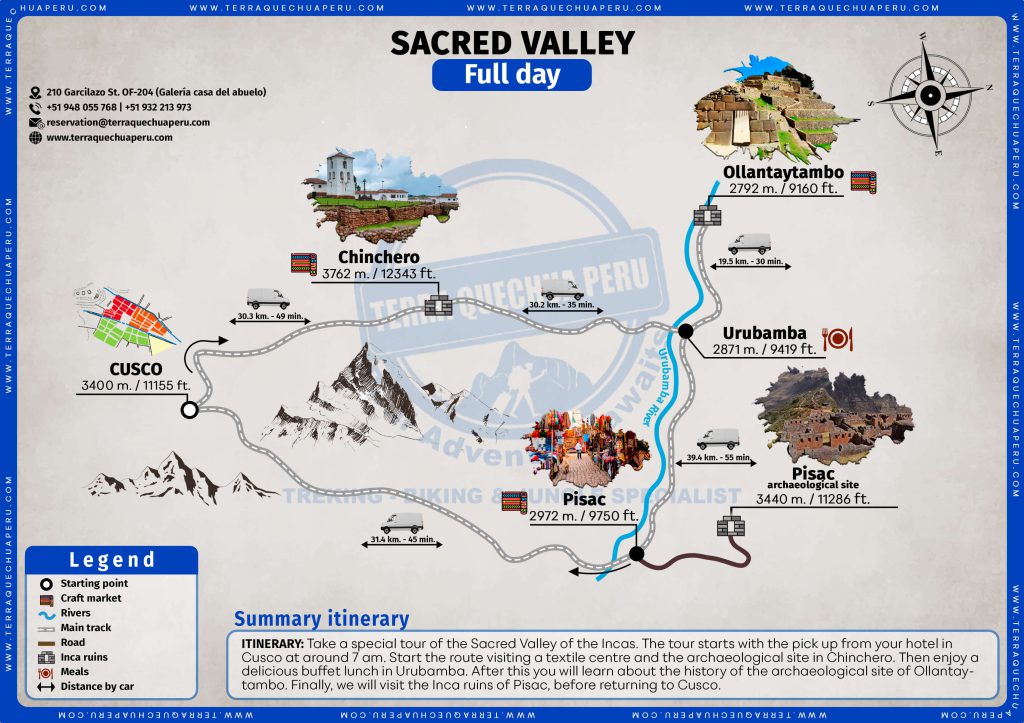
This is the map we use on our full-day tour. The loop leaves Cusco across the Chinchero plateau, drops into the valley at Urubamba, continues to Ollantaytambo and returns through Pisac. Times are driving times without stops; traffic and rain can add more.
| Leg | Distance | Drive time |
|---|---|---|
| Cusco → Chinchero | 30.3 km (18.8 mi) | ≈49 min |
| Chinchero → Urubamba | 30.2 km (18.8 mi) | ≈35 min |
| Urubamba → Ollantaytambo | 19.5 km (12.1 mi) | ≈30 min |
| Urubamba → Pisac | 39.4 km (24.5 mi) | ≈55 min |
| Pisac → Cusco | 31.4 km (19.5 mi) | ≈45 min |
Distances and times from our route map. Going from Ollantaytambo back toward Pisac repeats the leg to Urubamba.
| Place | Altitude | Compared with Cusco |
|---|---|---|
| Chinchero | 3,762 m / 12,343 ft | 362 m (1,188 ft) higher |
| Pisac (Inca site) | 3,440 m / 11,286 ft | 40 m (131 ft) higher |
| Cusco | 3,400 m / 11,155 ft | — |
| Pisac (town and market) | 2,972 m / 9,750 ft | 428 m (1,405 ft) lower |
| Urubamba | 2,871 m / 9,419 ft | 529 m (1,736 ft) lower |
| Ollantaytambo | 2,792 m / 9,160 ft | 608 m (1,995 ft) lower |
What to see in the Sacred Valley
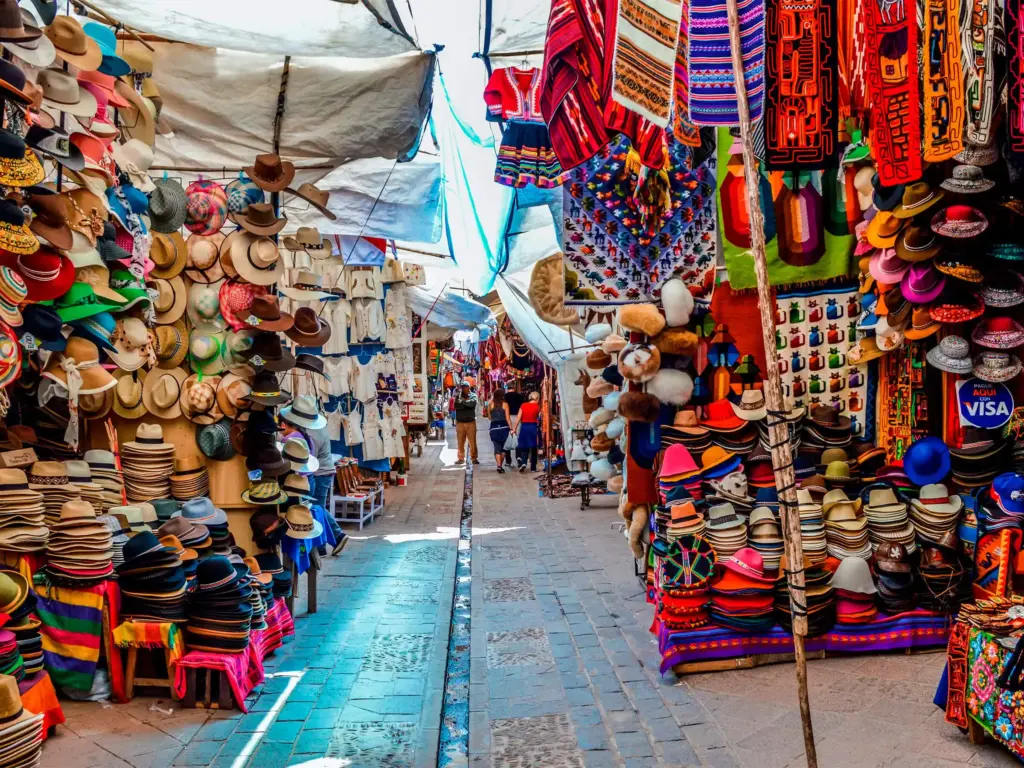
- Pisac: an Inca complex high on the mountain, with terraces, stone neighborhoods and a ceremonial sector at about 3,440 m (11,286 ft). Down in town is one of Peru’s best-known craft markets. The big market days are Tuesday, Thursday and Sunday, though stalls open every day.
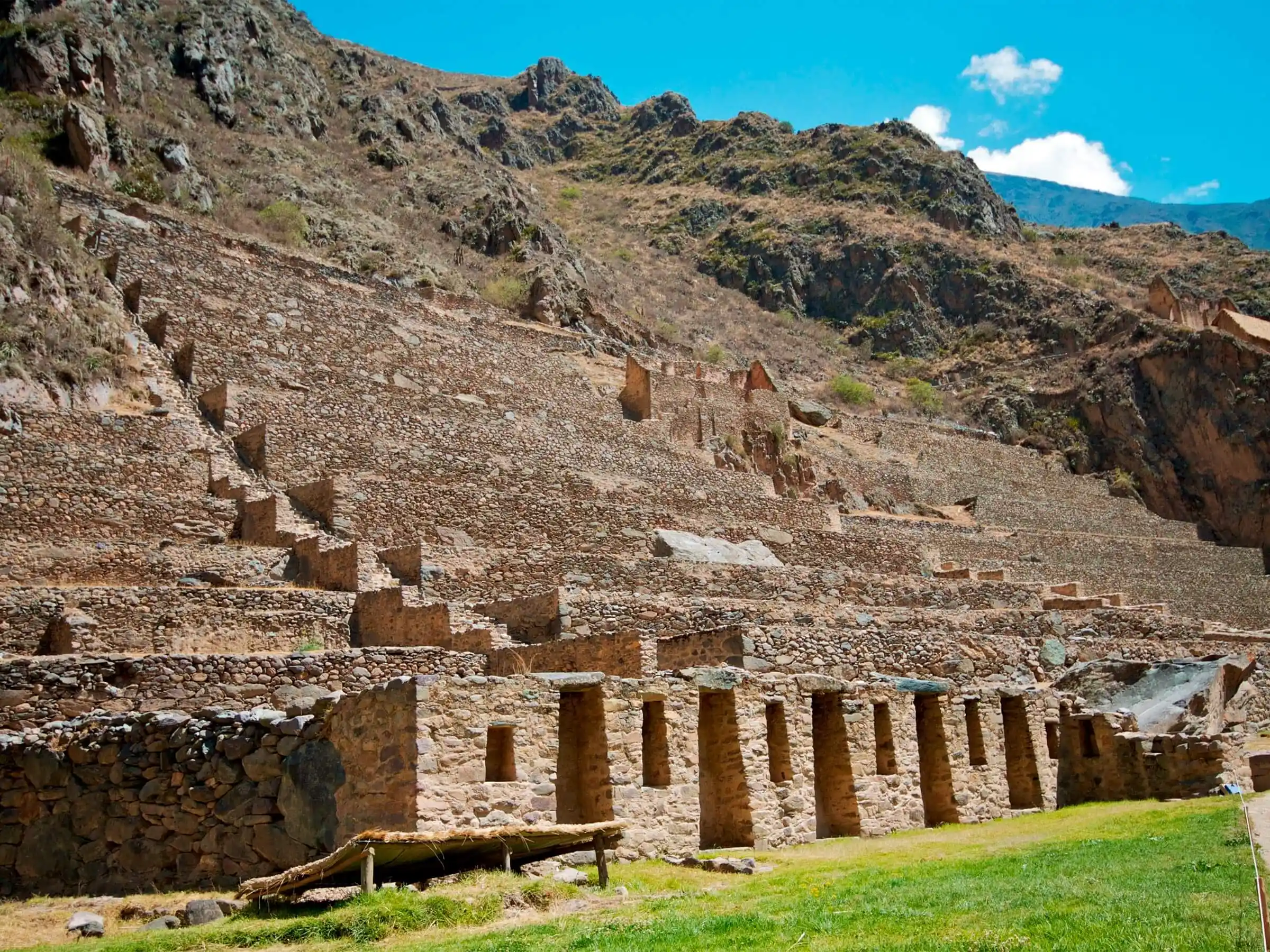
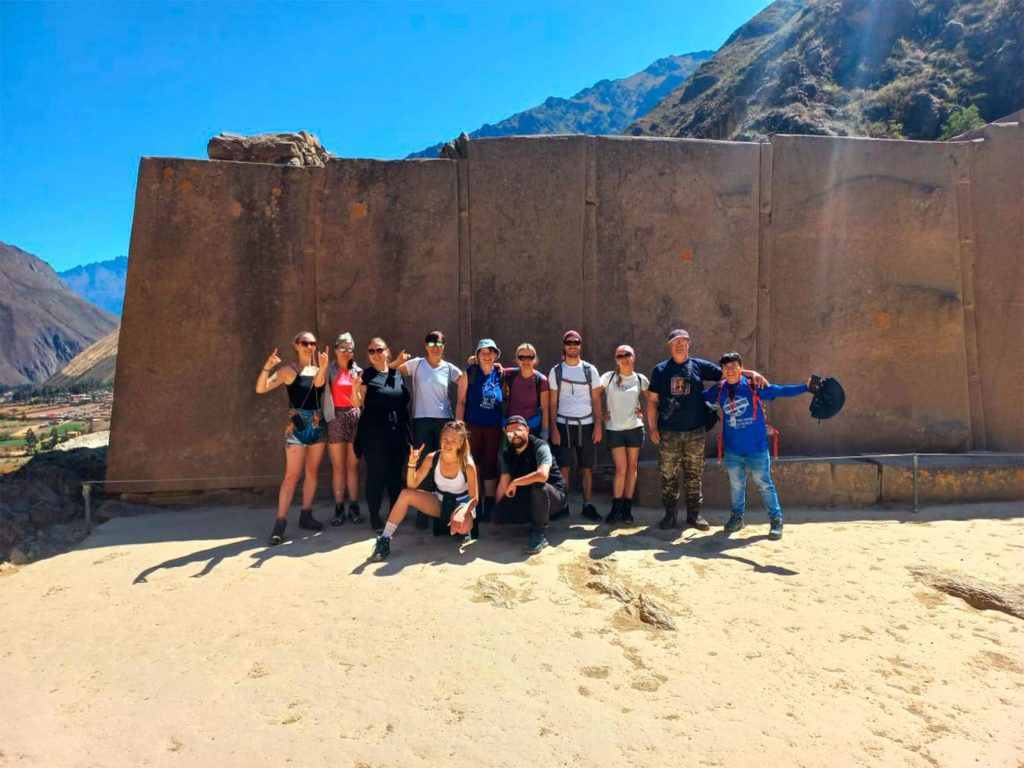
- Ollantaytambo: the terraced fortress climbing the mountainside and the temple with its huge monoliths. The town keeps its Inca street plan and is the train station for Machu Picchu.
- Chinchero: up on the plateau at 3,762 m (12,343 ft): Inca terraces, a colonial church, weaving workshops using natural dyes and a Sunday market in the square.
- Moray: concentric circular terraces; the largest hollow is about 30 m (100 ft) deep. The Incas are thought to have used them to study crops in different microclimates.
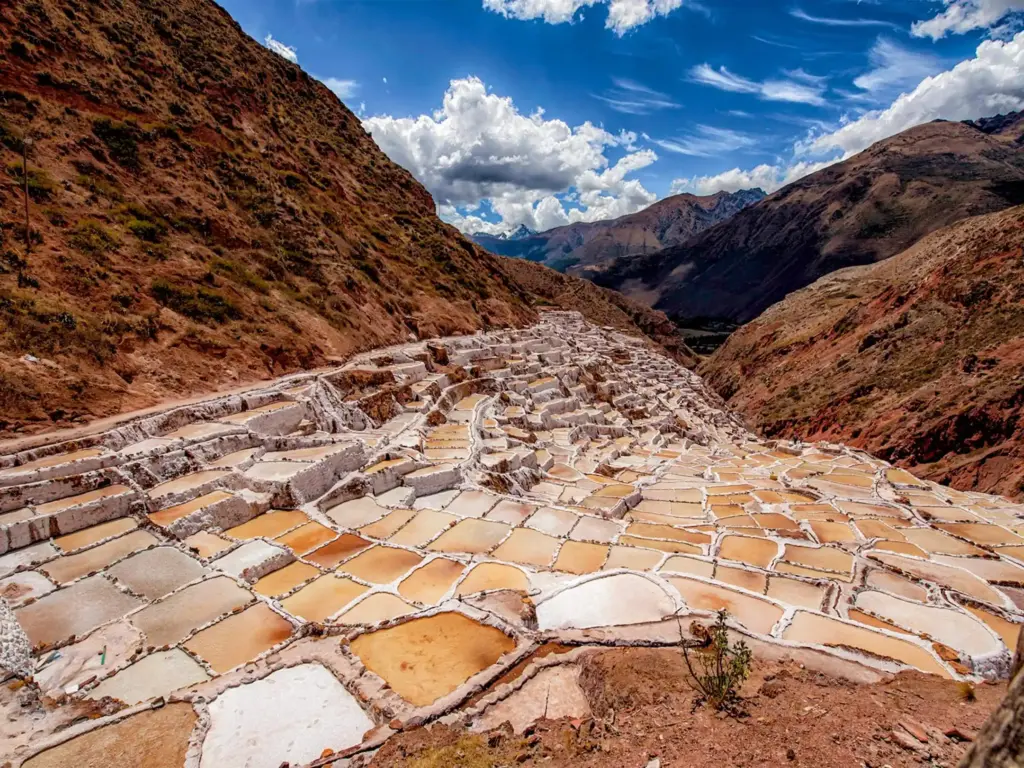
- Maras salt mines: thousands of salt pans on the hillside, worked by families from the community. Since 2019 you can no longer walk between the pans; you see them from the path and viewpoints.
- Urubamba: the valley’s central town, where most tours stop for lunch.
The tourist ticket: what it covers and what it costs
Pisac, Ollantaytambo, Chinchero and Moray do not sell single entries: you get in with the Boleto Turístico del Cusco, run by COSITUC. For the valley alone, the partial Circuit III ticket is enough; if you will also visit Sacsayhuamán and the city museums, the full ticket is better value.
| Ticket | Foreigners | Peruvians | Valid for |
|---|---|---|---|
| Partial Circuit III (Pisac, Ollantaytambo, Chinchero, Moray) | S/70 (≈US$20) | S/40 | 2 days (Peruvians: 1 day) |
| Full ticket (valley and city sites) | S/130 (≈US$37) | S/70 | 10 days |
| Full ticket, student | S/70 | S/40 | 10 days |
Official COSITUC price list checked on October 5, 2026. Students: ages 10–17 with ID, or 18–25 with a university card or ISIC. Machu Picchu and the Maras salt mines are not included. Dollar figures are approximate.
The Maras salt mines are paid separately, in cash, at the community entrance. Our tour page lists S/20; other sources quote different amounts, so carry a little extra cash.
How to visit: one day or two
- A full day from CuscoThe easiest option if you are short on time. Our Sacred Valley tour runs the loop in reverse to most groups to avoid the crowds: it starts in Chinchero, has a buffet lunch in Urubamba, visits Ollantaytambo and ends in Pisac. Guide, tourist bus, lunch and the ticket for the four sites are included.
- Sacred Valley and Machu Picchu in 2 daysPisac, Urubamba and Ollantaytambo on day one, the train to Aguas Calientes, a hotel night and Machu Picchu the next morning: that is our tour with the Machu Picchu connection.
- Maras and Moray on their ownFor more time on the plateau: a half day to Maras and Moray, or with an activity: quad bikes, horseback riding, biking or llama trekking.
The Sacred Valley before the Inca Trail
The CDC’s altitude guidance suggests that travelers flying into Cusco spend one or two nights lower than the airport before going higher. Urubamba and Ollantaytambo sit 530–610 m (1,700–2,000 ft) below Cusco, so two nights in the valley are a good way to start your trip. We go into more detail in our guide to altitude sickness on the Inca Trail.
The Classic Inca Trail also starts at Km 82, beyond Ollantaytambo, and the short trail at Km 104, reached by train from the same station. If you sleep in Ollantaytambo the night before, you skip most of the pre-dawn drive from Cusco; ask us about pickup when you book. See what each day looks like in our Inca Trail day by day and check dates on the Inca Trail availability page.
When to go and what to bring
According to PromPerú, April to October brings sunny days and cold nights, while November to March is rainy; temperatures range from 1 °C (34 °F) before dawn to 20 °C (68 °F) at midday. The valley is open all year: in the rainy months it is greener, but bring a poncho. In any month, pack layers, a hat, sunscreen, water and cash for the market and the salt mines. Chinchero, at 3,762 m (12,343 ft), is the coldest and highest stop of the day.
To get there, Cusco’s airport is still the gateway: the new Chinchero international airport is under construction and is expected to open between 2027 and 2028. For flights, time zones and trip length from the US, see planning the Inca Trail from the USA.
Frequently asked questions
Where is the Sacred Valley of the Incas?
What does the Sacred Valley tourist ticket include?
Can you see the Sacred Valley in one day?
What days is the Pisac market?
Should I stay in the Sacred Valley or in Cusco?
Can you walk into the Maras salt pans?

About the author
Raquel Sánchez co-founded Terra Quechua Peru in Cusco in 2012 together with Edwin Medina, both with extensive trekking experience. She writes our Inca Trail guides from the day-to-day work of securing permits and organizing every departure with our guides, cooks and porters.