
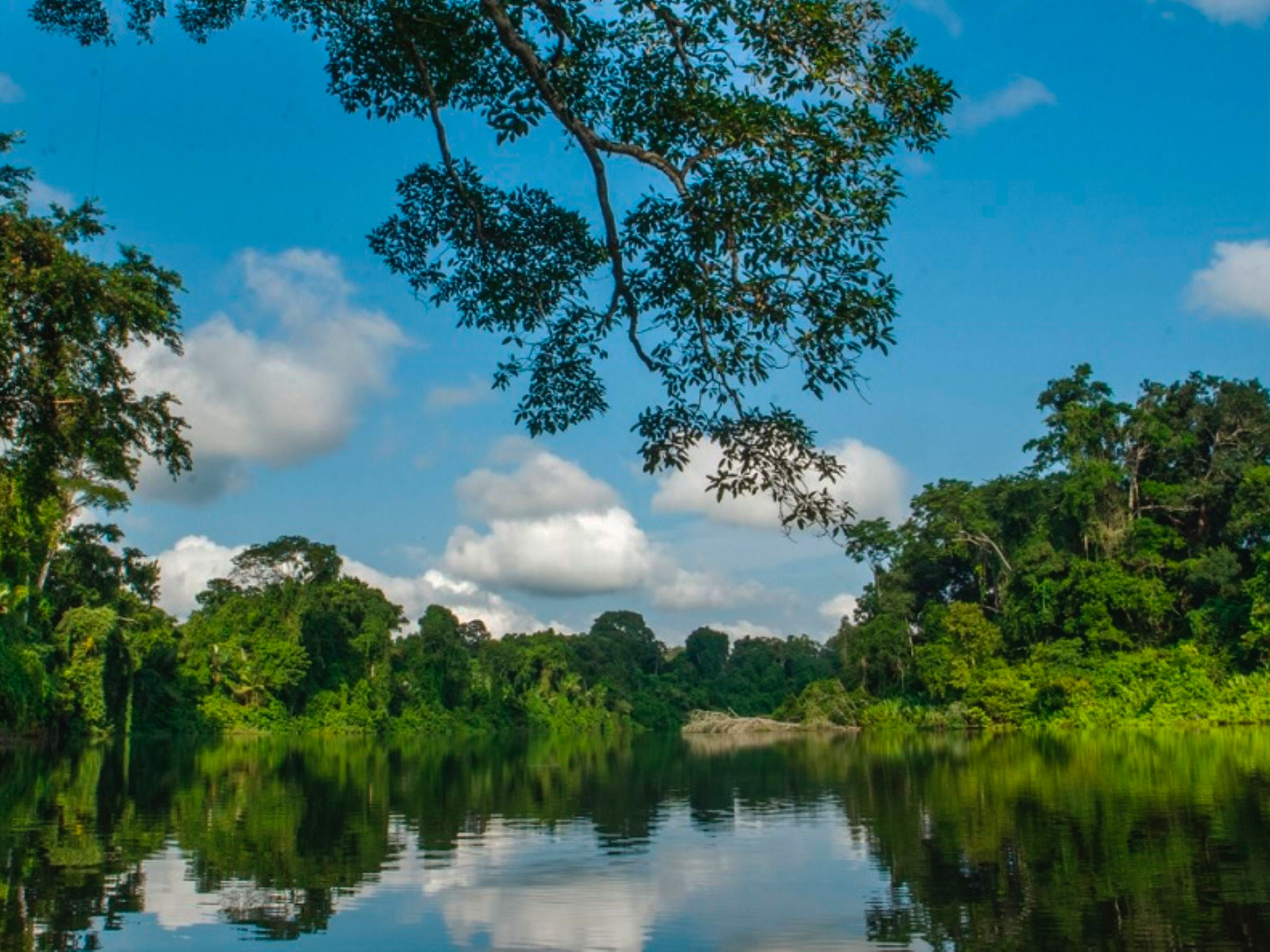
“Should I do Tambopata or Manu?” is the question we hear most after “Can I still get Inca Trail permits?”. Add Pacaya Samiria, the flooded forest near Iquitos, and the choice gets harder, because the three places are not really competitors: each is a different kind of Amazon, reached in a different way and suited to a different number of days. This guide helps you decide in a few minutes, with official data from SERNANP (Peru’s protected areas service) and the health advice US travellers actually need.
The three compared
| Tambopata | Manu | Pacaya Samiria | |
|---|---|---|---|
| Protected area | Tambopata National Reserve, 274,690 ha (2000) | Manu National Park, 1.7 million ha (1973), UNESCO World Heritage | Pacaya Samiria National Reserve, ≈2.08 million ha (1982) |
| Gateway | Puerto Maldonado | Cusco, overland | Iquitos, then Nauta |
| From Cusco | ≈55 min flight or ≈10 h overnight bus | Road down the eastern Andes through cloud forest | Flight via Lima; no road to Iquitos |
| Minimum days | 3 | 3–5 (Cultural Zone), 6–8 (Reserved Zone) | 4 |
| Signature wildlife | Macaw clay licks, giant otters at Lake Sandoval | Cock-of-the-rock, oxbow lakes, highest species count | Pink and grey river dolphins, flooded forest |
| Our tours from | US$350 (3 days) | US$375 (3 days) · US$1,360 (6 days) | US$820 (4 days) |
Areas and creation dates: SERNANP. Prices per person with Terra Quechua.
Tambopata: the easy, rewarding Amazon
Tambopata is the natural add-on to Machu Picchu. You fly from Cusco in under an hour and can be on the Madre de Dios river the same morning. Lodge-based tours visit Lake Sandoval, home to a family of endangered giant otters, and add canopy walks, night walks and caiman spotting. SERNANP records about 600 bird species and 169 mammals in the reserve. Longer trips reach a macaw clay lick, one of the great wildlife spectacles of South America.
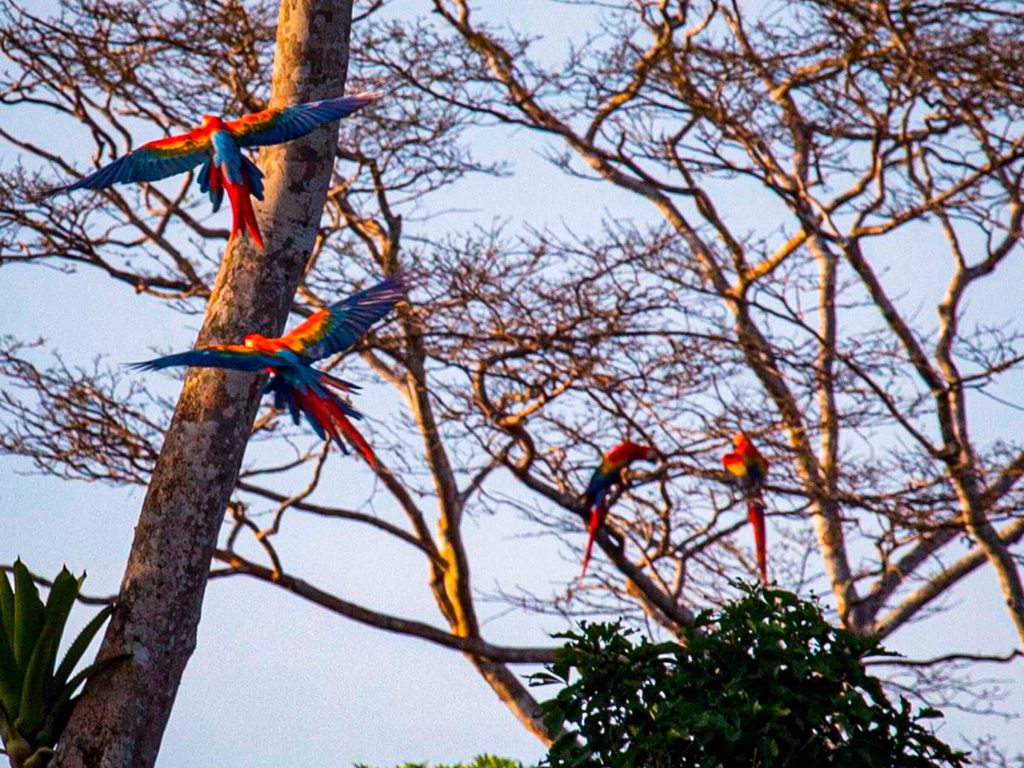
Best for: first Amazon trip, 3–5 days, travellers combining with Cusco. See our 3-day, 4-day and 5-day clay-lick tours, or all Tambopata tours.
Manu: the Andes-to-Amazon journey
Manu protects an entire watershed, from high grassland to lowland rainforest, and around 1,000 bird species — about one in ten of the world’s birds. The trip itself is part of the experience: you drive from Cusco over the Andes and down through cloud forest, where the Andean cock-of-the-rock, Peru’s national bird, displays at dawn. Then you continue by boat.
There are two ways to visit. The Cultural Zone (3–5 days) covers the cloud forest and lodges along the Alto Madre de Dios. The Reserved Zone (6–8 days) goes down the Manu river to oxbow lakes such as Cocha Salvador and Cocha Otorongo, and is only open with authorized operators. The core of the park is closed to tourism: it is home to Indigenous peoples, including groups in voluntary isolation.
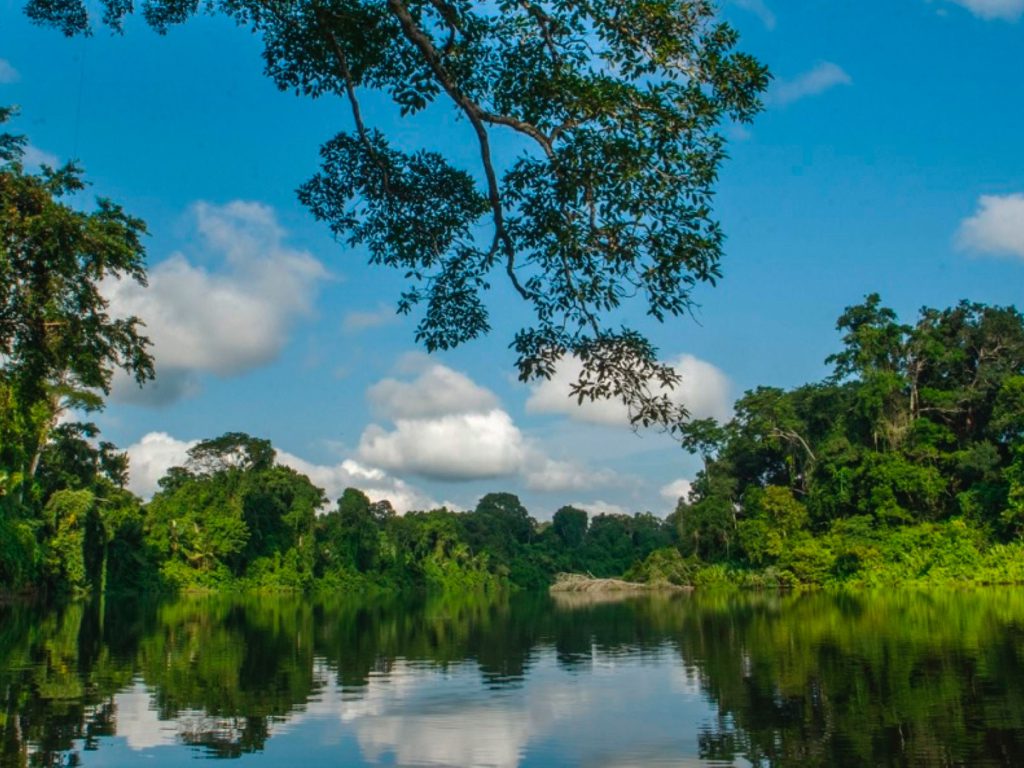
Best for: wildlife lovers and birders with a week. See our Manu tours.
Pacaya Samiria: the Jungle of Mirrors
Pacaya Samiria is Peru’s largest national reserve, between the Marañón and the Ucayali, the two rivers that join to form the Amazon. Most of it floods for part of the year, and its dark blackwater rivers reflect the forest like a mirror — hence its nickname. It is the place for pink and grey river dolphins, and SERNANP records 449 bird species. Iquitos has no road connection to the rest of Peru, so you fly in (usually via Lima), drive about two hours to Nauta and continue by boat.
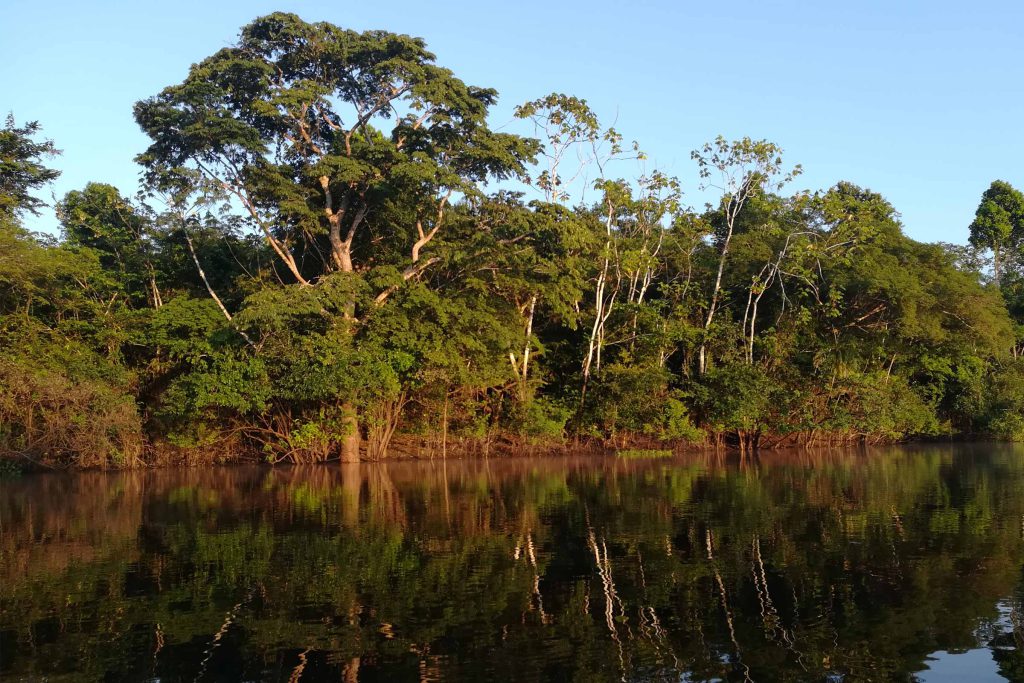
Best for: river lovers, travellers who have already seen Cusco, anyone who wants the “real” Amazon River. See our 4-day and 6-day expeditions.
When to go: a month-by-month view
| Months | Tambopata | Manu | Pacaya Samiria |
|---|---|---|---|
| Dec–Mar | Wet; clay licks very active | Wet; some roads and trails harder | High water: boats deep into flooded forest |
| Apr–May | Transition | Season opens (SERNANP: Apr–Nov) | High water starts to drop |
| Jun–Sep | Dry: best trails, cooler “friaje” days possible | Dry: best overall conditions | Low water; beaches closed Jul–Sep for turtle nesting |
| Oct–Nov | Clay-lick peak begins | Cock-of-the-rock display peak | Low water: fish and dolphins concentrated in channels |
Clay-lick seasonality from the Tambopata Macaw Project (Texas A&M). Water levels vary from year to year.
Entrance fees, simply explained
SERNANP charges foreign visitors by length of stay, the same way in all three areas: S/30 for one day, S/60 for two or three days and S/150 for four to thirty days. So a 3-day Tambopata tour falls in the S/60 band and a 4-day or longer trip in the S/150 band. Our Tambopata and Manu tours include the park or reserve entrance; always check each tour’s includes list, and note that fees can change each year.
Health: what US travellers need to know
- Yellow fever: the US CDC recommends the vaccine for travellers aged 9 months or older going to the Amazon regions (Madre de Dios, Loreto and others). Peru does not require proof of vaccination to enter the country, but some operators and parks request it — SERNANP asks for it in Manu.
- Malaria: there is risk in the Amazon lowlands, including Puerto Maldonado, Manu and Loreto. Ask a travel clinic about prophylaxis.
- No risk in Cusco, the Sacred Valley or Machu Picchu.
- See a travel clinic 4–6 weeks before your trip, and bring repellent, long sleeves and light rain gear.
Combining the Amazon with Machu Picchu
Tambopata fits best: fly Cusco–Puerto Maldonado after your Inca Trail or Machu Picchu visit and rest your legs on the river. Manu works if you have at least a week more. For Pacaya Samiria, plan your route via Lima. If you are still deciding on the Machu Picchu part, start with our Inca Trail routes.
Frequently asked questions
Which is better, Tambopata or Manu?
Where can I see pink river dolphins in Peru?
Is Pacaya Samiria the largest protected area in Peru?
When is the best time to see macaws at the clay licks?
Can I see jaguars?
Do I need a yellow fever vaccine for the Peruvian Amazon?
About the author
Raquel Sánchez co-founded Terra Quechua Peru in Cusco in 2012 together with Edwin Medina, both with extensive trekking experience. She writes our Inca Trail guides from the day-to-day work of securing permits and organizing every departure with our guides, cooks and porters.