
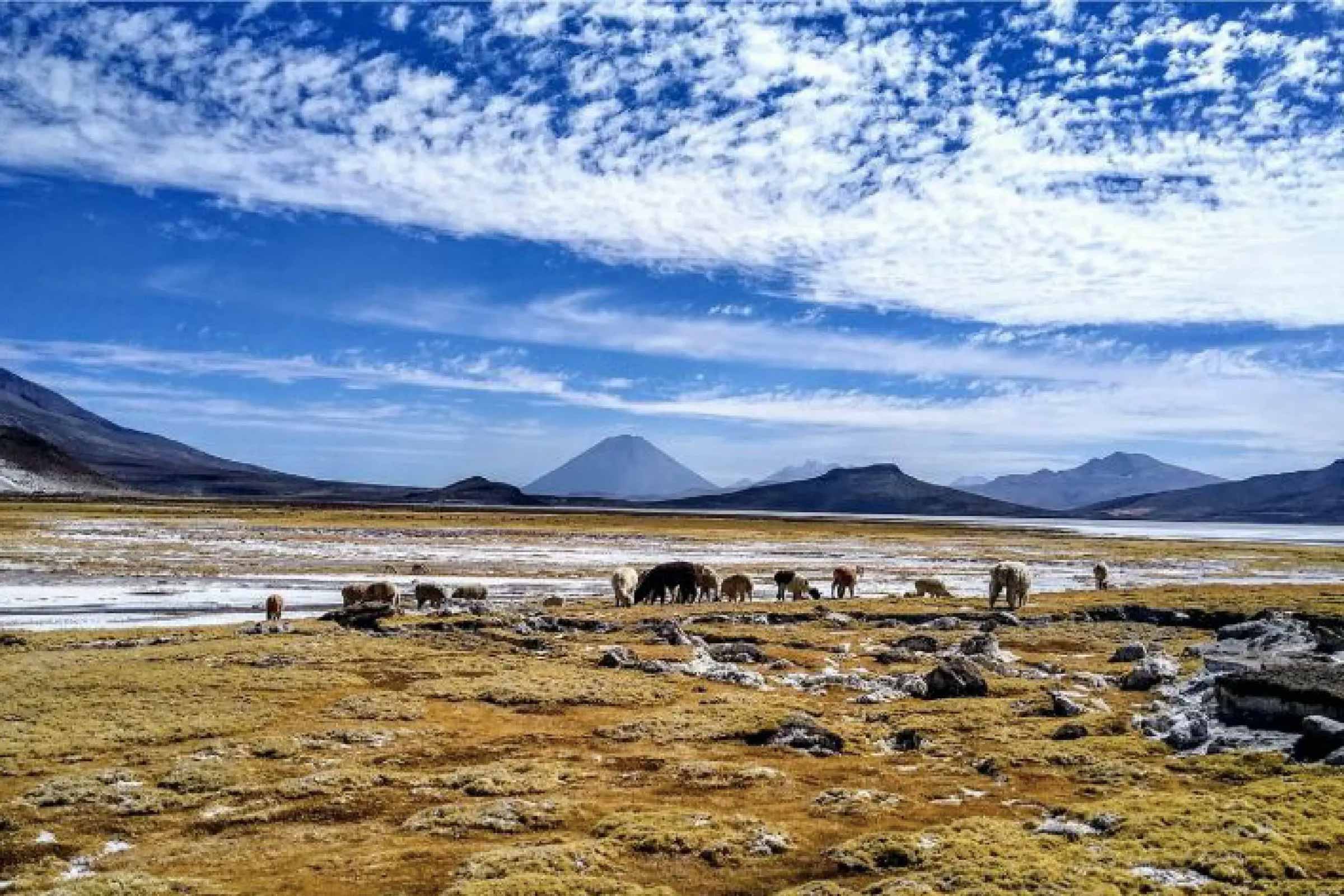
The Salinas y Aguada Blanca National Reserve is the high plateau, or puna, that wraps around Arequipa to the north and east: an average of about 4,300 m (14,100 ft) above sea level, between the Misti, Chachani, Pichu Pichu and Ubinas volcanoes, with flamingo lagoons, high wetlands and herds of vicuñas. It was created on 9 August 1979, protects 366,936 hectares in the Arequipa and Moquegua regions, and is run by SERNANP, Peru’s protected areas service. You can visit it on a day trip from Arequipa, and the roads to the Colca Canyon and the Pillones waterfall cross it too. Here is what you will see, when to go and how to visit.
- 366,936 haof protected puna in Arequipa and Moquegua, since 1979.
- ≈4,300 m(14,100 ft) average altitude: higher than Cusco.
- 3 flamingosAndean, James’s and Chilean, plus vicuñas and taruca deer.
What the reserve is, and why it exists
The reserve was declared in 1979 (Supreme Decree 070-79-AA) across parts of the provinces of Arequipa, Caylloma and General Sánchez Cerro, to protect the habitats of the vicuña, the taruca (Andean deer) and three species of flamingo. It is a textbook example of the puna ecosystem: high grassland, shrubs, small queñua woodlands, high-altitude wetlands called bofedales, and Andean lagoons. It also plays a role few visitors know about: its vegetation, wetlands and lagoons capture and store the rain that later supplies the city of Arequipa with water.
The reserve holds two wetlands of international importance: Laguna de Salinas and Laguna del Indio were designated Ramsar sites in 2003. Local communities raise alpacas and llamas here, and borax is still harvested by hand at the Salinas lagoon.
What you can see
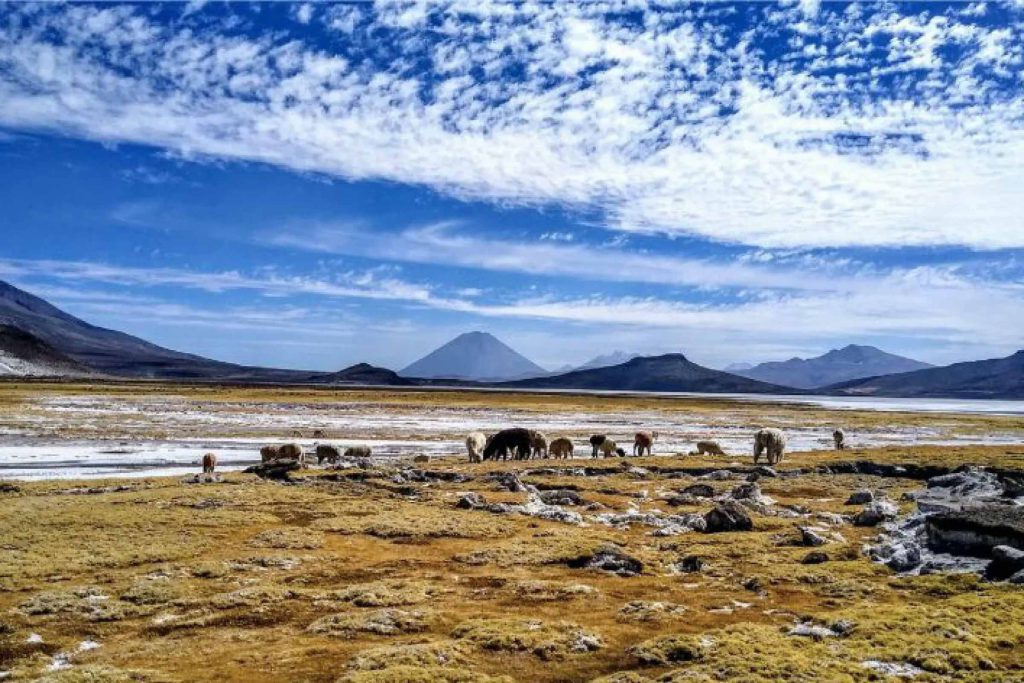
- Laguna de Salinas: a high-altitude Ramsar wetland between Misti, Ubinas and Pichu Pichu. With water, it gathers flamingos; in the dry season it turns into a white salt flat.
- Flamingos: the reserve protects the Andean, James’s and Chilean flamingos, plus Andean ducks and other wetland birds.
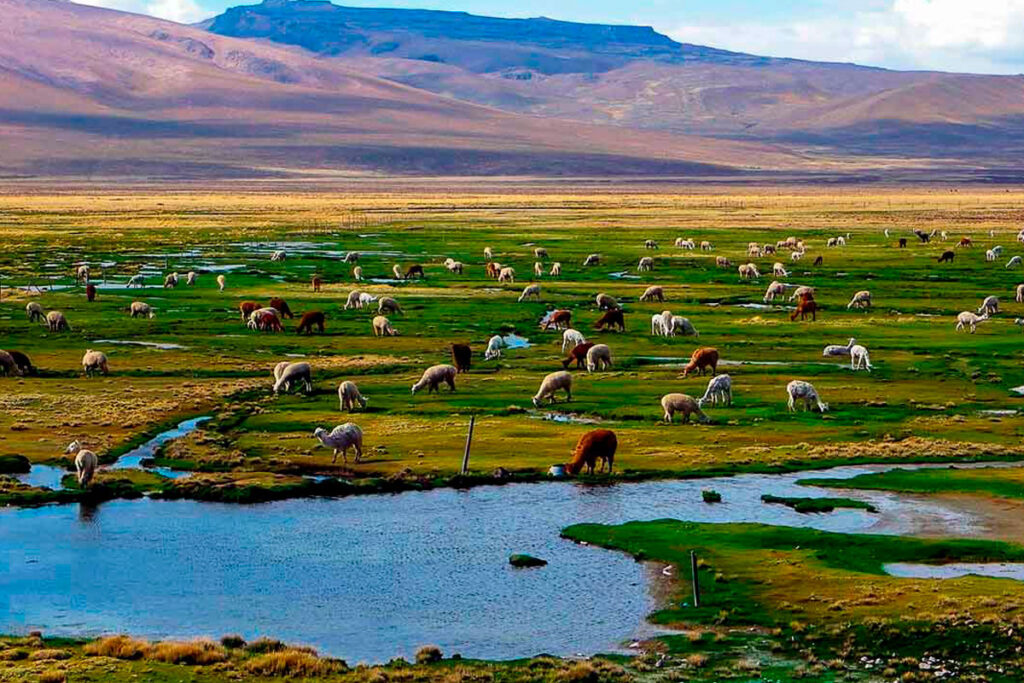
- Vicuñas and taruca: vicuñas roam free on the puna; on the road to Colca you see them mostly around Pampa Cañahuas.
- Arequipa’s volcanoes: Misti and Chachani, both climbed from the reserve, with Pichu Pichu and Ubinas on the horizon.
- Queñua woodlands and high villages such as Chiguata, on the way to the lagoon.
When to go: water or salt
| Season | What Laguna de Salinas looks like | Best for |
|---|---|---|
| December to May (rainy season) | Water and more flamingos; green wetlands | Birdwatching |
| June to November (dry season) | A white salt flat, clear skies, very cold nights | Salt-flat landscapes and blue-sky photos |
Based on our guides’ experience on the Salinas tour. Flamingo numbers depend on each year’s water.
Three ways to visit the reserve
- A day trip to Laguna de SalinasPick-up in Arequipa between 6:00 and 6:30 a.m., about 3 hours on the road with a stop in Chiguata, a walk by the lagoon and back around 1:30 p.m. You can extend it to the Lojen mini-volcano and the hot springs, back around 4:30 p.m. This is our Salinas y Aguada Blanca tour.
- On the way to the Colca CanyonThe road from Arequipa to Chivay crosses the puna through Pampa Cañahuas, Patahuasi and Patapampa, with stops for vicuñas and views. See the Colca Canyon in 1 day or in 2 days.
- Pillones waterfallThe Pillones waterfall tour also crosses the reserve, among llamas, alpacas and vicuñas.
Altitude, weather and what to bring
The reserve sits at about 4,300 m (14,100 ft), roughly 1,900 m higher than Arequipa. If you arrive from the coast, spend a day or two in the city before going up, eat lightly and drink water. Done this way, the visit is a good acclimatization step before the Colca Canyon or the volcanoes. Bring warm layers, a windproof jacket, sunglasses, sunscreen and some cash in soles for small community fees and the hot springs. The sun is strong and the air is very dry.
The reserve’s volcanoes
Misti and Chachani, the volcanoes you see from Arequipa, are inside the reserve and are climbed in two days from the puna. If you are thinking about climbing one, compare altitude, difficulty and views in our guide Misti vs Chachani, and see the Misti climb and the Chachani climb.
Frequently asked questions
Where is the Salinas y Aguada Blanca National Reserve?
When can you see flamingos at Laguna de Salinas?
How long is the Salinas y Aguada Blanca tour?
What animals live in the reserve?
Can I see the reserve on the way to the Colca Canyon?
Will the altitude affect me in Salinas y Aguada Blanca?

About the author
Raquel Sánchez co-founded Terra Quechua Peru in Cusco in 2012 together with Edwin Medina, both with extensive trekking experience. She writes our Inca Trail guides from the day-to-day work of securing permits and organizing every departure with our guides, cooks and porters.