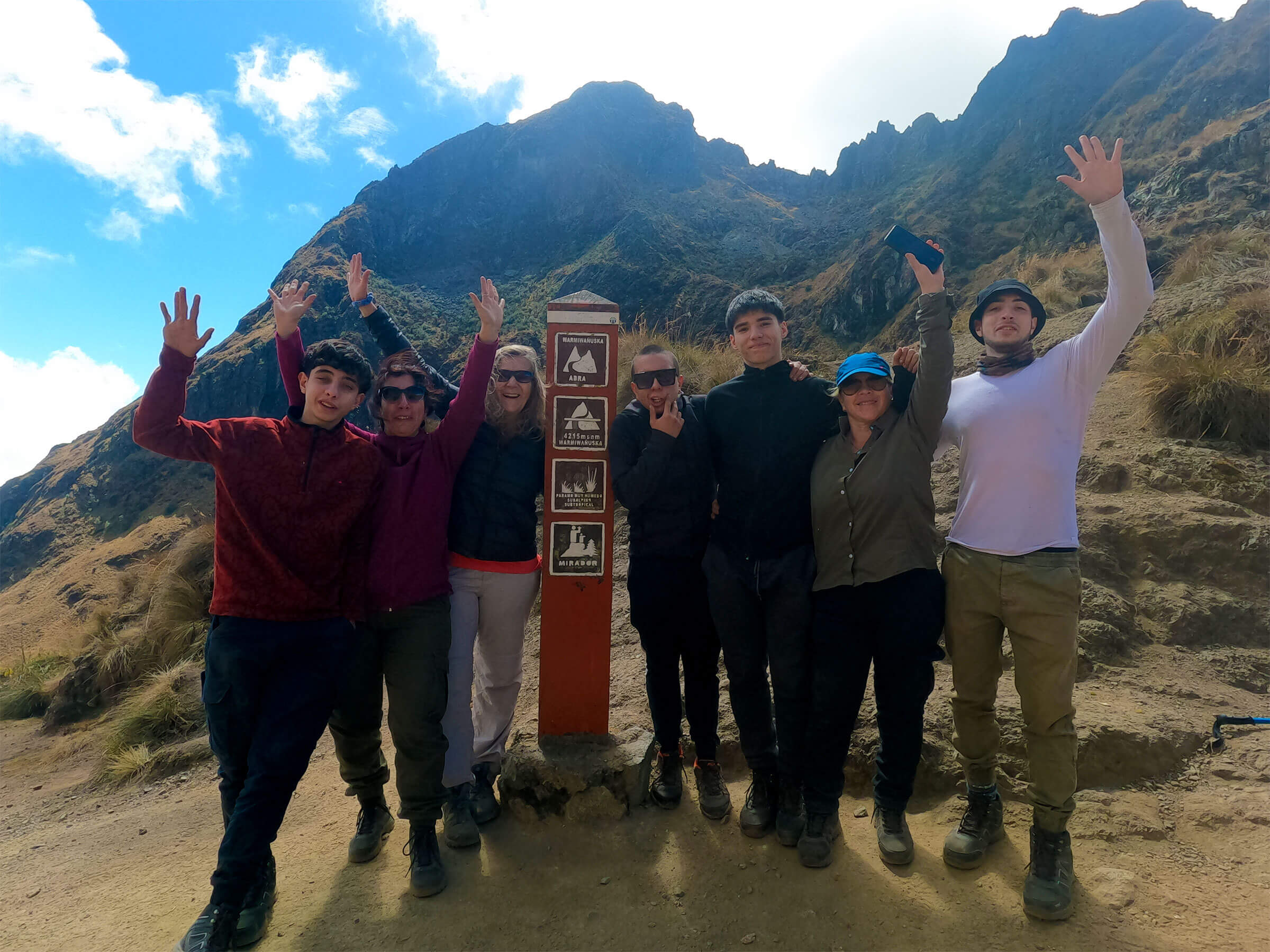
Here is a number most comparisons miss: the hardest day on the Inca Trail and the summit night on Kilimanjaro both climb roughly 1,200 m (about 3,900 ft). On paper they look alike. On the mountain they could not feel more different — because one of those climbs tops out at 4,215 m and the other at 5,895 m. That single fact explains almost everything about which trek is harder, which one you should do first and how you should prepare.
We are a Cusco-based Inca Trail operator, so we will be upfront: Kilimanjaro is the harder trek. But “harder” is not the same as “better for you,” and the Inca Trail has challenges Kilimanjaro doesn’t. Below are the numbers side by side, then what they mean for your plans in 2027.
- 5,895 mKilimanjaro’s summit (19,341 ft) — about 1,680 m higher than the Inca Trail’s highest point.
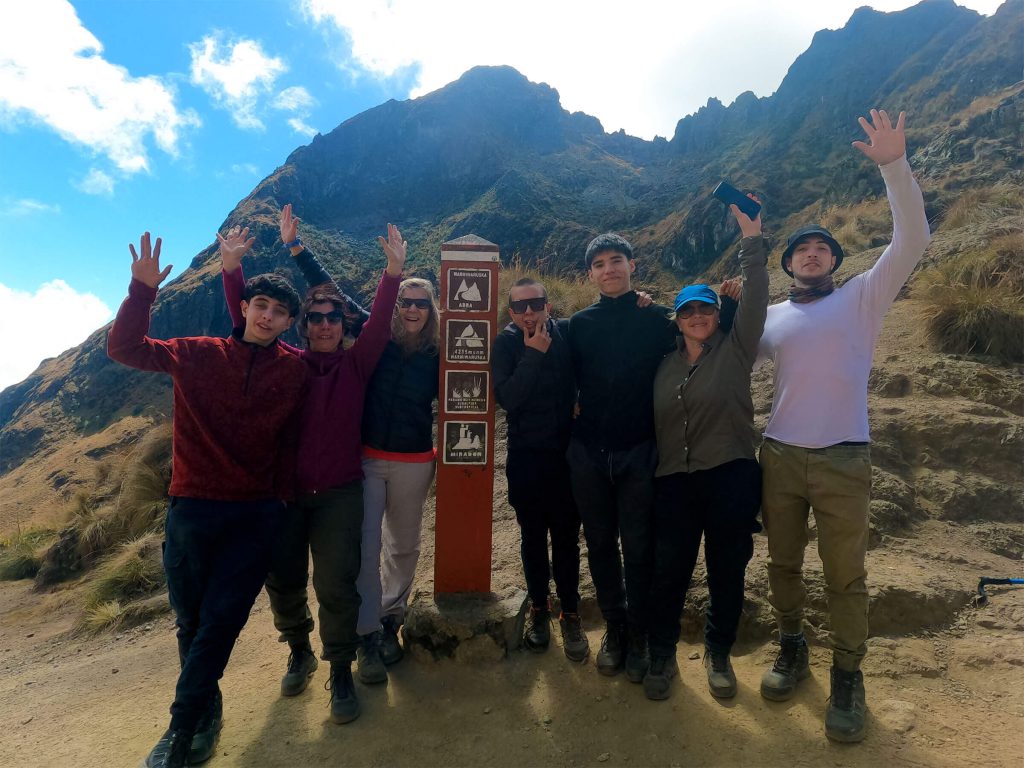
- 4,215 mDead Woman’s Pass (13,828 ft), the top of the Classic Inca Trail.
- ≈1,200 mclimbed on the hardest day of each trek — at very different altitudes.
Inca Trail vs Kilimanjaro: the numbers side by side
| Classic Inca Trail (Peru) | Kilimanjaro (Tanzania) | |
|---|---|---|
| Highest point | 4,215 m / 13,828 ft (Dead Woman’s Pass) | 5,895 m / 19,341 ft (Uhuru Peak) |
| Highest night’s sleep | About 3,600–3,800 m (11,800–12,500 ft) | About 4,600–4,700 m (15,100–15,400 ft) at high camp |
| Length | ≈42 km (26 mi) in 4 days | 5 to 9 days depending on the route |
| Hardest day | Day 2: ≈1,200 m up to the pass, then a steep descent to camp | Summit night: ≈1,200 m up from high camp starting around midnight, then a long descent the same day |
| Air at the high point | Roughly 60% of the oxygen available at sea level | Roughly half the oxygen available at sea level |
| Terrain | Original Inca stone steps — lots of them, up and down | Mostly dirt and scree paths; loose volcanic gravel near the top |
| Night temperatures | Near or slightly below freezing at the highest camps in the dry season | Well below freezing near the summit, before wind chill |
| Daily cap | 500 permits per day, including guides, cooks and porters | No daily cap on climbers |
| How far ahead to book | For May–September, before the permits go on sale | Usually 2–3 months is enough |
| Guide required | Yes, licensed operator and guide | Yes, licensed guide |
| Typical trip price | With Terra Quechua, from US$795 per person | Commonly US$2,000–4,000+ per person before flights; park fees alone are roughly US$1,000 on a 7-day climb |
| What waits at the end | Machu Picchu through the Sun Gate | The roof of Africa — and the long walk down |
Kilimanjaro figures are typical ranges published by Tanzanian operators and park-fee guides; they change by route, season and company.
Same climb, different planet: why altitude decides it
On day 2 of the Inca Trail you climb from the first camp — around 3,000–3,300 m depending on where you slept — up to Dead Woman’s Pass. It is steep, it is relentless stone stairs, and most people reach the top in the late morning. Then it is over: you drop to a camp at around 3,600 m and have the afternoon to rest.
Kilimanjaro’s summit push covers a similar vertical gain, but it starts higher than the Inca Trail’s highest point. You leave high camp at about 4,670 m in the dark, usually around midnight, and climb for six to eight hours in freezing air with roughly half the oxygen you have at home. After the summit you descend a long way the same day. That combination — cold, darkness, sleep loss and thin air — is why many climbers turn around, while the Inca Trail’s pass is something almost every reasonably fit hiker gets over.
Where the Inca Trail is actually tougher
Kilimanjaro wins on altitude, but people who have done both often mention three things about the Inca Trail that surprised them:
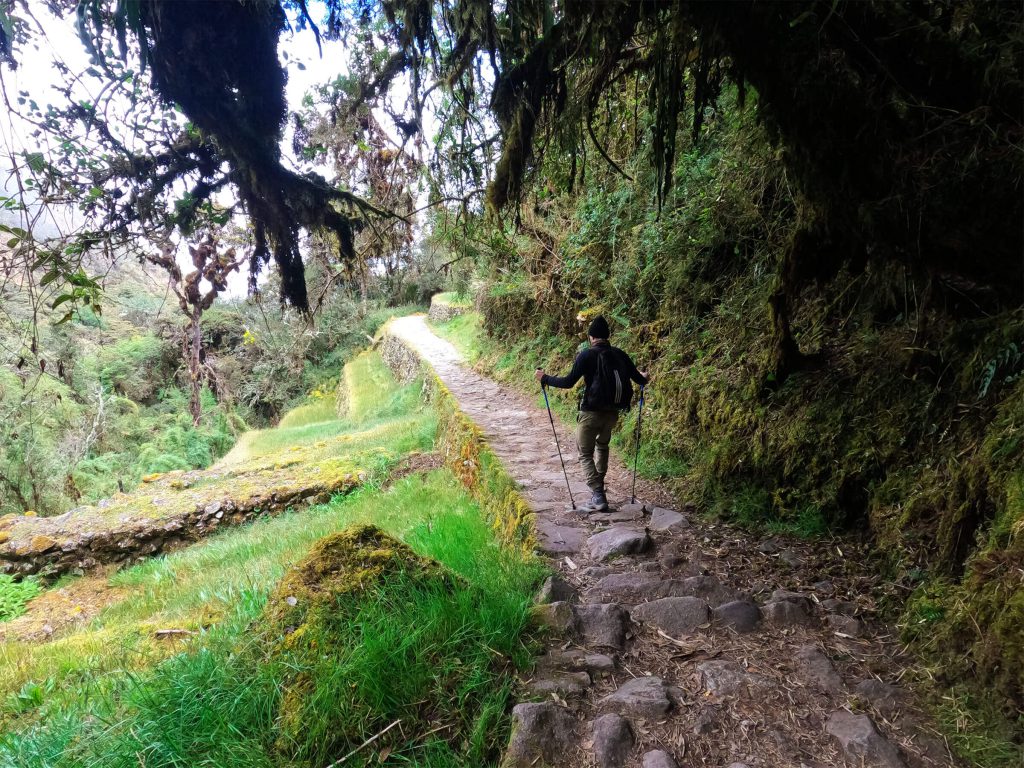
- The steps. The Inca Trail is a built road of uneven stone stairs. Day 3 in particular is a long descent that works your knees and quads in a way Kilimanjaro’s dirt paths do not. Trekking poles help a lot.
- Less time to adapt. Kilimanjaro routes build in slow days to acclimatize. The Inca Trail goes from the trailhead to its highest point in a day and a half, so the days you spend in Cusco beforehand do the acclimatization work.
- Humidity and cloud forest. After the pass you drop into warm, wet cloud forest. Steps can be slippery, especially from December to March.
Doing both? Why the Inca Trail should come first
If both treks are on your list, we suggest the Inca Trail first — and not only because we run it. It is a lower-stakes introduction to multi-day hiking at altitude: you learn how your body reacts above 3,500 m, how you sleep in a tent, how you handle long descents and whether trekking poles work for you. That knowledge is exactly what makes a Kilimanjaro climb safer and more enjoyable.
A realistic plan if you want to do both within a year or two:
- Now: lock your Inca Trail datesThe Inca Trail is the one with a hard daily cap. Dry-season dates sell out months ahead, so reserve first and plan the rest of the year around it.
- 8–12 weeks before Peru: build stair and hill fitnessWeekly long hikes with elevation gain, plus stairs or a step machine with a light pack. Train descents, not just climbs.
- In Peru: arrive in Cusco 2–3 days earlyCusco sits above 3,300 m. Those days are your acclimatization, so keep them easy.
- After the Inca Trail: note what you learnedHow you slept, how your head felt at the pass, what gear you missed. Take it to your Kilimanjaro planning.
- For Kilimanjaro: choose a longer routeRoutes of 7–8 days give your body more time to adapt than 5–6 day routes, and operators consistently report higher summit rates on them. Ask your doctor about altitude medication for both trips.
Which one is right for you?
- Choose the Inca Trail if this is your first multi-day trek, if you want history and ruins along the way, if you have about a week in total, or if your budget is closer to US$1,000 than US$4,000.
- Choose Kilimanjaro if you already know how you handle altitude, you want a summit goal, and you can give it 7–9 days on the mountain plus travel.
- Short on time or worried about the pass? The Short Inca Trail in 2 days tops out around 2,720 m and still ends at the Sun Gate. Our comparison of the 2-day vs 4-day Inca Trail helps you decide.
Booking timing for 2027
This is the biggest practical difference. Kilimanjaro has no daily quota, so you can usually book a couple of months ahead. The Inca Trail allows 500 people per day — guides, cooks and porters included — and Peru’s Ministry of Culture is expected to release the 2027 permits in October or November 2026 (see our 2027 permit release tracker). We already take early bookings and request your permit the moment sales open. Check dates in the calendar below or read our full guide to Inca Trail permits and availability for 2027.
If your group includes older hikers, read hiking the Inca Trail at 60 or 70+, and if your dates are already gone, see our best alternatives to the Inca Trail.
Frequently asked questions
Is the Inca Trail harder than Kilimanjaro?
Is Machu Picchu higher than Kilimanjaro?
If I can hike the Inca Trail, can I climb Kilimanjaro?
Which is more expensive?
Can I do both in the same year?
About the author
Raquel Sánchez co-founded Terra Quechua Peru in Cusco in 2012 together with Edwin Medina, both with extensive trekking experience. She writes our Inca Trail guides from the day-to-day work of securing permits and organizing every departure with our guides, cooks and porters.