
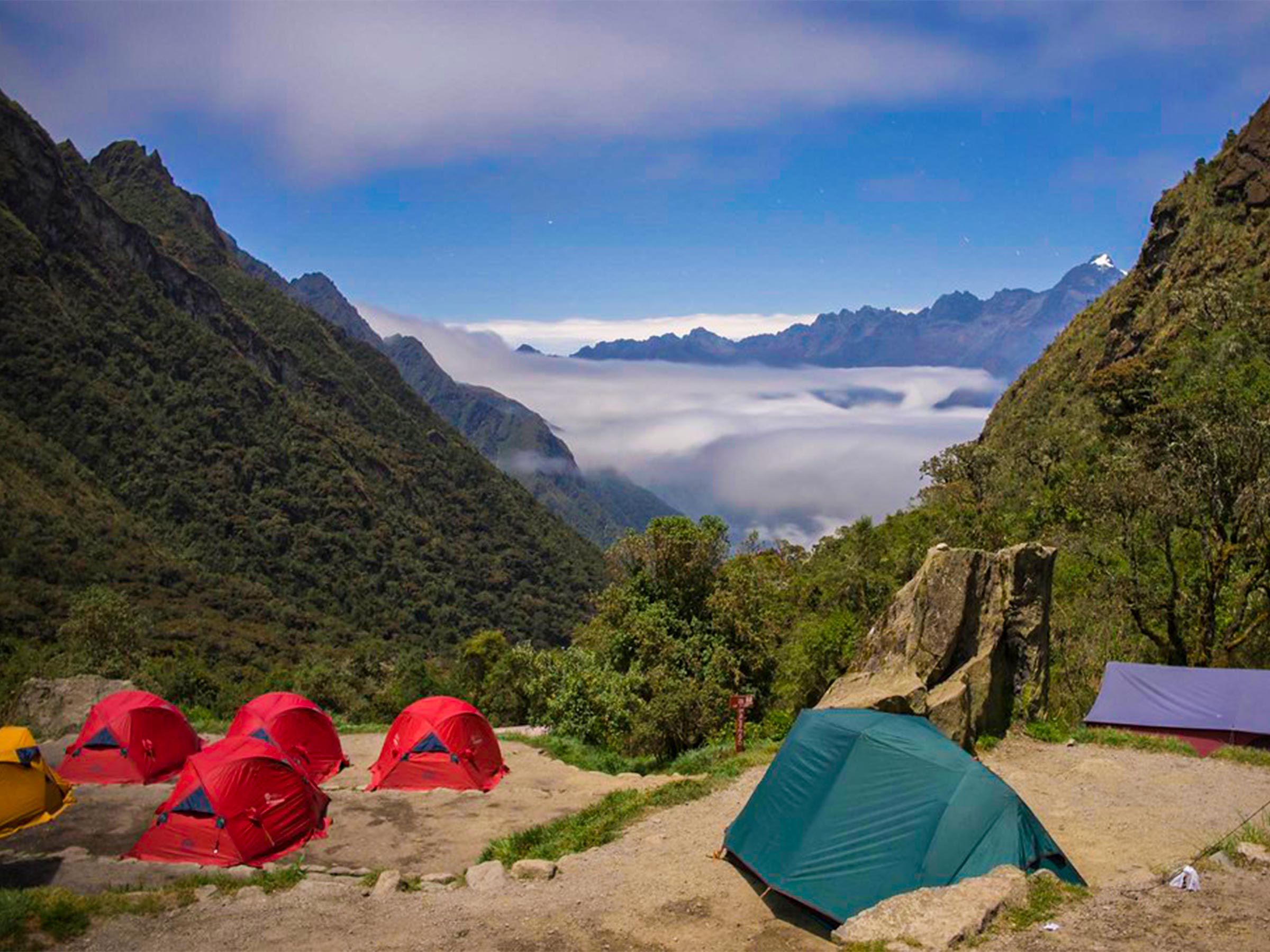
It is the question almost nobody asks out loud and almost everybody wonders about: what are the bathrooms like on the Inca Trail? The short answer is that there are toilets along the way — more than you might expect on a trail with no roads — but they are basic, they get simpler the further you walk, and Machu Picchu itself has none inside the site. Here is exactly what to expect, stop by stop, from the people who walk this trail every week.
- Squatis the norm. Most toilet blocks on the trail are squat toilets, not seated ones.
- Bring paperThere is rarely toilet paper, soap or a light. Used paper goes in the bin, never in the toilet.
- 0 toiletsinside Machu Picchu. The only ones are at the entrance, outside the gate, for a small fee.
The honest overview
On the first morning you pass small villages where families run simple toilets and charge a coin or two (about S/1). They are usually the cleanest you will see. From the second day the trail is inside the protected area and the toilets are public blocks at or near the campsites: free, basic, often with wet floors, doors that don’t always lock and no lighting. There are no toilets on the high passes, so the longest stretch without one is usually the climb to Dead Woman’s Pass and the descent to the next camp.
None of this should put you off. Thousands of people of every age hike the trail each year, and a little preparation makes the difference between “fine” and “I wish someone had told me.”
Stop by stop: toilets on the 4-day Classic Inca Trail
| Where | Day | What you’ll usually find | Tip |
|---|---|---|---|
| Ollantaytambo / breakfast stop | 1 | Café and restaurant toilets with seats | The last “normal” bathroom for four days. Use it. |
| Km 82 trailhead (Piscacucho) | 1 | Toilets near the checkpoint, small fee | Carry coins in soles. |
| Villages on day 1 (Miskay, Wayllabamba) | 1 | Family-run toilets, about S/1 | Often the cleanest on the trail. |
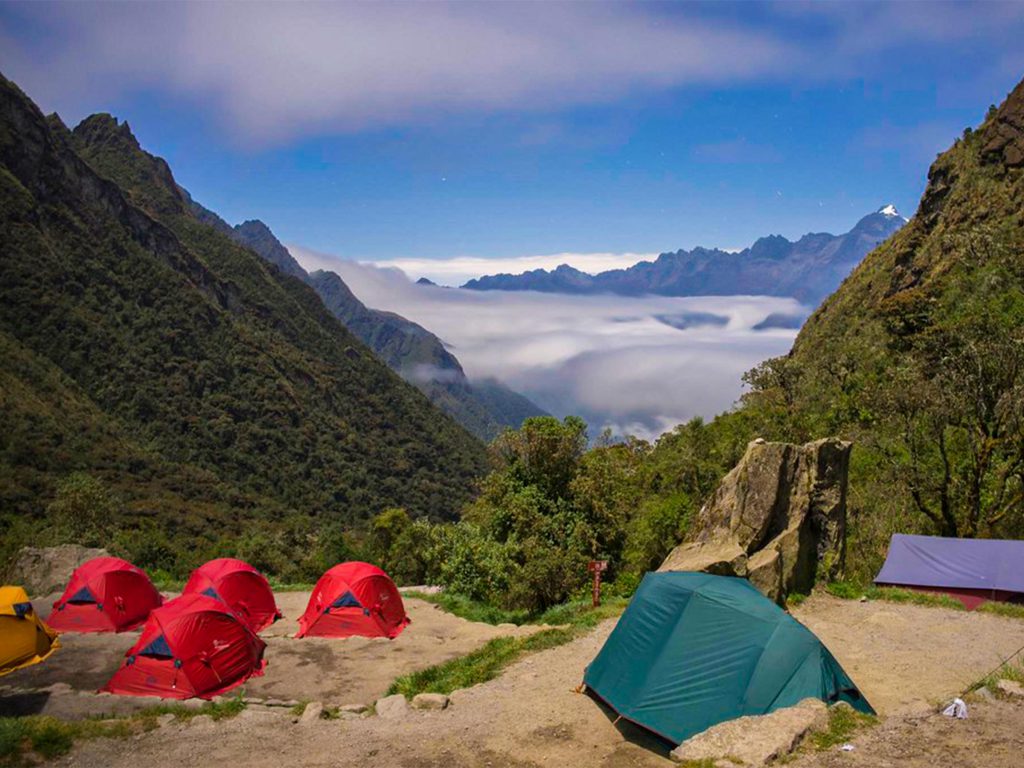
| First camp (Wayllabamba or Ayapata) | 1 | Basic toilet block | Find it before dark and note the path. |
| Dead Woman’s Pass (4,215 m) | 2 | None | Go at the last camp or rest stop before the final climb. |
| Second camp (Pacaymayo or Chaquicocha) | 2 | Public block, free, basic | Headlamp and sandals make night trips easier. |
| Phuyupatamarca area | 3 | Very basic; water is not always available | Hand sanitizer is your friend here. |
| Wiñay Wayna (last camp) | 3 | Usually the best block on the trail | Busy at dawn — go early before the 4 a.m. start. |
| Sun Gate and the path into Machu Picchu | 4 | None | Go at Wiñay Wayna before the final checkpoint. |
| Machu Picchu entrance building | 4 | Paid toilets outside the gate, about S/2 | There are no toilets inside the citadel. |
Campsites are assigned with each permit and can change by season, and facilities are maintained by the park, so conditions vary. Your guide will tell you each morning where the next toilet is.
On the 2-day and 1-day Inca Trail
The shorter routes are much easier on this front. You start at Km 104 after a train ride, walk for roughly six to seven hours and finish at Machu Picchu. Use the facilities in Ollantaytambo and on the train, and expect a toilet stop at Wiñay Wayna around the middle of the hike. On the Short Inca Trail in 2 days you sleep in a hotel in Aguas Calientes, so your evening bathroom is a private one with a shower.
What to pack (the small kit that changes everything)
- A roll of toilet paper in a zip bag, plus a second empty zip bag for used paper when there is no bin.
- Hand sanitizer and a few wet wipes — water and soap are not guaranteed.
- A headlamp for night trips; blocks have no lights.
- Camp sandals so you are not walking into wet floors in your socks.
- Coins in soles for the paid toilets on day 1 and at Machu Picchu.
- A small personal medical kit, including something for an upset stomach. Ask your doctor what suits you.
For women: nights, periods and privacy
- Expect more night trips. Altitude makes most people urinate more, and some altitude medicines do too. Keep your headlamp and sandals by the tent door.
- A pee cloth or reusable wipe saves a lot of paper and is easy to rinse at camp.
- Periods: pack out everything in an opaque, sealable bag. A menstrual cup works well if you already use one; empty it in a toilet block, never near water.
- Privacy on the trail: if you need to go between stops, step well off the path, away from water and ruins, and pack out your paper. Your guide can tell you the best spot and keep the group moving ahead.
Private toilet tents: worth asking about
Many operators can set up a private toilet tent at camp: a small tent with a portable seat, carried and cleaned by the porters. It is the single biggest comfort upgrade on the trail, especially at night. If it matters to you, ask before you book whether it is included on your departure or available as an add-on — and ask us the same; we will tell you exactly what your trip includes.
Machu Picchu: plan your last stop
This is the one that catches people out. There are no toilets inside the archaeological site. On the Classic route you walk from Wiñay Wayna to the Sun Gate and down into the citadel, then do your guided visit — so use the Wiñay Wayna block before the final checkpoint. The paid toilets are at the entrance building outside the gate.
Planning your trek
If camping toilets are a deal-breaker, the 2-day route with a hotel night is a great option — our 2-day vs 4-day comparison explains the trade-offs. Wondering how tough the rest of the trek is? See how the Inca Trail compares with Kilimanjaro. When you are ready, check live dates on our Inca Trail permits and availability page.
Frequently asked questions
Are there toilets on the Inca Trail?
Do you have to pay to use them?
Are they squat toilets?
Are there bathrooms inside Machu Picchu?
Can you shower on the Inca Trail?
About the author
Raquel Sánchez co-founded Terra Quechua Peru in Cusco in 2012 together with Edwin Medina, both with extensive trekking experience. She writes our Inca Trail guides from the day-to-day work of securing permits and organizing every departure with our guides, cooks and porters.