
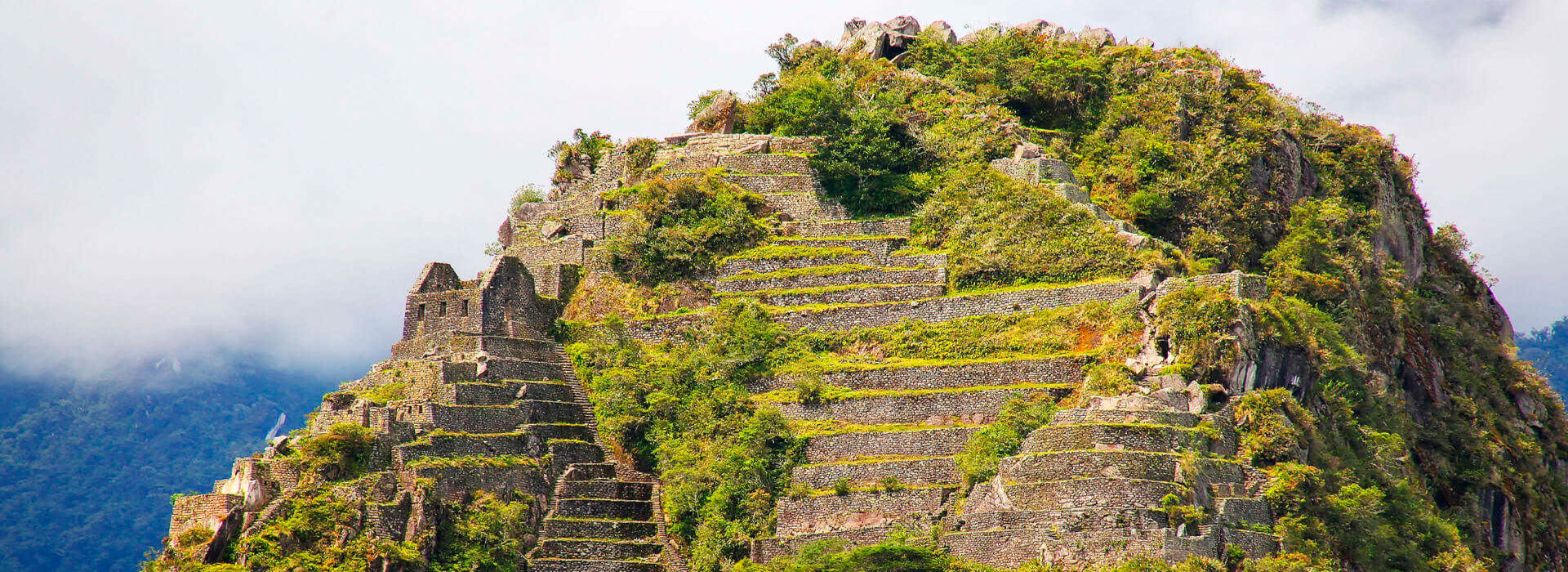
Huayna Picchu is the steep peak behind every classic photo of Machu Picchu, and its most famous section has a nickname that doesn’t help anyone’s nerves: the “Stairs of Death.” So, is it dangerous? The honest answer is that it is steep, exposed and demanding, but not deadly for hikers who stay on the trail. What makes it feel risky — and what makes it safe — depends on the section, the weather and whether you are going up or down. Here is the climb broken down section by section, the sourced safety record, and how to fit it into an Inca Trail trip in 2027.
- ≈2,700 msummit altitude (sources give 2,690–2,720 m), roughly 260–360 m above the citadel.
- 2–3 hround trip for most hikers, including time at the top.
- Separate ticketHuayna Picchu is not included in the Inca Trail permit.
Why they call them the “Stairs of Death”
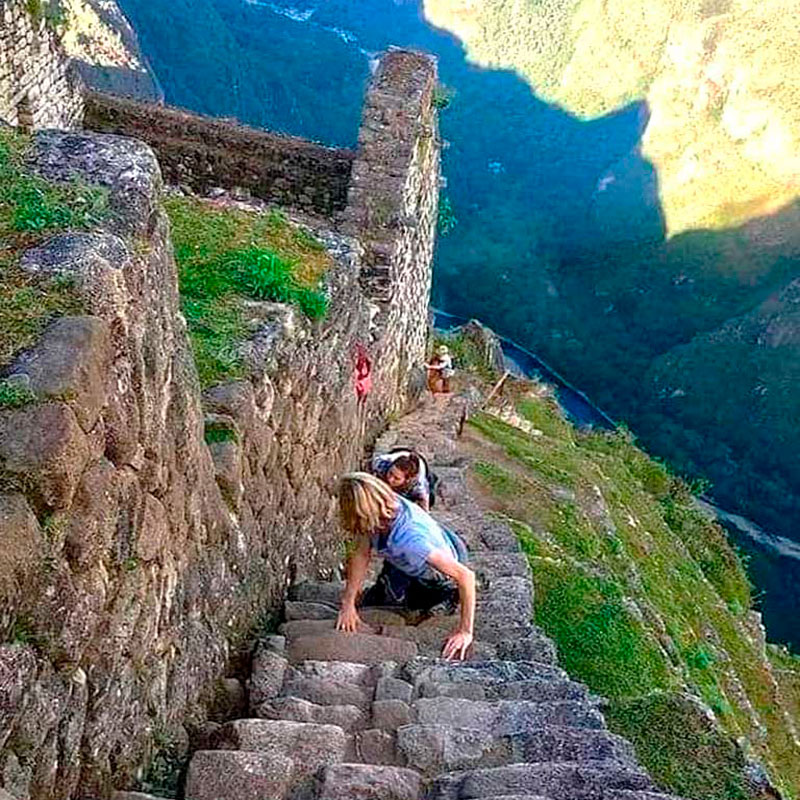
The nickname comes from a short, very steep staircase near the summit: narrow Inca steps cut into the rock with a long drop to the side. Looking down them for the first time is genuinely dramatic. But the name is marketing more than history. Steel cables run along the steepest stretches, and in June 2026 the route was closed for a month so that the Ministry of Culture could renew those handrails, repair steps and improve drainage.
The climb, section by section
| Section | What it’s like | Exposure | Tip from our guides |
|---|---|---|---|
| 1. Control post to the saddle | Forest path and stone steps behind the Sacred Rock | Low | Start slowly; this is where people burn out by rushing. |
| 2. Zigzag stairs up the ridge | Steep, relentless Inca stairways, cables on some stretches | Medium | Short steps, regular breathing, and stop on wide landings rather than on the stairs. |
| 3. Summit terraces and narrow passages | Terraces, tight gaps between rocks and a low passage you may need to crouch through | Medium | Keep your daypack small so you don’t get snagged. |
| 4. Summit boulders | Open rocks with the famous view down to Machu Picchu | High | Sit down for photos. No jumping, no edge poses. |
| 5. The descent (“Stairs of Death”) | Very steep, narrow steps with a cable to hold | High | Go down slowly, side-on or facing the steps, one hand on the cable or rock. |
Exposure ratings are our guides’ assessment in dry conditions. Wet rock makes every section harder.
Almost every hiker we take up says the same thing afterwards: going down is scarier than going up. On the way up you look at the steps in front of you; on the way down you look at the drop.
The safety record, with sources
You will find pages claiming “nobody has ever died” and others listing dramatic death tolls. Neither is accurate. The best-documented fatality on the mountain dates from 1997, when a 68-year-old American visitor fell while climbing, as reported by UPI at the time. We could not find a reliable record of a death on the “Stairs of Death” section itself. Other widely shared cases either lack a primary source or happened elsewhere in the sanctuary, usually after people left the marked path.
The risks that do matter are ordinary ones: slipping on wet steps, twisted ankles, dizziness from exertion or heights, and heat. Stay on the trail, follow the ranger’s instructions and turn back if the rock is wet and you feel unsure.
Afraid of heights? A quick self-check
- Can you walk down steep open stairs, like the top rows of a stadium, without freezing?
- Are you comfortable on a narrow path with a drop to one side if there is something to hold?
- Can you sit on an exposed rock and enjoy the view rather than look for the way down?
If you answer “no” to two of these, consider Machu Picchu Mountain instead. It is higher and takes longer, but the path is wider and much less exposed, and the views are just as rewarding.
Adding Huayna Picchu to the Inca Trail in 2027
This is where many travelers get caught out. Since 2026, Inca Trail hikers enter Machu Picchu on a specific route of Circuit 3 reserved for them, and that route does not include Huayna Picchu. The mountain is a separate ticket (Route 3-A, “Montaña Waynapicchu”), with its own daily limit and entry times, sold on the official Ministry of Culture platform or through your operator.
- After the 4-day Classic: you arrive at dawn after four days of hiking. Climbing the same day is possible only if an early enough slot is available and your legs agree. Most people are happier with a night in Aguas Calientes and Huayna Picchu the next morning.
- With the 2-day Inca Trail: the easiest combination. You arrive on day 1 and can climb Huayna Picchu on the morning of day 2, before or after your guided visit, depending on your ticket time.
- Book both together. Huayna Picchu tickets are limited and sell out in the dry season. When you reserve your trek, tell us you want it and we’ll try to secure a slot that fits your itinerary. With us it is an optional extra of US$80 per person.
Plan the rest of your trip
Choosing a route? Compare the 2-day and 4-day Inca Trail, see what the full trip costs in 2027 and check live Inca Trail dates in the calendar below.
Frequently asked questions
Is Huayna Picchu dangerous?
Has anyone died on the Stairs of Death?
How long does it take to climb Huayna Picchu?
Is Huayna Picchu included with the Inca Trail?
Huayna Picchu or Machu Picchu Mountain?

About the author
Raquel Sánchez co-founded Terra Quechua Peru in Cusco in 2012 together with Edwin Medina, both with extensive trekking experience. She writes our Inca Trail guides from the day-to-day work of securing permits and organizing every departure with our guides, cooks and porters.