Choose the Inca Trail if you want history: original Inca paving, a chain of ruins along the way and the arrival at Machu Picchu on foot through the Sun Gate. Choose the Salkantay Trek if you want big mountain scenery, more flexibility with dates and no permit hunt — at the cost of a higher pass and an arrival by the valley instead of the Sun Gate. Both are excellent; they are simply different trips. Here is an honest side-by-side from a Cusco operator that runs both.
Inca Trail vs Salkantay at a glance
| Classic Inca Trail | Salkantay Trek | |
|---|---|---|
| Days | 4 (also 2-day and 1-day versions) | 2 to 5, depending on the itinerary |
| Distance | ≈42 km / 26 mi | Roughly 65–75 km / 40–46 mi on the classic 5-day route |
| Highest point | 4,215 m / 13,828 ft (Dead Woman’s Pass) | ≈4,600 m / 15,090 ft (Salkantay Pass) |
| Permit | Official Inca Trail permit, limited per day, issued with your passport | No Inca Trail permit; you need a timed Machu Picchu ticket |
| Arrival at Machu Picchu | On foot through the Sun Gate | From Aguas Calientes, by bus or on foot, with a regular ticket |
| Inca sites on the way | Many: Llaqtapata, Runkurakay, Sayacmarca, Phuyupatamarca, Wiñay Wayna | Few; the highlight is nature (Humantay Lake, glaciers, cloud forest) |
| Scenery | Andean valleys, puna and cloud forest | Snow peaks and glaciers, then subtropical valleys and coffee farms |
| Nights | Camping on official campsites | Camping, Andean huts or glass-roofed domes |
| Availability | Sells out months ahead in the dry season | Usually available weeks ahead |
| Closed | Every February | Open all year (rainy season is wet) |
Distances and altitudes are approximate and vary with the itinerary. Salkantay routes differ between operators and between our own camping, hut and dome versions.
Which is harder?
On altitude, Salkantay is harder. The pass sits at about 4,600 m (15,090 ft), almost 400 m (1,300 ft) higher than anything on the Inca Trail, and the first night is usually around 3,900 m. The day over the pass is long and cold, and then the trail drops more than 2,000 m into the cloud forest, which is hard on the knees.
The Inca Trail concentrates its difficulty in two days: the climb to Dead Woman’s Pass on day 2 and the long stone stairways of day 3. It is shorter overall, but the steps are relentless. Our guide to how hard the Inca Trail is breaks it down day by day. On both treks, two or three days of acclimatization in Cusco make all the difference.
The experience: history vs mountains
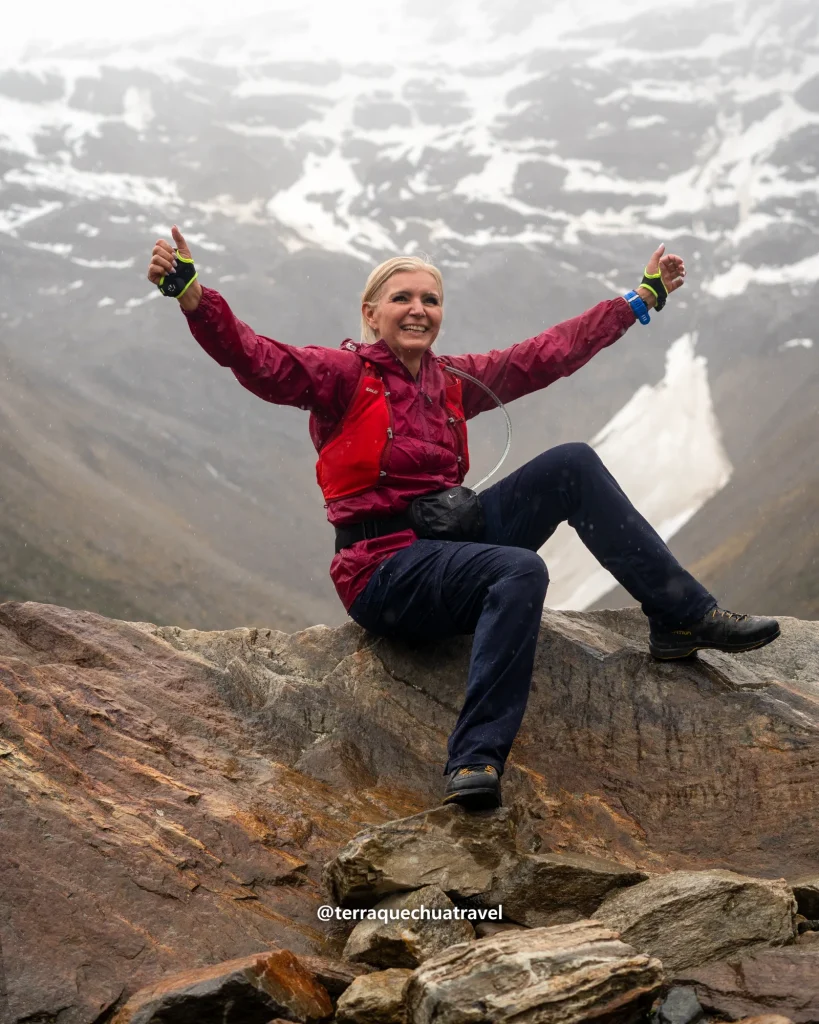
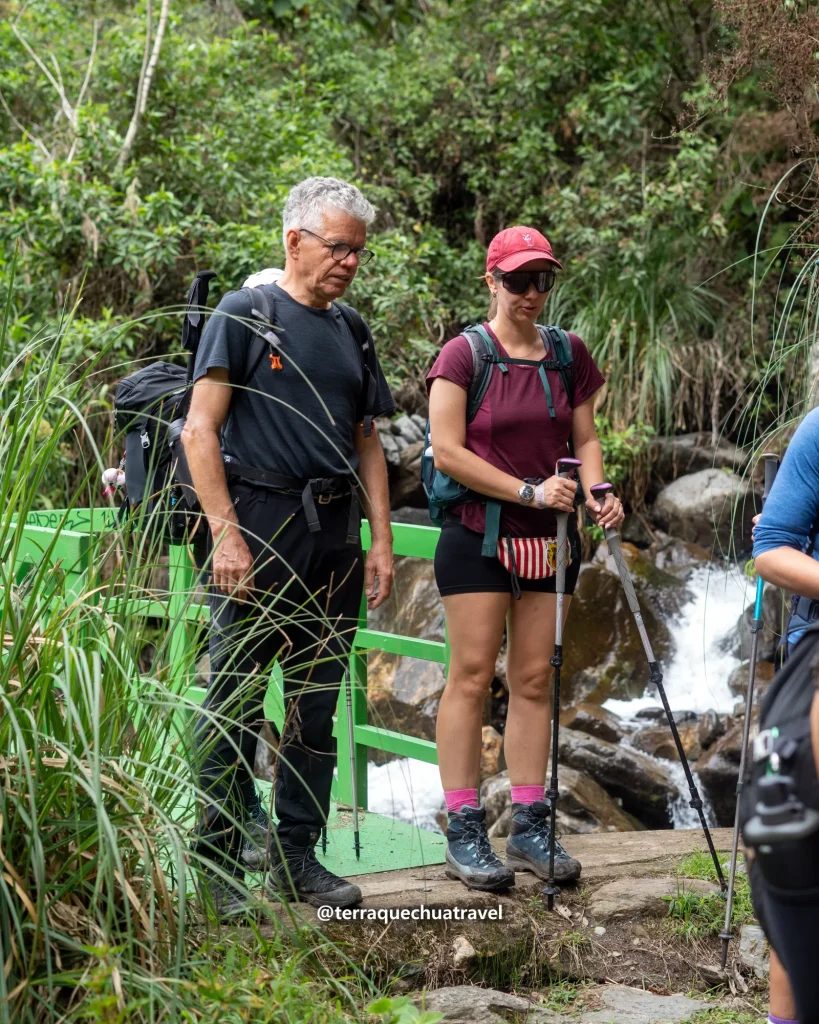
The Inca Trail is a walk through an archaeological site 42 km long. You step on the same paving stones as the Incas, pass through a tunnel carved in rock and camp beside ruins. The payoff is emotional: seeing Machu Picchu appear below you from the Sun Gate after four days on foot. Read our Classic Inca Trail day by day to see how it unfolds.
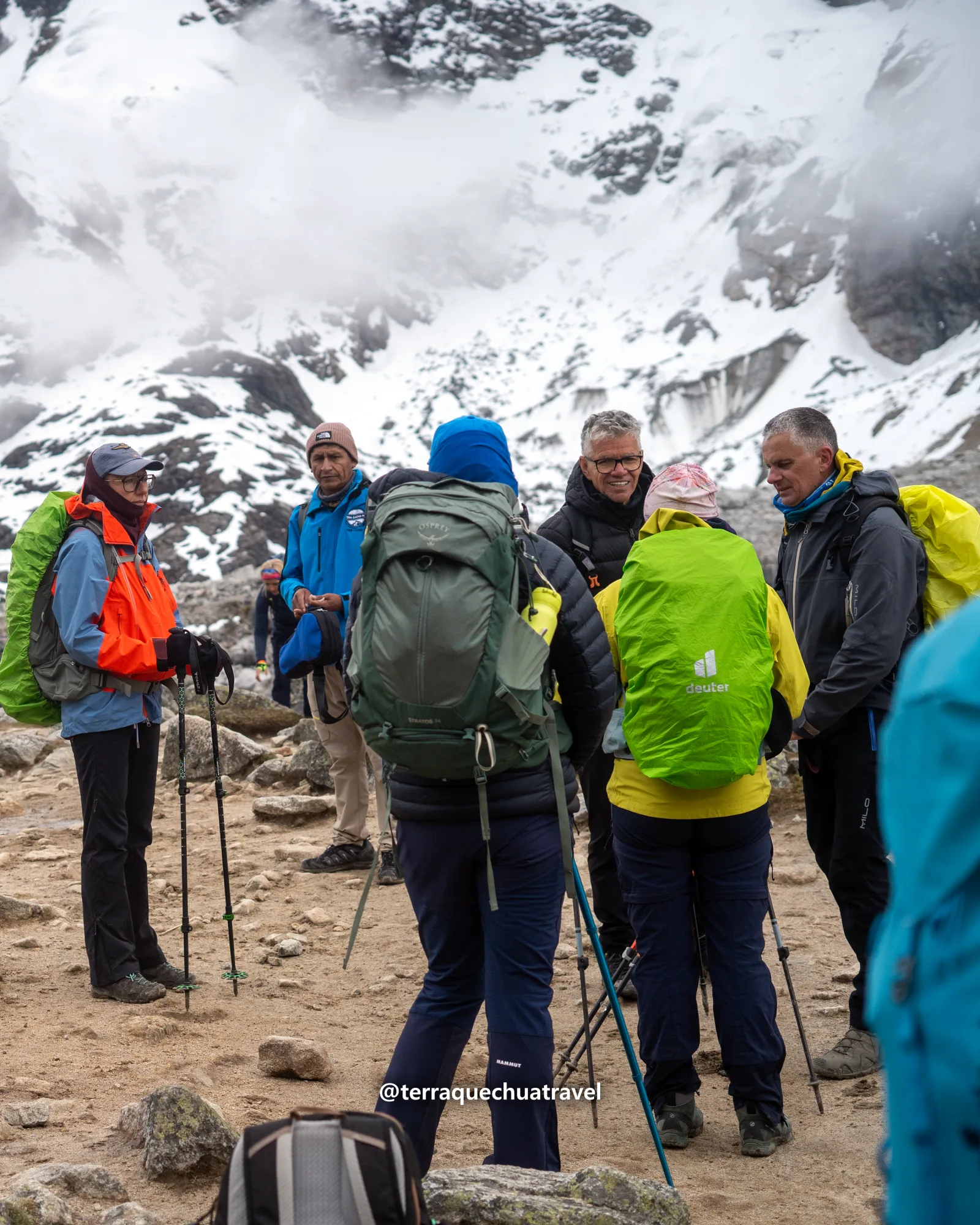
Salkantay is about landscape. You walk under a 6,000 m-plus snow peak, visit turquoise Humantay Lake, cross the pass among glaciers and then descend through a dramatic change of climates, from frost to orchids and coffee farms, in a couple of days. You reach Aguas Calientes on foot or by train and visit Machu Picchu with a timed entrance ticket, like other visitors.
Permits and availability: the practical difference
This is often what decides it. The Inca Trail needs an official permit in your name, and the dry-season dates sell out months ahead — for 2027, before the permits even go on sale, expected October–November 2026 (see how far in advance to book). Salkantay needs no Inca Trail permit, so it can usually be booked a few weeks ahead; you only need the Machu Picchu entrance, which is included in our treks that end at Machu Picchu.
Where you sleep
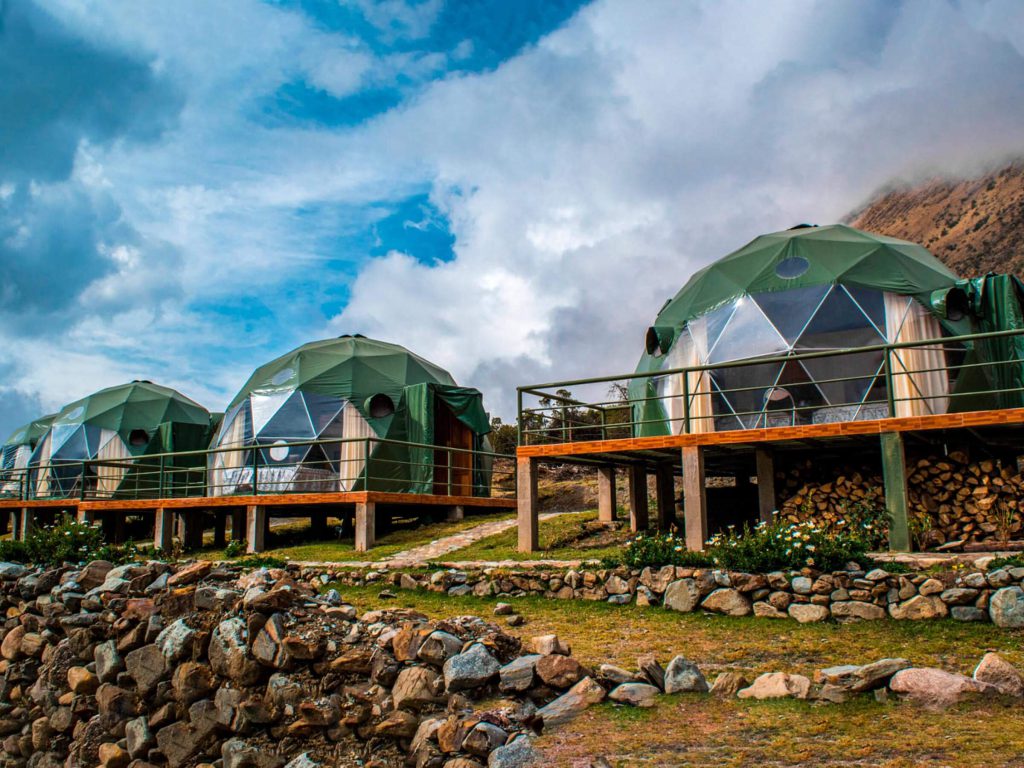
On the Inca Trail everyone camps on official campsites assigned with the permit. On Salkantay you can choose: classic camping and Andean huts, or glass-roofed domes where you fall asleep looking at the stars and the glacier, as on our 5-day dome trek and the 4-day dome-to-dome route. The choice changes comfort, not the difficulty of the trail.
Which one should you choose?
- “I want the Sun Gate and Inca history” → Classic Inca Trail, or the 2-day Inca Trail if you are short on time.
- “I want glaciers and big mountains” → Salkantay.
- “My dates are fixed and the Inca Trail is sold out” → Salkantay, or see all our Inca Trail alternatives.
- “I’m worried about altitude” → Inca Trail, especially the 2-day version (highest point 2,720 m / 8,920 ft).
- “I want comfort” → Salkantay with domes.
- “I want both” → with a week in Cusco, many travelers do Salkantay or a day hike first to acclimatize, then the Inca Trail.
See all our Salkantay treks and check Inca Trail dates in the calendar below.
Frequently asked questions
Is Salkantay better than the Inca Trail?
Is Salkantay harder than the Inca Trail?
Do I need a permit for the Salkantay trek?
Does the Salkantay trek end at the Sun Gate?
Can I do Salkantay if the Inca Trail is sold out?
Which trek has better views?
About the author
Raquel Sánchez co-founded Terra Quechua Peru in Cusco in 2012 together with Edwin Medina, both with extensive trekking experience. She writes our Inca Trail guides from the day-to-day work of securing permits and organizing every departure with our guides, cooks and porters.