
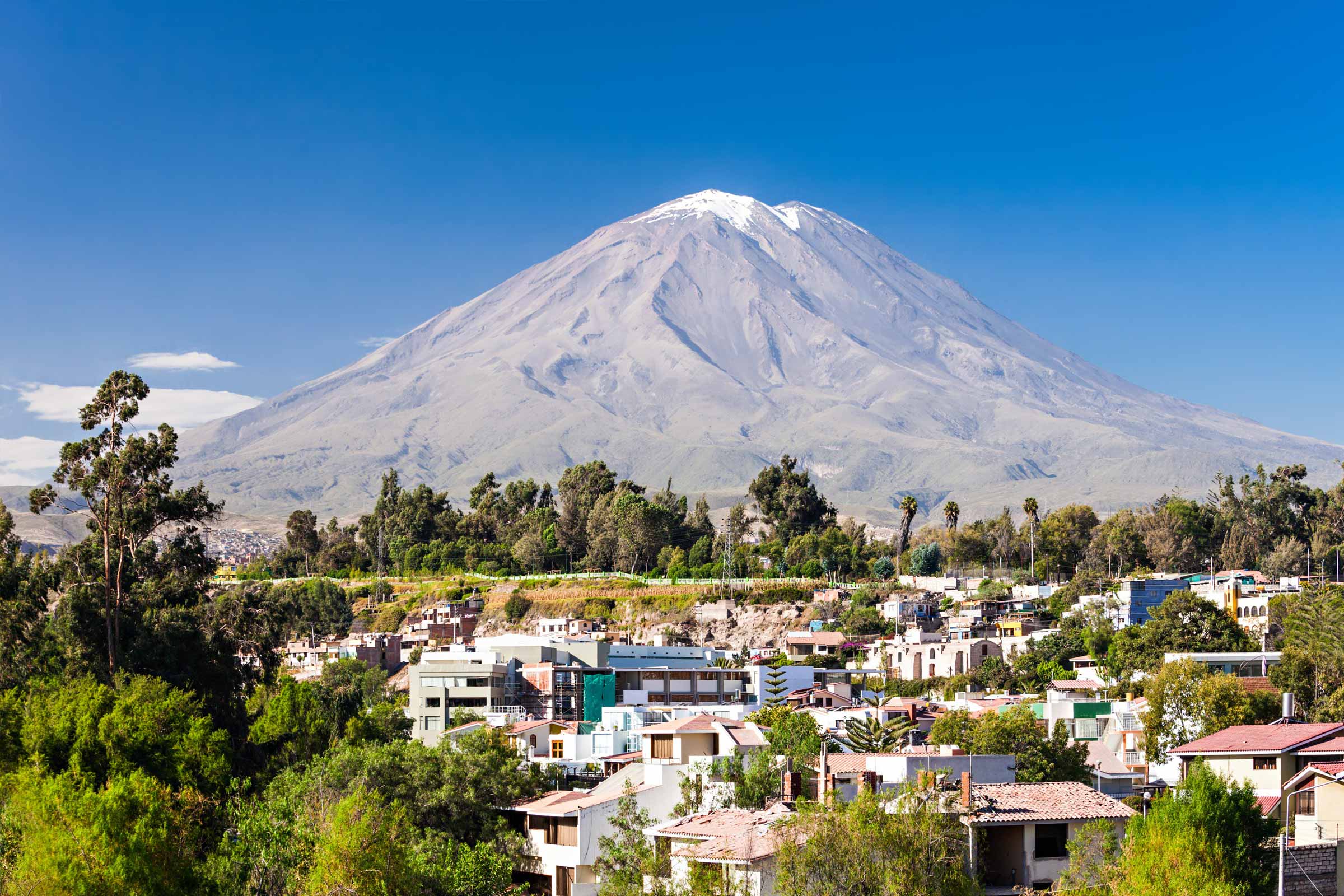
Arequipa is one of the few cities in the world where you can look up from a colonial square at two volcanoes you can climb in a weekend. El Misti is the perfect cone behind the cathedral; Chachani is the broad, often snowy massif to the north, and the easiest-access 6,000 m summit around. Both are non-technical, and both are much harder than they look from a tour page. This guide compares them with real figures, explains which to climb first and shows how to build an acclimatization ladder so you actually reach the top.
Misti vs Chachani at a glance
| El Misti | Chachani | |
|---|---|---|
| Summit | 5,822 m | ≈6,057 m (many local pages say 6,075 m) |
| Where the walking starts | ≈3,300–3,700 m, after a 4×4 drive | ≈4,900–5,000 m, at the end of a 4×4 track |
| High camp | ≈4,600–4,800 m | ≈5,200 m |
| Total climbing | ≈2,500 m over two days | ≈1,000–1,200 m |
| Summit day | Start 1–2 am; 5–6 h up, 2–3 h down | 5–7 h up, ≈3 h down |
| Terrain | Loose ash and scree, no water | Sand, ash, some snow after snowfall |
| Harder on… | Legs: more climbing, loose ground | Lungs: higher summit and higher camp |
| Our tour | Misti Volcano 2 Days | Chachani 2 Days |
Route and camp names vary between operators; altitudes are approximate and depend on the route used.
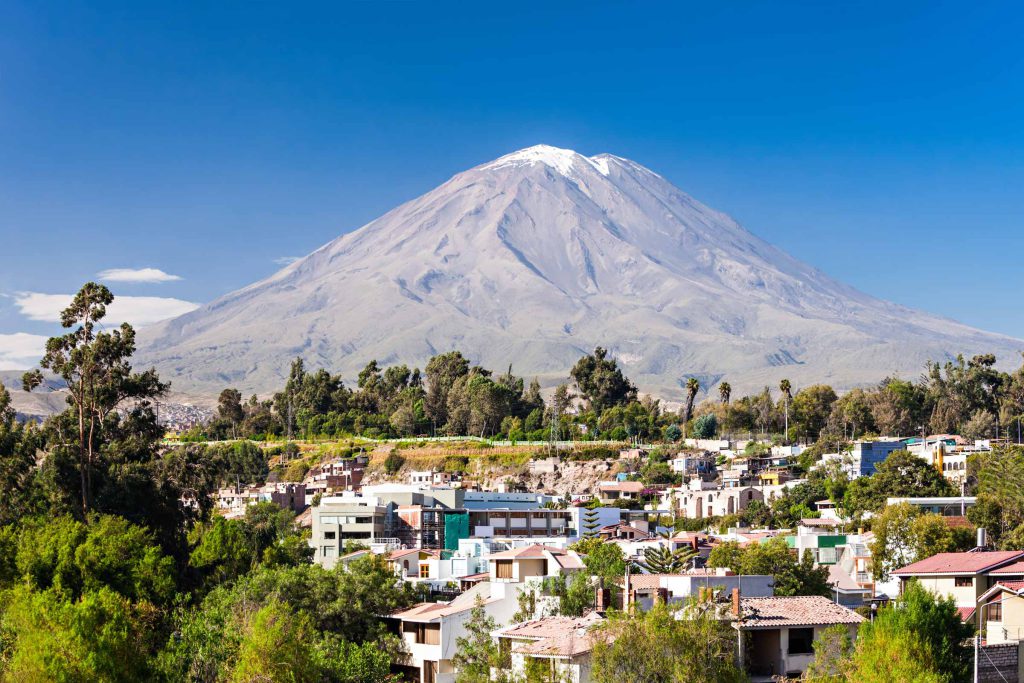
How high is Chachani, really?
You will see 6,057 m in reference works and 6,075 m on most local tour pages; hand-held GPS readings on the summit tend to land around 6,070–6,080 m, and satellite models give slightly lower numbers. Nobody has settled it, and for a climber it makes no difference: Chachani is above 6,000 m, and you sleep about 500 m higher than on Misti. What makes it “accessible” is not the height but the road that brings you to about 5,000 m.
Which is harder?
Most people who have done both say Misti feels harder physically: you gain around 2,500 m on loose ash where every step slides back a little, and there is no water on the mountain. Chachani is harder on altitude: you sleep at about 5,200 m and climb above 6,000 m, and a poor night at camp is the most common reason people turn back. That is why the usual order is Misti first, then Chachani a few days later if your body responds well.
The Arequipa acclimatization ladder
The mistake we see most often is flying into Arequipa and heading straight for a volcano. Arequipa is only about 2,335 m, so you need to climb the ladder step by step:
| Step | Where | Altitude | Idea |
|---|---|---|---|
| 1 | Arequipa city | ≈2,335 m | 1–2 days: city tour, rest, hydrate |
| 2 | Salinas y Aguada Blanca | ≈4,300 m (day trip) | Salinas day tour, sleep low again |
| 3 | Colca Canyon | Chivay ≈3,500 m, Patapampa pass 4,910 m | Colca 2 days: one night higher |
| 4 | El Misti | Camp ≈4,600–4,800 m, summit 5,822 m | Your first real test |
| 5 | Chachani | Camp ≈5,200 m, summit ≈6,057 m | After 1–2 rest days in Arequipa |
If you are arriving from Cusco or Puno after a week or more at altitude, you can skip steps 2 and 3. Coming from sea level, give yourself at least four or five days before Misti. The Arequipa tours page compares all these trips.
Is Misti safe? Checking the volcano’s status
El Misti is an active volcano: its crater has fumaroles, and its last major eruption was in the 15th century. Peru’s Geophysical Institute (IGP) monitors it continuously and publishes a regular bulletin with the alert level, which was green in early 2026. In February 2026 heavy rain triggered a cold lahar (a mudflow) on one of its northwest gullies — a reminder that the rainy season brings its own hazards, and one more reason to climb from May to October. We check the latest bulletin and weather before every departure.
What to pack
- Down jacket, warm layers, hat and gloves: expect −5 to −15 °C at night.
- Gaiters and sturdy boots for the ash; trekking poles help a lot on the descent.
- At least 3–4 litres of water per day: there is none on either route.
- Sunglasses, sunscreen and lip balm: the sun at 5,000 m is fierce.
- Headlamp for the night start.
Tents, mats, crampons, ice axes and meals are included in our climbs, and an official mountain guide leads every group. Crampons and ice axe are only used when there is snow, mostly after storms.
When to climb
May to October is the season, with July and August usually the clearest and coldest. November and April are possible but less stable. December to March brings rain, snow, low visibility and the lahar risk mentioned above; we don’t recommend it.
Frequently asked questions
Should I climb Misti or Chachani first?
Is Chachani the easiest 6,000 m mountain?
Do I need climbing experience?
Can I climb both in one trip?
How cold is it on the summit?
Is there water on the route?
About the author
Raquel Sánchez co-founded Terra Quechua Peru in Cusco in 2012 together with Edwin Medina, both with extensive trekking experience. She writes our Inca Trail guides from the day-to-day work of securing permits and organizing every departure with our guides, cooks and porters.