
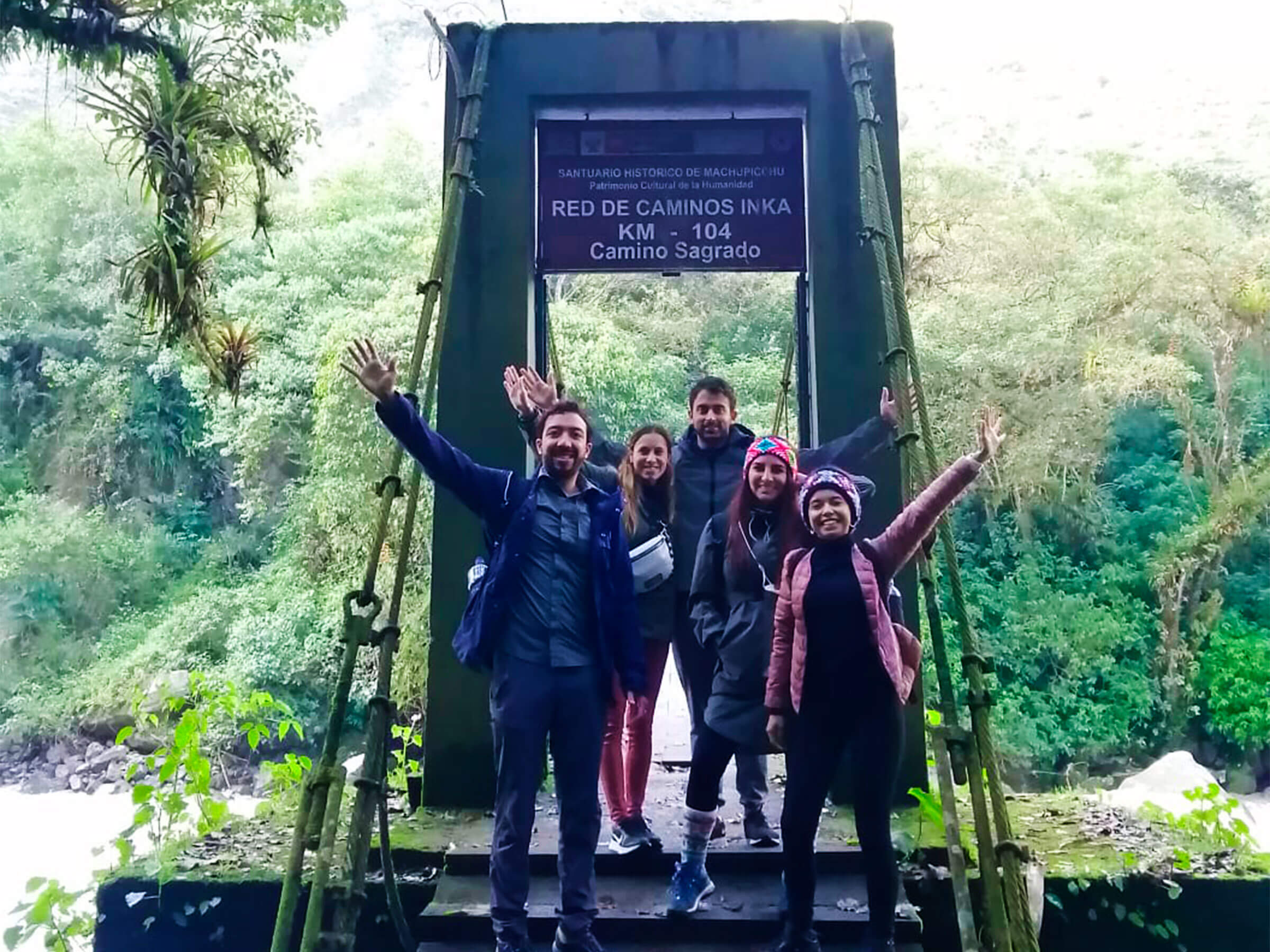
Leave No Trace on the Inca Trail is not just good manners; most of it is written into Peruvian law. The official regulation for the Inca Road Network in the Machu Picchu Historic Sanctuary (Ministerial Resolution 069-2017-MC) bans campfires, glass, alcohol, music players, drones and metal-tipped poles. It also requires every agency to sort its waste into four colored bags and carry it all out of the sanctuary. Here is what the rules actually say, how the seven Leave No Trace principles apply on this trail, and what you can do as a hiker.
- 4 colored bagsfor waste on every trek, registered at the control points.
- 0 firescampfires are banned along the whole Inca Road Network.
- Km 106.5where bags are checked before the waste leaves the sanctuary.
What the official rules say
The regulation is enforced by the Ministry of Culture and SERNANP, Peru’s protected areas service, whose rangers staff the control points along the trail. These are the parts that affect you directly:
| Not allowed on the trail | Why it matters |
|---|---|
| Trekking poles with uncovered metal tips, and sticks made of native wood | Metal tips damage the original Inca stones. Use rubber tips; we rent poles that already have them. |
| Glass bottles and containers | Glass breaks and stays in the forest for centuries. |
| Alcohol and drugs | Banned as items, and walking or working under their influence is also prohibited. |
| Speakers, sound equipment and musical instruments | The regulation protects the quiet of the trail and its wildlife. |
| Drones and unauthorized professional filming | Flying over the sanctuary needs prior authorization from the Ministry and SERNANP. |
| Pets, bicycles, fuels such as gasoline, and large knives or tools | Part of the same list of banned items. |
Summary of articles 26 and 27 of the Reglamento de Uso Turístico Sostenible de la Red de Caminos Inka del Santuario Histórico de Machupicchu (RM 069-2017-MC).
The regulation also prohibits lighting fires, camping outside your assigned campsite, climbing Inca walls, scratching or writing on stones, any kind of graffiti, disturbing plants and animals, eating inside the archaeological sites, and walking on the railway or on routes that are not authorized.
Where the waste goes
Article 28 makes the agency responsible for all the waste its group produces: sorting it, carrying it and disposing of it outside the sanctuary. The waste is sorted into four colors of bags:
| Bag | What goes in it |
|---|---|
| Red | Metal, paper, cardboard, Tetra Pak, styrofoam |
| White | Plastic bags, plastic bottles and plastic containers |
| Black | Toilet paper and biodegradable collection bags |
| Green | Organic waste |
The bags are registered at the SERNANP control points. The black bags are registered at the last point, in the Choquesuysuy sector (Km 106.5), and taken out of the sanctuary by the operator.
That is why our porters carry rubbish down as well as food up, and why your guide will ask you to keep your snack wrappers and hand them in at camp. Nothing stays on the trail.
The seven Leave No Trace principles, on the Inca Trail
- Plan ahead and preparePack with the rules in mind: rubber tips for your poles, no glass, a reusable bottle, rechargeable batteries and biodegradable soap. Our packing list covers it.
- Travel and camp on durable surfacesStay on the stone path and use only your assigned campsite. Cutting corners on the zigzags erodes the slopes.
- Dispose of waste properlyKeep every wrapper, and use the toilets at the campsites and checkpoints, or our toilet tent. Used toilet paper goes in a bag, never under a stone.
- Leave what you findDon’t take stones, plants or seeds, and don’t climb or touch the Inca walls.
- Minimize campfire impactsOn this trail it is simple: no campfires at all. Our cooks use gas stoves.
- Respect wildlifeWatch birds and spectacled bears from a distance, and never feed animals.
- Be considerate of other visitorsNo music, keep voices low at camp, and step aside on the inside of the path when porters pass with their loads.
Good practices the regulation asks for
Annex F of the regulation lists good environmental practices for hikers, guides and porters. Some are surprising:
- Rechargeable batteries: regular disposable batteries are not supposed to enter the trail. Bring a power bank and rechargeable batteries for your headlamp.
- Reusable water bottles for hikers, guides and support staff. With us, you refill them with filtered boiled water from day 2.
- Biodegradable dish soap, shampoo and soap.
- Refillable gas canisters for cooking, and used cooking oil stored in a closed container and registered.
- No shouting or loud noise, and all equipment removed from the campsites.
What we do on our treks
- A cloth snack bag for each hiker, so we don’t hand out plastic bags.
- Biodegradable hand soap and dishwashing detergent at camp.
- A portable toilet tent at no extra cost, so nobody has to look for a bush.
- Filtered boiled water to refill your bottles, instead of plastic bottles.
- Waste sorted and carried out of the sanctuary, as the regulation requires.
- Maintenance work on the trail: once a year our team travels to the Inca Trail to help maintain it. We explain how it works on our page about caring for the Inca Trail.
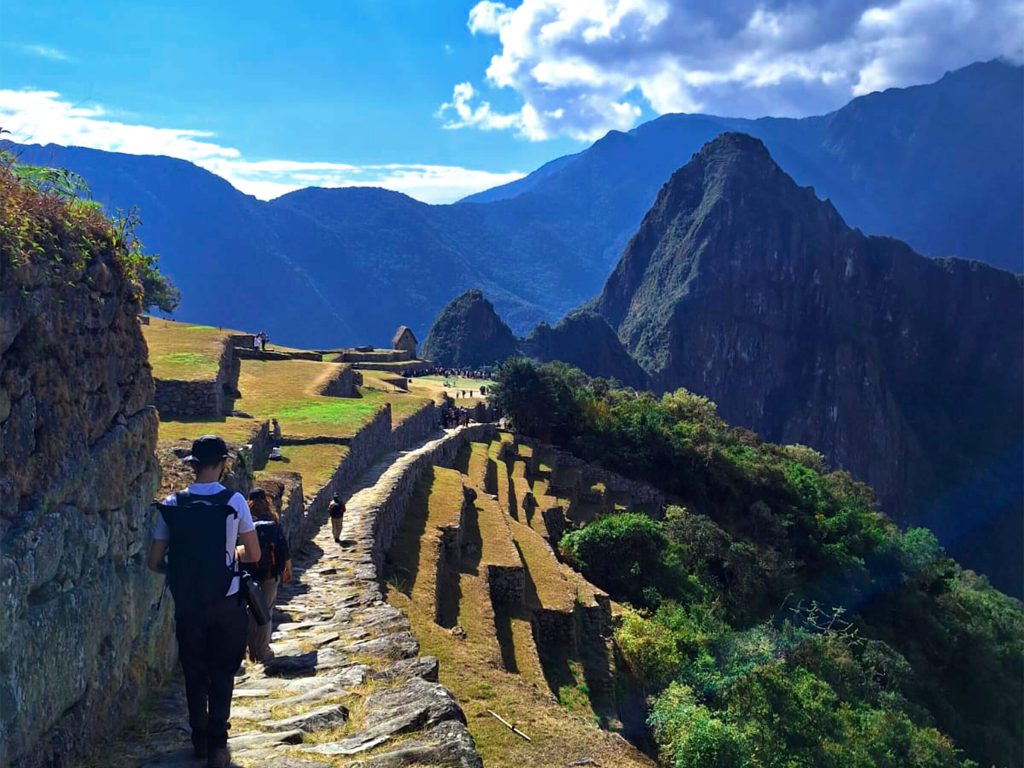
Choosing a licensed operator is part of it too: only authorized agencies can take groups on the trail, and they answer for their porters, their campsites and their waste. Read how to choose an Inca Trail operator, and see what is really there in terms of bathrooms before you go.
Frequently asked questions
Are campfires allowed on the Inca Trail?
Can I bring trekking poles on the Inca Trail?
Is alcohol allowed on the Inca Trail?
What happens to the rubbish on the Inca Trail?
Can I fly a drone on the Inca Trail?
Do I need special batteries for the Inca Trail?

About the author
Raquel Sánchez co-founded Terra Quechua Peru in Cusco in 2012 together with Edwin Medina, both with extensive trekking experience. She writes our Inca Trail guides from the day-to-day work of securing permits and organizing every departure with our guides, cooks and porters.