
Tipping on the Inca Trail is optional, and it is given once, for the whole trip. On our treks the group usually collects it together and hands it to the whole team, guide, cook and porters, on the last evening. As a reference, our travelers give about US$20–30 per person for the Classic 4-day trek. Online you will find much higher figures, often US$45–50 per person or more, and below we explain why, how to hand it over, and what changes on the shorter routes.
- US$20–30per traveler, as a reference, for the whole Classic trek.
- 1 envelopefrom the group to the whole team, not person by person.
- Optionalour team is paid properly; a tip is a thank-you, not a salary.
Who is on your team
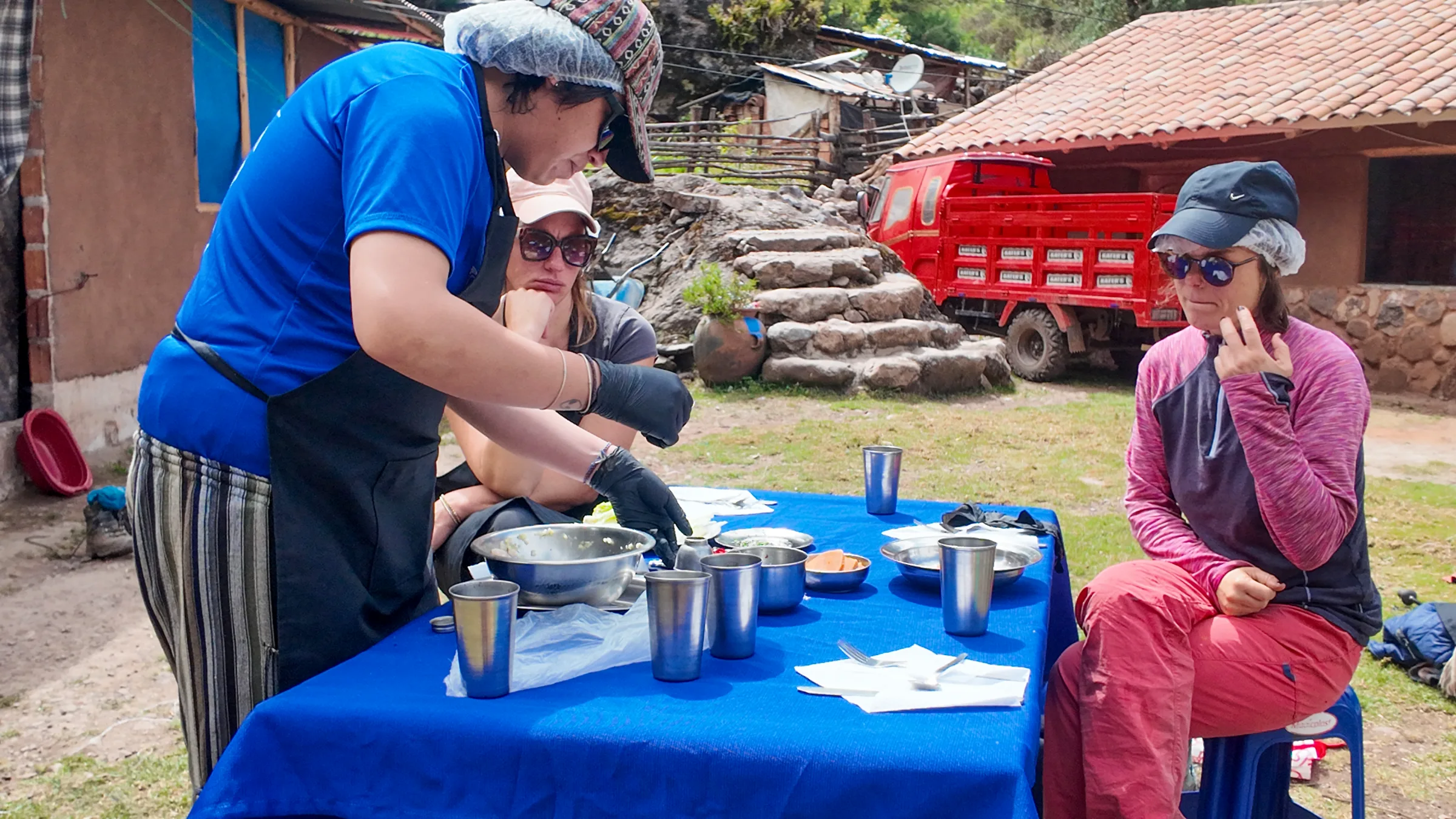
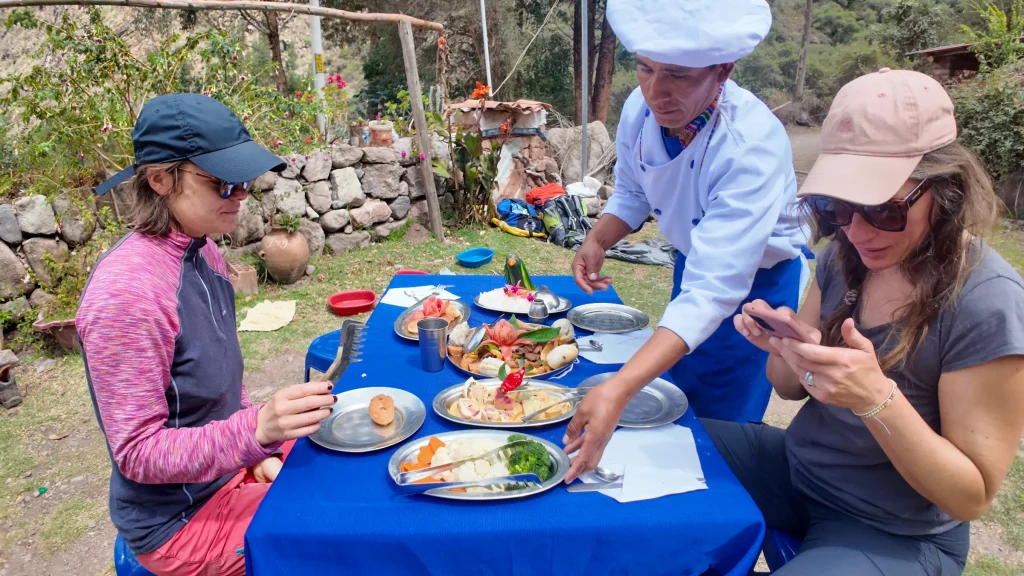
On the Classic Inca Trail you walk with a licensed guide (two guides for groups of more than 8), and behind the scenes work a chef and a team of porters who carry the tents, the kitchen, the food and up to 5 kg of your personal gear. They set up camp before you arrive, cook three meals a day and pack everything again after you leave.
Peru’s porter law (Law 31614) limits what each porter may carry, 20 kg for men and 15 kg for women, and requires proper pay per working day, insurance, food and equipment. That is why groups need several porters, and why a fair trek has a real price floor. It also means a tip is a thank-you on top of fair pay, not the pay itself.
How much to tip on the Inca Trail
| Route | Who you tip | Our reference |
|---|---|---|
| Classic Inca Trail, 4 days | Guide, chef and porters, as one team | About US$20–30 per traveler for the whole trek |
| Short Inca Trail, 2 days | Your guide (there are no porters; you carry your own daypack) | Optional; less than on the Classic trek |
| 1-day Inca Trail | Your guide | Optional; less than on the Classic trek |
Tips are not included in the tour price and are always voluntary. Give more if you feel the team went beyond what you expected, or less if not.
Why do other guides suggest more? Many tipping guides add up a daily amount per role, for example so much per day for the guide, the cook and each porter, and arrive at US$45–50 per traveler or more. That logic comes from companies where the tip is an expected part of the team’s income. Our reference is lower because our team is paid properly for every working day; what you give is a genuine thank-you. If you want to give more, it will be very welcome, but you should never feel pressured.
How and when to hand it over
- Collect it as a groupOne person gathers the tips during day 3. A group tip is fairer and avoids differences between team members.
- Give it on the last evening at campThe night before Machu Picchu is the last time the whole team is together, cooks and porters included. A few words of thanks mean as much as the envelope.
- Hand it to the whole teamGive the envelope in front of everyone, or to the guide and chef together, so all the team sees it.
- Use soles in small billsSoles are easiest for the team to use. US dollars are fine too if the bills are clean and untorn.
Bring the cash from Cusco: there are no ATMs on the trail. Our packing list reminds you to carry soles for tips, toilets (S/1–2) and the last day in Aguas Calientes.
Other ways to say thank you
- Gear in good condition: a warm jacket, gloves or a headlamp you won’t need at home is useful for people who work at 4,000 m. Ask your guide first, and give it to the whole team, not to one person.
- A review that names people: a review mentioning your guide, chef or porters by name helps them more than you might think.
- Respect on the trail: step aside when porters pass with their loads, say sulpayki (“thank you” in Quechua) and keep your duffel within the weight limit.
Tipping elsewhere in Peru
- Restaurants: look at the bill before tipping. Peruvian law allows restaurants and hotels to add a “recargo al consumo”, a service charge of up to 13%. If it is already there, you don’t need to tip again; if not, around 10% for good service is common.
- Drivers and transfers: not expected for a short ride; rounding up or a few soles for help with bags is a kind gesture.
- Guides on day tours: optional, like on the trail; give what you feel the day was worth.
For a full budget of your trip, with tips, meals and extras, see what the Inca Trail really costs in 2027, and if you are still choosing a company, read how to choose an Inca Trail operator, including how they treat their porters.
Frequently asked questions
How much should I tip on the Inca Trail?
Do I tip the porters separately?
When do you tip on the Inca Trail?
Should I tip in soles or US dollars?
Do you tip on the 2-day Inca Trail?
Is the tip included in the tour price?

About the author
Raquel Sánchez co-founded Terra Quechua Peru in Cusco in 2012 together with Edwin Medina, both with extensive trekking experience. She writes our Inca Trail guides from the day-to-day work of securing permits and organizing every departure with our guides, cooks and porters.